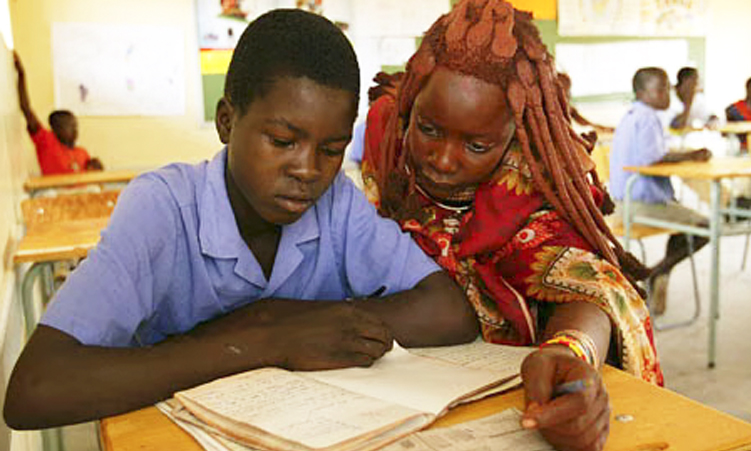







In classroom across Namibia, Grade 11 pupils are opening chemistry textbooks while sitting at desks with no lab next door.
They are being told to do research but they are in schools that have no computers. And many are discovering that the subjects they were given may quietly close the door on the careers they’ve dreamed of since primary school.
The education ministry’s decision to introduce some of the combined subjects for Grade 11 was aimed at creating well-rounded pupils. But on the ground, the rollout has left schools scrambling.
At several combined and junior secondary schools, chemistry is now part of the core offering. The challenge is that the buildings were never designed for it, like the school in which I completed Grade 11 – no lab, no chemistry tools, teachers demonstrate experiments by drawing them. Learners memorise steps they have never performed.
When the exam asks you to describe what happens when you heat copper sulfate, you’ve only read it, you don’t know the colour, the smell – nothing. Yet they expect us to get everything right or to perform well at national exam level. How is that possible?
The curriculum also assumes pupils can research, type and print but in reality, many schools have no computers, and the internet is either too expensive or non-existent at many schools.
The ministry should urgently address these vital gaps which see a significant number of learners unable to even switch on a computer, despite having “computer classes”.
I wrote my Oshikwanyama research by hand, over five pages, and was forced to pay for transport to town to use paid internet services to get additional information. Other pupils simply skipped the research tasks. Teachers say the gap is already evident in the results and confidence levels of learners.
Beyond resources, the way subjects have been mixed is raising alarm. In a number of schools, Grade 11s have paired chemistry with biology and geography, while excluding physical science or additional agriculture.
For pupils who want to become engineers, pharmacists, pilots, or information technology specialists, those combinations do not meet university entry requirements.
Learners are effectively being told to change their career path at age 16, not because of grades, but because of timetabling.
The education ministry must urgently prioritise the rolling out of container labs, shared regional science centres, and offline digital content loaded onto a few school tablets. Fast-track support and create partnerships with local businesses to donate equipment and sponsor internet bundles for school work.
– Jairus Haufiku