





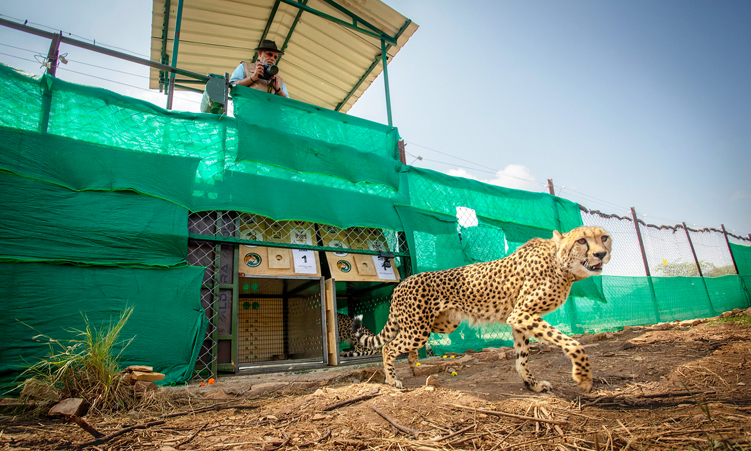
In an extraordinary chapter of global conservation history, the translocated Namibian cheetahs sent to India have not only adapted seamlessly to their new home in Kuno National Park, Madhya Pradesh, but are actively spearheading the revival of the species in Asia.
Recent breakthroughs have seen India’s total national cheetah population officially cross the 50 mark, reaching a historic high of 57 animals.
This monumental milestone is anchored by a series of vibrant wild litters born on Indian soil – with a remarkable total of 37 thriving Indian-born cubs now roaming, hunting and growing under the Indian sun.
The message cheetah ambassadors are sending is clear: Project Cheetah is progressing remarkably well and Namibia’s big cats are thriving as the founding mothers and fathers of a brand-new wild population.
HISTORICAL AND CULTURAL LEGACY
The return of the cheetah to India is a deeply symbolic restoration of both ecological balance and national culture.
The word ‘cheetah’ is derived directly from the Sanskrit word ‘Chitrak’, meaning ‘spotted’.
Cave paintings dating back over 10 000 years in the Chambal valley of Madhya Pradesh depict these majestic carnivores.
Ancient Vedic texts dating to 1 200 BC revered their speed and power, while medieval royal courts trained them to course game.
Because cheetahs rarely bred in captivity, thousands of wild cubs were trapped over centuries for royal menageries. Combined with habitat conversion and excessive bounty hunting during the colonial era, the indigenous Asiatic cheetah population rapidly dwindled.
After the last three recorded wild cheetahs were shot by trophy hunters in 1947, India officially declared the species extinct in 1952. It remained the only large carnivore eliminated from post-independence India, making its current return a historic ecological triumph.
STARS OF KUNO
While the overarching figures are impressive, it is the remarkable stories of individual Namibian cheetahs that truly demonstrate total environmental compatibility and biological success:
Jwala, the proven matriarch
Translocated from Namibia during the inaugural release in September 2022, Jwala has emerged as one of the project’s most prolific mothers.
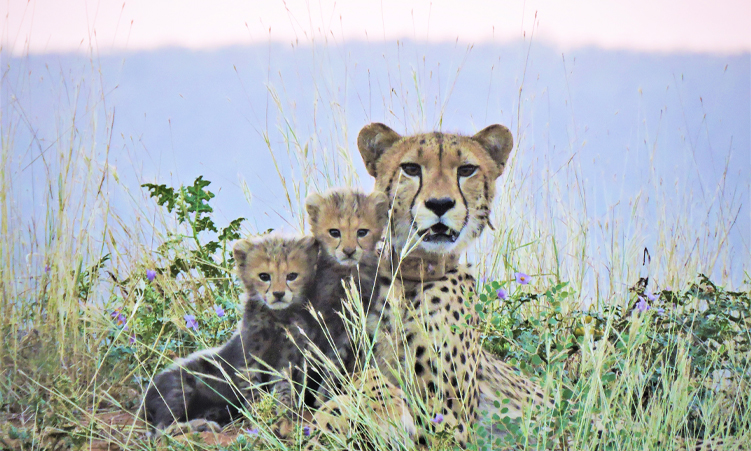
On 9 March, Jwala successfully delivered her third wild litter, welcoming five healthy cubs into the world. This marked the 10th successful cheetah litter recorded on Indian soil.
Having previously raised litters in March 2023 and January 2024, Jwala’s exceptional maternal instincts stand as living proof that these big cats experience zero stress and enjoy optimal wild conditions in India.
Aasha, the wild explorer
Another proud Namibian founder, Aasha, delivered her second litter of five vibrant cubs at Kuno National Park.
Aasha has consistently demonstrated incredible adaptability, moving effortlessly through Kuno’s varied habitats – from savanna grasslands to riverine patches – and expertly raising her cubs without human provisioning.
Siyaya
Having collectively contributed alongside Aasha to over 11 cubs on Indian soil, Siyaya’s legacy is firmly established.
Seven of her wild-born cubs have already reached full maturity, actively hunting native prey such as chital (deer) and chinkara (gazelle), and exploring the free-ranging wilderness completely independent of human care.
Elton and Oban, the founding sires
Before dying of natural causes at advanced ages for wild cheetahs, male founders Elton and Oban successfully sired wild litters.
Their enduring genetic legacy is now permanently woven into the future generations of India’s big cat population.
SECOND GENERATION
The ultimate measure of any species reintroduction programme is whether translocated animals can establish a self-sustaining, multi-generational population.
India achieved this critical benchmark when Mukhi – the very first cheetah born on Indian soil under Project Cheetah – reached adulthood and successfully gave birth to five cubs of her own.
Observational radio-collar tracking confirms that these free-ranging big cats are hunting naturally across mixed deciduous forests and open grasslands, displaying a steady kill interval averaging 6.68 days on native prey species.
Despite sharing the landscape with native predators like leopards, the cheetahs have successfully carved out their own spatial niches.
While any ambitious wildlife translocation involves inherent learning curves, Indian and Namibian scientific teams have successfully navigated early hurdles using scientifically driven, adaptive management.
Critics initially questioned the use of soft-release enclosures (bomas) and medical interventions. However, these temporary, fenced natural habitats are international best practices that increased reintroduction survival odds by 2.5-fold.
When animals developed unseasonal winter coats during humid monsoons, proactive veterinary interventions such as topical ectoparasiticidal treatments completely resolved the issue.
Total mortality rates remain far below the standard failure threshold of 50% for wild carnivore translocations. Adult annual survival in Kuno has climbed to over 85%, while juvenile cub survival stands at nearly 70% – a remarkable feat for a species naturally prone to high cub mortality in the wild.
Project Cheetah is more than a species recovery programme; it is a flagship symbol of South-South cooperation between Namibia and India.
Inspired by India’s landmark success of Project Tiger in restoring wild tiger populations from under 300 to nearly 4 000 animals today, the cheetah initiative is restoring crucial open-forest and grassland ecosystems.
As these Namibian ambassadors and their expanding litters race across the wilderness of central India, the people of Namibia can take immense pride.
The big cats gifted to the world are not just surviving, but they are also building a thriving, wild legacy that will inspire generations to come.
– Rahul Shrivastava is the high commissioner of India to Namibia.