





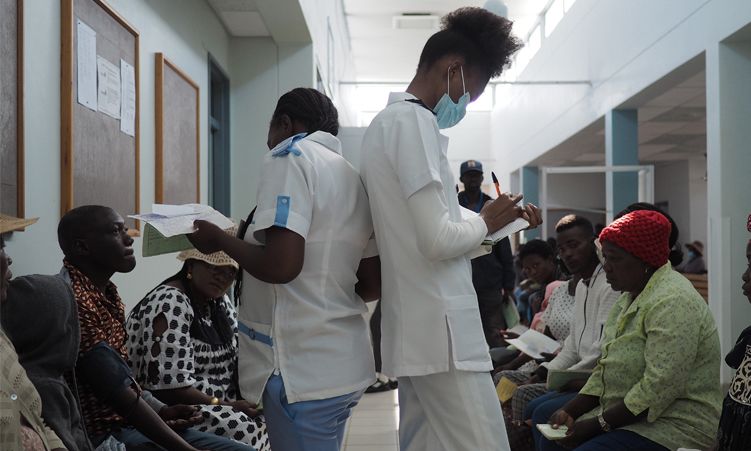
//KHARAS governor Dawid Gertze says the directorate of health and social services in the region is grappling with a severe workforce shortage and currently operating at only 35% of its required capacity.
Gertze revealed this during his state of the region address on Tuesday, saying the health and social services sector is critical to the well-being and resilience of communities.
The governor said despite significant investments in infrastructure and equipment, the sector is grappling with severe workforce shortages, limited mental health services, and disparities in access to services between urban and rural communities.
He said the //Kharas region faces escalating mental health concerns, particularly among young people. The rising rates of depression, anxiety, and substance abuse are linked to factors such as unemployment, social media pressures, and a lack of psycho-social support.
Gertze said to bolster healthcare delivery, the Ministry of Health and Social Services has invested about N$5.9 million in essential medical equipment such as dialysis units, neonatal ventilators, anaesthesia machines, and CTG monitors in the region during the 2024/25 financial year.
The governor said Karasburg Hospital received a significant boost through private donations, enabling the replacement of essential equipment, including autoclaves and a much-needed roof replacement, with a combined value of N$1.3 million.
During the period under review, Keetmanshoop Hospital saw the completion of a new specialist wing, valued at N$7.4 million and the establishment of a dialysis centre, both sponsored by the Social Security Commission.
Gertze said the health ministry requires an additional N$8.84 million for advanced diagnostics and surgical tools such as CT scanners and ICU ventilators.
He said the percentage of children born to HIV-positive mothers who tested negative has improved from 97 to 100%, testament to the effectiveness of the prevention of mother-to-child transmission efforts.
“We are deeply concerned about the persistent issues of maternal, neonatal, and under-five mortality and to address this, the ministry is actively pursuing public-private partnerships to expand access to skilled care and emergency obstetric services, ensuring that expectant mothers and newborns receive the critical care they deserve,” Gertze stressed.