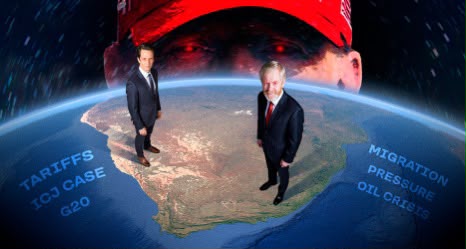







ENERGY MINISTER MODESTUS Amutse’s decision to grant a Swiss company an exclusive mandate to import all Namibia’s fuel feeds into concerns that the fuel sector has allegedly been captured by individuals linked to politicians as high up as the president.
Last week, Amutse chose Swiss commodity trader Vitol, a company dogged by bribery allegations in several countries, to supply Namibia’s entire fuel needs from June to August. The contract is valued at an estimated N$2.4 billion a month at current fuel prices.
Amutse not only failed to follow due process but effectively undermined the competition watchdog, which falls under his portfolio.
In March, the Namibian Competition Commission gave Nasan Energies, co-founded by Miguel Hamutenya (34), the greenlight to buy 52 petrol stations, making it the country’s third-largest fuel retailer. Some were bought from Vivo Energy, which is owned by Vitol.
To stop one group from dominating the market, the commission set a stiff condition: Nasan may not source fuel from Vitol, directly or indirectly, for five years.
Nasan is appealing that ban via minister Amutse. Yet while the appeal sits on his desk, the minister has handed the country’s national fuel supply to Vitol, undermining the very regulator whose decision he is meant to weigh.
The Hamutenya interest in the fuel sector runs deep. Miguel’s father, Mathews, co-owns Validus Energy with Vitol, holding 35% through Millennium Investments against Vitol’s 65%. Millennium also co-owns a farming business with the president’s son, Ndeli Ndaitwah.
Although Amutse claims the deal will save the government N$1 billion over three months, his decision to appoint the Swiss company so quickly and without transparency will only fuel more suspicion.
Without public information on how Vitol was selected, how much the government will pay, how much other bidders offered, public concern that the oil sector is being captured by a small circle close to the president is understandable.
History has a habit of repeating itself.
Amutse’s directive is reminiscent of a petroleum enrichment scandal 21 years ago. Then, a group of politically connected Namibians formed a joint venture with South African energy firm Sasol to import half the country’s national fuel supply.
Namibia Liquid Fuel (NLF) included Sacky Shanghala (the then adviser to the justice minister), and James Hatuikulipi, Investec Namibia’s managing director at the time.
Others included businessman Ranga Haikali, the then permanent secretary in the Office of the President, Ndeutala Angolo, and former presidential economic adviser Leevi Hungamo. Regulations were changed or overridden to favour NLF, a black economic empowerment consortium which secured a state contract eventually valued at nearly N$4 billion. The deal enriched the Namibian group by more than N$55 million.
Amutse’s directive essentially copies that formula and forces domestic companies to get petrol and diesel exclusively from Vitol.
A monopoly removes the state’s negotiating leverage and leaves the public vulnerable to arbitrary supply contracts.
It is incumbent on Amutse to explain why the government chose Vitol.
On the one hand, the government is pleading for foreign investment and private sector partners. On the other hand, the same government is enabling monopolies.
It sends the wrong signal. It appears to indicate Namibia will close a market to competition if it suits those in power.
A Boost for the Kasi
THE OPENING OF Goreangab Mall in Katutura is a welcome sign that more big retailers are moving into densely populated areas we colloquially call ‘the kasi’.
For years, property developers have largely pumped hundreds of millions into the central business district and affluent suburbs.
This imbalance forced customers from densely populated areas to travel long distances to shops and often pay double taxi fares. The kasi demographics speak for themselves. Between them, the Samora Machel, Moses Garoëb and Tobias Hainyeko constituencies house 228 000 people.
That is nearly half the capital’s population.
Opening shops closer to these residents is not a matter of convenience.
It is an economic imperative. This should also apply to government services.
Residents close to the N$270-million new mall have already raised questions about local employment and opportunities.
These must be answered, but let’s also look at the bright side.