Through the centuries fireplaces have been central to human life and the heart of the home.
Memories have unusual origins. My love for fireplaces began when I was 14 years old.
At the time, my brother-in-law was an agent for the Farmer’s Cooperative Union and would travel from farm to farm buying cattle.
That year I accompanied him during my school holidays.
We stopped at a simple ‘hartebeeshuis’ in the Omaheke region belonging to a family of Dorsland trekkers who had returned from Angola. Even though the family wasn’t well off, they invited us to join them in the kitchen for lunch.
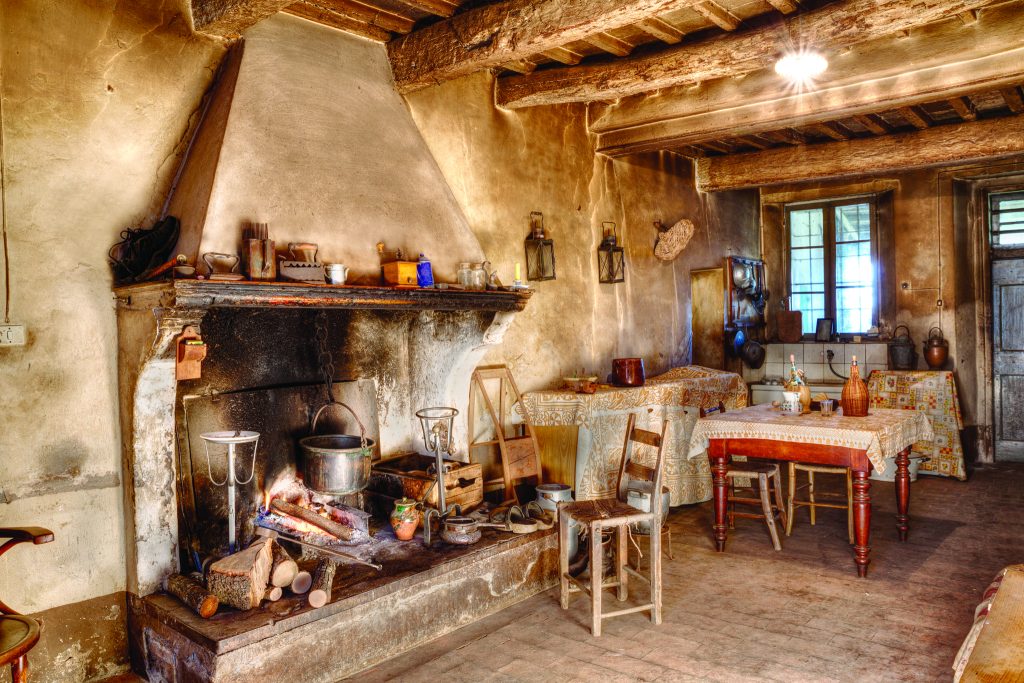
It was a bitingly cold day in the middle of winter and the family was sitting around the fireplace in the small kitchen.
The cat lay purring on the hearth next to several children playing on the mud floor and on the springbok kaross that was spread across it.
The smell of wood-smoke and food mingled invitingly in the air.
Light poured in through the windows, and while the icy wind blew outside, a cocoon of golden warmth enveloped the home.
It is an image that has remained with me throughout my life and one that ignited my fascination for fireplaces.
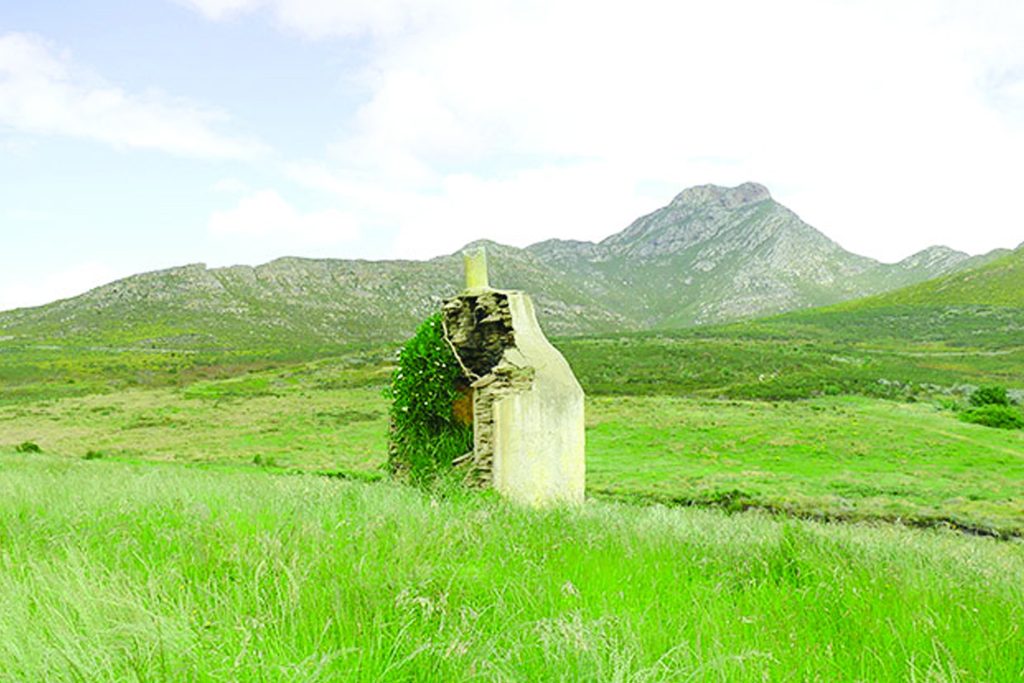
Since that time, regardless of where I am in southern Africa or Europe, I stop whenever I see the ruins of an old fireplace. They are usually standing solitary in an abandoned field or enveloped in a tangle of undergrowth.
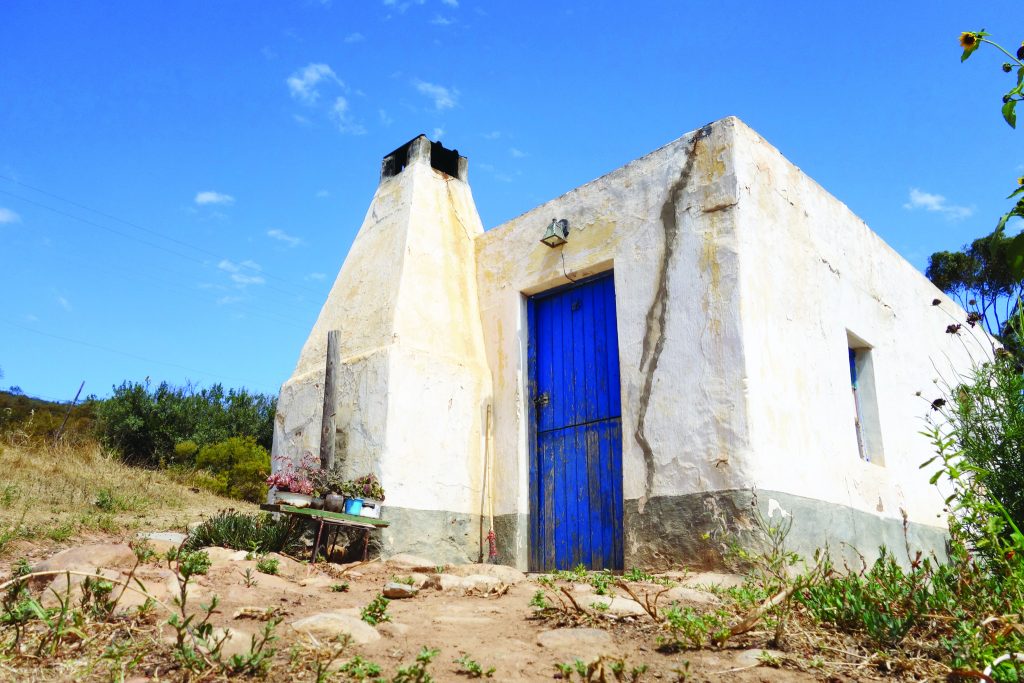
It is always symbolic to me that the rest of the house has crumbled away to time, yet these sturdy fireplaces and their chimneys remain standing, a testament to the core and heart of the home – and, of course, good masonry and a history of continual heat.
These days they are relics, fragments of the past. Like times gone by when families used to gather around the fireplace to swap stories and share dreams, the importance of the fireplace has been lost.
With the loss of these open fireplaces, we have also lost the quality of the experience. Today, electric-or oil/gas-heaters and central heating often replace the old stone fireplaces.
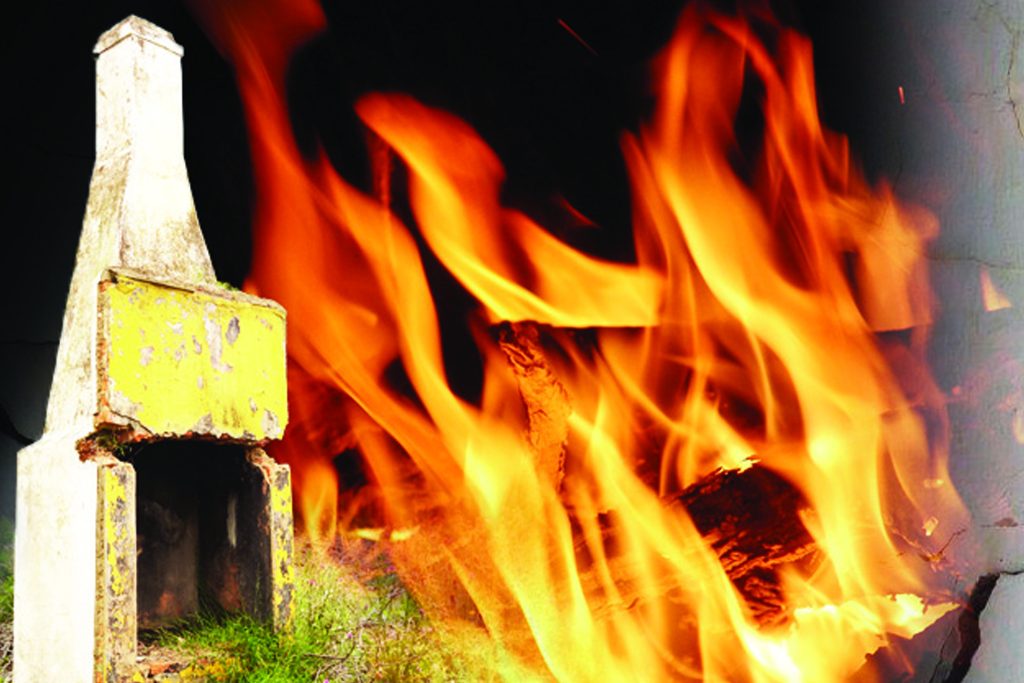
And, all I have left are memories from my youth of returning home from boarding school in the winter holidays and huddling next to the fireplace – and our day in the Omaheke all those many years ago.
Historically, fireplaces began as fire-pits built into the ground in caves, and later on, in huts.
In Namibia, where the weather is kinder than in Europe, small fires are still made in the centre of Himba dwellings to warm the interior.
In the rural areas of the north, fire is an important and practical element, built in the yard of the homestead. Since time immemorial, people have gathered around the fire.
It was the centre of the home, where food was cooked and storytelling took place.
It provided not just warmth, but a sense of safety, security and community.
As time progressed, fire-pits became raised hearths. Until the invention of the chimney in northern Europe in the 11th or 12th century, smoke escaped through vents or holes in the roof (or even an open window).
When smoke could be channelled up chimneys and out of the house, the fireplace became the perfect indoor feature and centrepiece of the kitchen and home.
Fireplaces evolved over the years. In the 1870s, they gained a more aesthetic value and good fireplaces were made of quality stone.
Stonemasons and blacksmiths created increasingly attractive fireplaces that were built in the sitting rooms of stylish Victorian homes.
Fireplaces were also introduced in southern Africa.
They became elaborate features in opulent houses after the discovery of diamonds in the south-western corner of the country in the early 1900s. And, they have remained a central part of simpler homes over the decades.
Clothes were hung to dry, food cooked and a kettle boiled around or on the fireplace, and all members of the family, from grandma and grandpa to ma and the newborn baby, gathered at the hearth.
In the northern hemisphere, the fireplace gained additional symbolism when it was woven into Christian mythology.
Father Christmas (Santa Claus) is said to enter houses via the chimney to leave an exciting array of gifts for good children, and to fill Christmas stockings hung from the mantel.
It is a tradition that has also been adopted in Africa. Still today, even in the sweltering Namibian summer, you may find a Christmas tree or a line of Christmas stockings waiting for Father Christmas’s generous offerings.
My love for fireplaces extends to other areas of my life and my work.
When I embarked on my journey with the Gondwana Collection, I ensured that each lodge had ample fireplaces to warm the guests on chilly winter days.
The most unusual of these fireplaces are those at Canyon Roadhouse, which are ingeniously built into the cabs of old vehicles.
Call me old-fashioned, but I still prefer the trusty fireplaces of yesteryear.
Although I know that central heating and streamlined metal and gas fireplaces may be more efficient – and less smoky – there is a special atmosphere created by the crackling wood and dancing flames of the old fireplace.
Fire, after all, is integral to civilisation. It is at the core of human life and evolution – and, little compares to the feeling of security and comfort gained at the hearth while the wind whistles outside.
And, even if some insist that it is warmth that is paramount in a home, I will always opt for the open fireplace and will fondly remember that day that should have been like any other in the life of a teenager, until I stepped into the cosy kitchen with its blazing fireplace.