


PRODUCTIVE land is one of the world’s most valuable assets in banishing poverty and creating shared prosperity.
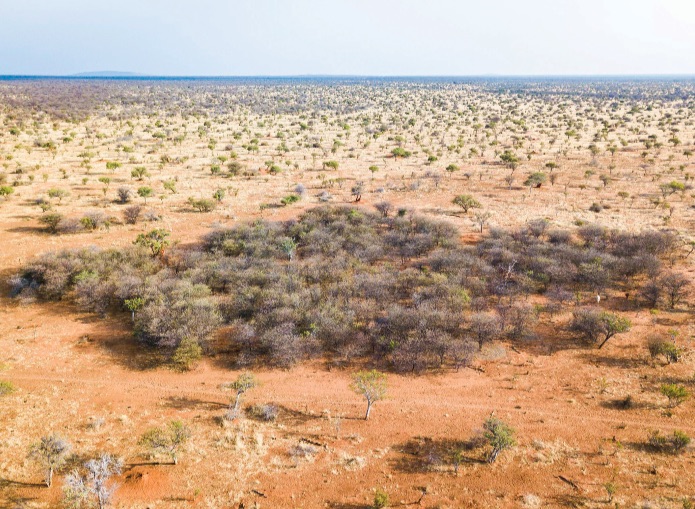
Yet in Namibia, the government has identified desertification and land degradation as a major headache scuppering the country’s efforts towards achieving sustainable land management.
One of the major causes of desertification in Namibia, according to 76-year-old Petrus Shikongo from Otuwala village in the Oshana region, is the cutting down of trees in rural areas.
He says trees protect the soil, prevent soil erosion and also bring good rains to an area.
Shikongo says when he was a young man, there were huge forests at his village and nearby villages such as Othingo, Ehenye and Okaku.
“I did not have to go far to look for sticks for household construction purposes or for firewood. There were hyenas and other wild animals at our villages,” says Shikongo.
However, people cutting down too many trees caused desertification in many parts of northern Namibia, which in turn led to less rainfall and soil erosion.
When people were clearing areas for their mahangu fields, many cut most trees down, only leaving a few marula and makalani palm trees, Shikongo says.
Land degradation is partly caused by people who cultivate their mahangu fields for a number of years but do not add fertilisers, he adds.
“Fertiliser is food for the soil and when the soil is well-fertilised, it will be able to produce more food. Adding cattle manure or cow dung is good. This is organic matter and it helps give the soil nutrients. This is ecosystem-based adaptation which is good, especially in the changing climate,” says Shikongo.
Environmental commissioner Timoteus Mufeti says desertification and land degradation in Namibia are caused by a combination of factors.
The main contributors are wrong land management and the agricultural practices employed by Namibians, especially those which lead to over utilisation of limited and scarce resources such as overgrazing, whereby farmers especially those in the rural areas, keep large stocks of animals in areas where there is limited space and resources, he says.
“This definitely leads to land degradation and desertification. Uncontrolled utilisation of limited resources is another contributing factor.
“Some of our people, particularly strong and financially advantaged ones, are taking too much of national resources such as land, water and grass for their own consumption to increase their wealth, leaving little for the poor.
“Where this happens, you will for sure find some land degradation and desertification,” says Mufeti.
As a country with an arid and semi-arid environment, Namibia suffers from frequent droughts and dry spells, which have now been aggravated by climate change. However, the country has come with a number of commendable interventions to address desertification, land degradation, drought and climate change.
One early intervention was the Namibia Programme to Combat Desertification (Napcod), which involved the government, non-governmental organisations and the private sector, and ran from 1994 to 2005.
Namibia is also an active party to the United Nations Convention to Combat Desertification (UNCCD), which is one of the three global environmental agreements which emanated from the 1992 Rio Earth Summit. Established in 1994, UNCCD is a sole legally binding international agreement linking environment and development to sustainable land management.
The 15th Conference of Parties to the UNCCD will be held in Ivory Coast from 9 to 21 May.