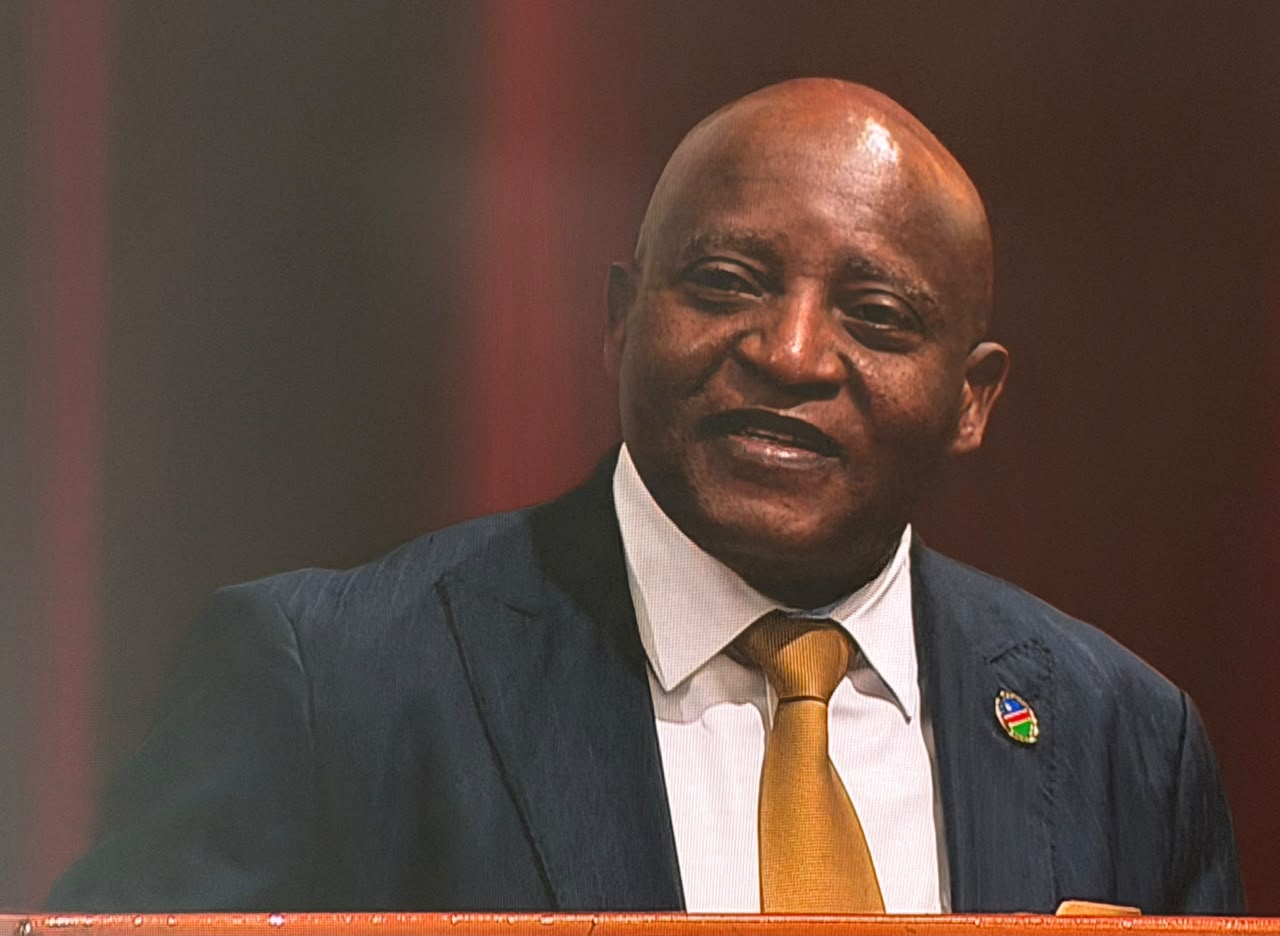







Hillary Imbuwa says he is conscious that his international role is not about favouring Namibia or any individual federation.
Imbuwa has been appointed as an International Federation of Volleyball (FIVB) sport management and administration expert.
“As someone who is passionate about volleyball and sport governance in general, I see the appointment as an opportunity to give back to the volleyball or sport family that gave me the experience to reach this level,” he says.
“It is about sharing knowledge fairly and helping sport federations strengthen themselves.”
He adds that Namibia and the southern African region will benefit from having an administrator with regional experience participating in international knowledge exchange.
“Where I will have a unique opportunity to bring lessons from other parts of the world back to our region, while also ensuring that the realities and experiences of southern African volleyball are understood internationally.”
Imbuwa says the opportunity is particularly significant because southern Africa’s Zone VI includes Namibia, South Africa, Botswana, Angola, Lesotho, Malawi, Mozambique, Eswatini, Zambia and Zimbabwe.
“The long-term objective should be to develop a stronger network of federations in which administrators learn from one another and share solutions.”
He says one of the biggest lessons is that people are the foundation of any sport organisation.
“You can have facilities, equipment and funding, but if you do not have committed people with the passion, knowledge and systems to manage the sport, sustainability becomes difficult.
“Another lesson I learnt during my tenure with the Namibia Volleyball Federation (NVF) is that development must be strategic, driven by clearly identified gaps and measurable objectives. Grassroots development, competitions, national teams, coaching, administration, marketing and partnerships cannot operate as isolated activities. They have to form part of one ecosystem,” Imbuwa says.
He says patience, consistency, good governance, and a well-aligned strategic plan are fundamental in building the credibility and institutional confidence required to attract and retain strategic sponsors.
He adds that during his tenure as NVF president, those principles enabled the federation to strengthen its institutional positioning and secure a sponsorship of N$1 million from Mobile Telecommunications Limited.
“This experience demonstrates that sustainable sponsorship is not achieved through short-term approaches, but through strategic alignment, sound governance, consistent stakeholder engagement, and the ability to demonstrate measurable value to corporate partners.
“It is a lesson I am willing to share with other sport institutions seeking to professionalise their operations and build sustainable partnerships.
He says federations in general cannot grow in isolation.
“They need the government, institutions like the Namibia National Olympic Committee and Namibia Sports Commission, universities, schools, clubs, sponsors, municipalities, communities, volunteers, athletes, coaches and the international volleyball/sports family.
He says sport federations should not define themselves by what they lack.
“We must identify our strengths, use our resources intelligently and build progressively.
In my view, those same lessons are highly transferable internationally.” Imbuwa says the FIVB Knowledge Transfer Programme (KTP) is important because the development of volleyball is not only about producing talented players, referees and coaches, it is equally about building strong institutions of leadership that can manage, sustain and grow the sport.
He says the programme is designed to identify areas where a national federation, such as the NVF, requires additional capacity and then bring in experienced experts to transfer practical knowledge in areas such as sport management, administration, governance, strategic planning and organisational development.
“FIVB specifically identifies national federation sports management and administration as one of the key areas supported through the KTP.
“Over the years, the NVF has consistently leveraged the FIVB KTP as a strategic capacity-development mechanism, strengthening the technical and institutional competencies of coaches, referees, and sport administrators.”
He says this sustained engagement has contributed to the professionalisation of volleyball governance and technical delivery in Namibia, while supporting the development of a more competent, standardised, and sustainable national volleyball ecosystem.
He says the most important word is “transfer”, adding that the objective should not be for him as an expert to come into a federation and simply do the work.
“The objective is to leave behind knowledge, systems, tools and people who are better equipped to continue the work independently. That is how this programme creates more sustainable federations rather than temporary solutions. In a nutshell the KTP is more on impact than on mere outputs or activities.”
Imbuwa says the most important measure of a successful sport administration intervention is whether it produces measurable and sustainable institutional change. “As an FIVB expert some of the key indicators I could look at for any federation include the existence and implementation of a clear strategic plan, properly defined governance structures, financial accountability, effective reporting systems, compliance with both FIVB and national sport regulations, quality of decision-making, stakeholder engagement, human-resource or technical capacity and the federation’s ability to deliver development programmes consistently.
“From my observation over the years, I believe that there is significant potential in southern Africa. This is demonstrated by the region’s strong sporting culture, a growing interest in both indoor and beach volleyball, talented young players and increasing opportunities for international competitions.”
Imbuwa says there has been positive regional activity, pointing to Namibia hosting the first stop of the 2026 CAVB Zone VI Beach Volleyball Tour in Windhoek earlier this year, with a repeat of the same competition’s fourth leg last week at Swakopmund, with participation from eight countries in the region.
He says for Namibia to become one of Africa’s volleyball powerhouses, they need to think beyond individual tournaments.
“The plan is to have a long-term national volleyball strategy covering schools, clubs, grassroots participation, talent identification, coach development, refereeing, competitions, and sport science at local universities, facilities, national teams at all age levels, beach volleyball and commercial development with consistent government funding.
“Namibian volleyball needs financial support to assist with regular high-quality competitions for the recently established national team under the FIVB national team support. Our athletes cannot improve if they only compete internationally occasionally.”
He says most important is the need to invest in administration.
“A strong national team requires a strong federation behind it. Namibia has already demonstrated that our athletes can compete internationally. The next step is to create a system that produces international-level athletes consistently rather than occasionally.”