




There are moments in a nation’s story that refuse to fade, moments that stand outside the calendar and demand honesty, not ceremony. In Namibia, one such moment carries the name Anna Kakurukaze Mungunda.
On 10 December 1959, 12 peaceful demonstrators in Windhoek’s Old Location were shot dead. More than 50 were injured. And in the middle of that brutality stood a young woman – a domestic worker, a mother – who refused silence. When apartheid police killed her only son, Kaaronda, she ran toward the superintendent’s car, poured petrol over it, and set it alight. She was shot dead on the spot.
Anna Kakurukaze Mungunda’s death was not just an act of mourning, it was an act of defiance. A reminder that when human rights are denied, courage will rise, and that our duty is to answer that courage with accountability.
Her story is not nostalgia. It is instruction.
THE CONTINUITY OF STRUGGLE
Today, when we speak of human rights – police violence, hunger, gender-based violence, corruption, exclusion – we must remember: these struggles did not begin after independence. They are part of a long fight for human rights, dignity and safety.
So, when communities raise their voices or leaders express frustration, the question is not why are they angry? It is: What conditions created that anger?
A society that condemns anger while ignoring injustice is not committed to peace, only to silence.
Sixty-six years after the Old Location uprising, we are still wrestling with the most basic questions:
Who is safe? Who is protected? Who is heard? Who is allowed to dream without fear?
Human rights are supposed to answer these questions. But rights that remain on paper are not rights, they are slogans.
Children who go to school hungry are not experiencing human rights.
Women who fear walking home at night are not experiencing human rights.
Communities without clean water are not experiencing human rights.
Citizens who wait years for justice are not experiencing human rights.
Families burying loved ones after preventable tragedies are not experiencing human rights.
We honour the past not by reciting it, but by ensuring it does not repeat.
THE BRIDGE FROM HISTORY
When we speak of human rights in Namibia today, we cannot pretend these struggles are new.
They come from a long line of Namibians who refused to accept humiliation as destiny. Anna Kakurukaze Mungunda understood, long before the world called it a “right”, that dignity and justice are worth defending with one’s life.
Her courage did not come from ideology. It came from violation. It came from witnessing her son’s humanity stripped away and deciding that silence was no longer acceptable.
Our duty is to continue that struggle – with accountability and moral courage. Human rights must be more than words.
They must be lived in policy, in budgets, in safety, and in opportunity.
To honour Anna Kakurukaze Mungunda is not to romanticise her death. It is to ask why she had to die at all. Her legacy forces us to examine uncomfortable truths:
– Are our police trusted to protect rather than harm?
– Are our courts delivering justice swiftly and fairly?
– Are women safe in their homes and streets?
– Do young people have opportunities, not obstacles?
– Are leaders held accountable when they misuse power?
– Do the vulnerable receive protection instead of promises?
If the answer to any of these questions is no, then our human rights work is unfinished.
THE MEASURE OF A COUNTRY
Anna Kakurukaze Mungunda did not die for symbolism or commemorations. She died because her son’s humanity was violated and she refused to accept it.
Her story asks us:
What and whom, are we willing to defend?
If human rights are to mean anything in Namibia, they must matter most to those with the least power and the least privilege.
A free country is not measured by what it claims. It is measured by what it safeguards.
By who is protected when no one is watching.
By whether the most vulnerable can live without fear.
The true honour for Anna Mungunda is not remembrance, it is responsibility.
And our responsibility is to build a Namibia where no mother ever again has to choose between silence and sacrifice because her rights, and her children’s rights, are fully and fiercely protected.
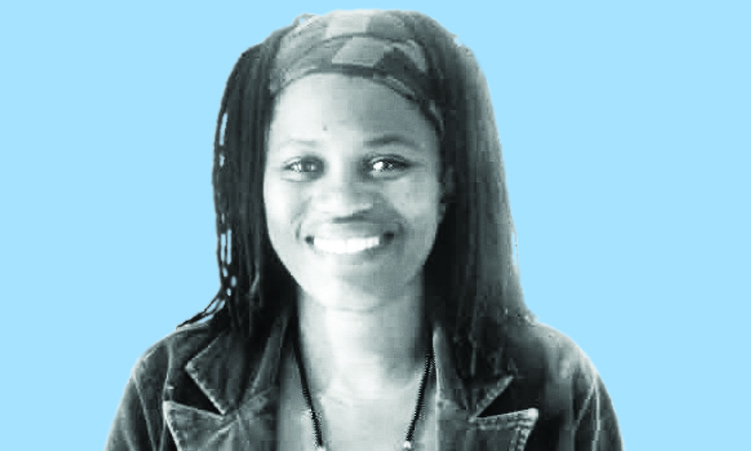
- Joyce Tjizu is an apartheid survivor, mother, grandmother, lay counsellor, poet, and student of applied mathematics and statistics.