As Namibia edges closer to becoming a major oil and gas producer, the national conversation has turned to opportunities, jobs, revenue and global relevance.
But history, both at home and abroad, suggests a more cautious framing: natural resources do not automatically create prosperity. They create choices.
Few countries illustrate this better than Iran.
For more than four decades, Iran has endured sanctions that could cripple other economies.
Yet it has survived, largely by using oil and gas as a strategic lifeline.
This holds powerful lessons for Namibia, lessons which become even clearer when viewed alongside Namibia’s own resource experience: fisheries, diamonds, and uranium.
Iran didn’t treat oil simply as a source of income, it’s treated it as state infrastructure.
Despite sanctions, oil revenue funded government operations, supported domestic industries and enabled the country to build alternative trade and financial systems.
Iran sold oil through nontraditional markets, bypassing global financial restrictions and, when foreign expertise disappeared, developed domestic technical capacity.
Oil became a tool of resilience but it also became a trap.
Heavy dependence on oil exposed Iran to price shocks, economic instability and political concentration of power.
Informal trade networks expanded.
Transparency weakened. Growth outside the energy sector lagged.
Oil helped Iran survive but not necessarily thrive.
NOT STARTING FROM SCRATCH
Unlike many new oil producers, Namibia has decades of experience managing natural resources.
The country’s track record across fish, diamonds and uranium offers a ready-made playbook of both success and of caution.
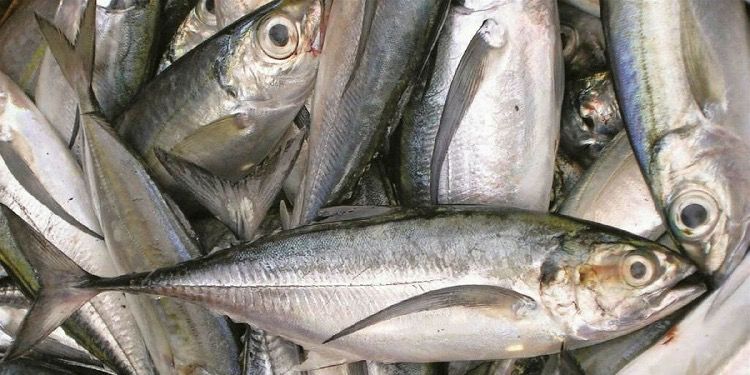
After independence, Namibia reclaimed control over its fishing grounds and built a regulated, quota-based system.
Fish stocks recovered, local processing grew and jobs were created. It remains one of Namibia’s strongest examples of effective resource governance.
Yet even here challenges persist.
Quota controversies, climate pressures, and limited industrial spillover beyond harvesting and processing.
REVENUE CAPTURE
Through partnerships such as Namdeb and Debmarine Namibia, Namibia has maintained strong state participation and secured significant revenue from diamonds.
This is a model of control and value retention.
But diamonds are capital intensive and create relatively few jobs. Much of the value remains concentrated, and the broader economy sees limited transformation.
Namibia is one of the world’s top uranium producers.
The sector attracts investment and generates exports, it creates jobs, but most uranium leaves the country in raw form.
Local value addition is minimal to none.
Technological dependence is high.
This is the clearest warning: resource extraction alone does not equal development.
Oil now places Namibia at a crossroads.
From fisheries, the country has learned the importance of strong regulation and sustainability.
From diamonds, it has learned how to capture value through strategic partnerships. From uranium, it has learned what happens when value chains remain shallow.
From Iran, it sees how oil can create resilience but also dependency and risk.
The challenge is to combine the strengths of each model without repeating their weaknesses.
POWER vs PROTECTION
A growing policy debate in Namibia is whether oil and gas oversight should be placed directly under the Presidency. On the surface, this makes sense.
Oil is strategic. It touches national security, foreign policy, and macroeconomic stability.
Centralising it at the highest level could: speed up decision-making; strengthen coordination across ministries; signal seriousness to investors.
This is where the Iranian lesson becomes uncomfortable.
When resource control is highly centralised as seen in Iran, it can also: Concentrate power in a small circle; Reduce institutional checks and balances; Create parallel systems outside normal accountability structures.
In such systems, oversight weakens not because rules disappear, but because they become selectively applied.
Opinion: Placing oil and gas under the Presidency is not inherently wrong, but it is high risk without strong counterweights.
It must be accompanied by visible, enforceable oversight mechanisms.
Otherwise, Namibia risks shifting from a rules-based system to a personality-driven one.
PRIORITIES
Oil wealth does not disappear quietly; it leaks through weak systems. Namibia has a narrow window to get this right.
How it can be achieved:
- Full transparency: All petroleum agreements, licensing rounds, and fiscal terms should be publicly accessible.
This reduces speculation, builds trust, and limits elite capture.
- Independent regulatory authority: Licensing, environmental approvals, and compliance should sit with technically competent bodies not political offices protected from interference.
- Parliamentary oversight with teeth: Parliament must do more than receive reports.
It must: review contracts; summon officials; audit revenue flows and report to the public.
- Sovereign wealth fund discipline: Revenue management mechanisms must have: clear deposit, withdrawal and usage rules; independent audits; public reporting.
- Civil society and media access: Transparency is not only institutional, but also societal.
Journalists, researchers and citizens must have access to information to hold power accountable.
WARNING SIGNS
History, globally and in Africa, shows the warning signs: confidential contracts justified as “commercially sensitive”; political interference in licensing decisions; state-owned entities operating without public scrutiny; revenue flows that are aggregated, delayed or obscured; oversight institutions that exist on paper but lack independence.
In such environments, oil wealth does not vanish, it becomes invisible to the public but visible in inequality.
Oil and gas should not become the economy; it should finance the economy.
Transparency frameworks must precede production.
Move beyond crude exports into services, skills, and infrastructure.
Maintain open, balanced international partnerships.
Use petroleum revenues to build a post-oil economy.
FINAL WORD
Natural resources do not determine a country’s destiny.
Policy, institutions and leadership do.
Namibia’s experience with fish, diamonds and uranium shows that governance matters.
Iran’s experience shows that oil can sustain a country under pressure but also easily distort it.
Now comes the real test: The decision is not just about where oil sits in government, whether in a ministry or the Presidency.
The decision is whether Namibia will build a system where power is exercised with oversight, or one where power replaces oversight.
Because in the end, oil does not change a country. It reveals it.
- Petrus Nehale is a professional electrical engineer. He writes in his personal capacity. He can be reached at petrusnehale@gmail.com