





THE GOVERNMENT owes the Namibia Institute of Pathology (NIP) around N$710 million, a debt that has crippled the operations of the national agency that carries out critical disease examinations and blood tests for public health centres across the country.
Documents reviewed by over the weekend show that the situation at the state-owned entity is so bad that the institution fears that people are dying because of a lack of money to carry out critical blood tests.
NIP is a government agency which handles all public health sector pathology testing and disease monitoring services. Its laboratories provide information for healthcare professionals to treat and medicate on patients.
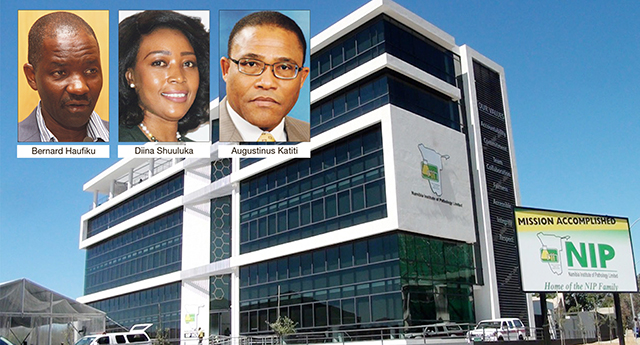
NIP chief executive Augustinus Katiti wrote several letters, including to Prime Minister Saara Kuugongelwa-Amadhila, in February this year, complaining about the lack of payments.
Health minister Bernard Haufiku told yesterday he was aware of the non-payment matter.
“I can only assure the public that no patient will die as a result of the outstanding payment to NIP,” he said.
Haufiku added that while payments were due to the NIP, “our view, backed by facts, is that the NIP has been overcharging the ministry, and unreasonably so”.
He said the issue of the NIP’s pricing was raised last year, especially on HIV testing for treatment monitoring.
The ministry found that the NIP charged the government three times what Lancet Laboratory (a state-owned lab in South Africa) was charging for the same service.
“Even if you factor in volumes of patients and the fact that South Africa manufactures test kits, it still doesn’t tally,” Haufiku stated.
The minister said the NIP received money through the United States President’s Emergency Plan for AIDS Relief (Pepfar) and the Centres for Disease Control (CDC) and Prevention to drop their charges for HIV testing and monitoring.
“They did not drop the price, until the health ministry, through their board and the CDC, demanded that they do it (40% reductions),” the minister continued.
According to Haufiku, the NIP was given equipment by the Japanese embassy in Namibia that would bring prices down on HIV testing, “but again, they have not done that”.
“The NIP gets 95% of its revenue from the state through payments by the health ministry. I expect them to be sensitive with taxpayers’ money,” he said, adding that these issues had caused the delay of payments to the NIP.
“There is some amount that is due to the NIP that the ministry has not honoured due to cash flow problems, but the vast amount cited by the NIP is because the NIP has been overcharging the ministry,” he stressed.
While Haufiku is optimistic about finding a solution, Katiti told NIP chairperson Diina Shuuluka on 13 June 2018 of the financial problems because of the non-payment of the NIP’s dues by the health ministry.
He said the health ministry owed the NIP around N$710 million as of 31 May 2018.
A person familiar with the matter said the amount has risen to N$710 million since 2016. Another official said the government paid the NIP over N$100 million in April this year, and that there were talks for another N$26 million payment soon.
According to Katiti, the NIP was unable to pay its key suppliers for urgently needed testing chemicals and other laboratory supplies.
“I highlighted the fact that I do not rule out the loss of human lives due to the inability of the NIP to perform urgent and critical tests,” he stated.
Katiti said the “NIP cannot even afford to supply blood culture bottles to the intensive care unit of the Windhoek Central Hospital”.
Furthermore, the board was also aware that several suppliers had stopped supplying the NIP with critical materials to perform mandatory tests.
The board was informed on a number of occasions about the impact this had on patient management, and that it could even lead to loss of life, he added.
“Key vendors are threatening to terminate equipment lease agreements, and to remove their equipment from NIP laboratories due to the inability of the NIP to meet monthly lease obligations,” Katiti said, adding that the quality of tests was being compromised.
The board blames Katiti, who in turn is blaming the board, for the institute’s financial troubles.
“These are the realities, and it is reasonably expected of the board to provide strategic leadership, to engage the shareholder with authority, and to also work with management in order to find lasting solutions in the best interest of the NIP,” he said.
He added that it was difficult to identify the intentions of the board and its conduct when “all of our time, energy and effort ought to be spent in keeping the NIP operational, and in doing so, save lives”.
Katiti declined to comment for this article.