



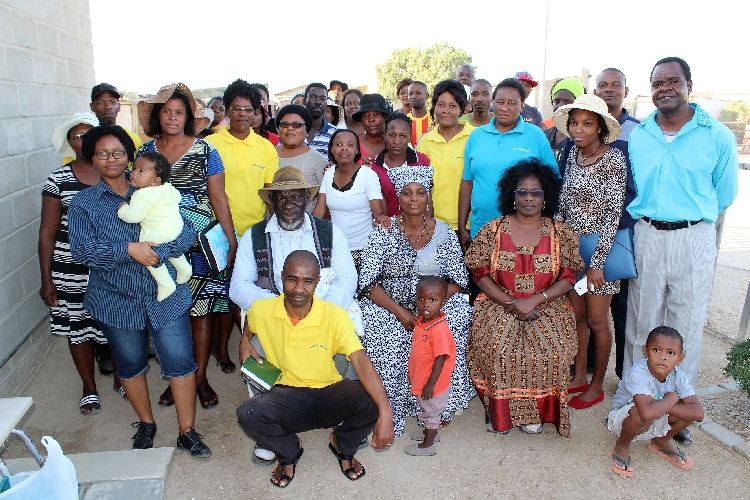
MEMBERS of the Hai//om San community met at Swakopmund last Sunday to address their marginalisation.
Many Hai//om come to the Erongo region for work, especially at Swakopmund and Walvis Bay. Their exact figure could not be verified, but claims suggest there may be about 40 000 tribe members, based mostly at Outjo, Otavi and Grootfontein.
Other marginalised communities include the Ovatwe and Ovashimba, subgroups of the Ovahimba, and the San’s six subgroups, of which Hai//om is one.
Marginalised communities are those who were historically dispossessed of their land and traditional way of life due to the encroachment of European settlers.
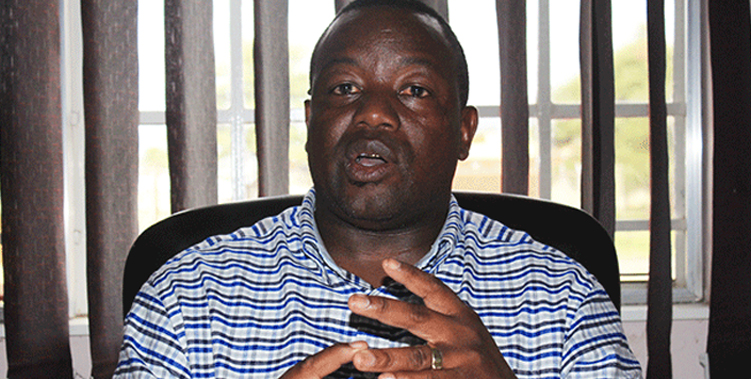
The Hai//om’s adviser in Erongo, Mpingana Agapitus Schmidt (‘Ouma Kuku’), said their latest frustration centres around the alleged dawdling by the Division of Marginalised Communities in the Office of the President in processing applications for study grants.
“We are being sidelined. Other groups seem to be enjoying preference, and even after several follow-ups with the deputy minister of Marginalised Communities (Royal /Ui/o/oo), we are still waiting,” Schmidt said.
Ana Mapiye is a youth advocate, who said it was hard to be encouraged by the idea of national inclusion if there are no Hai//om leaders in the political arena or the private sector.
“I don’t want to be classified as a member of a marginalised community anymore,” she stressed. “[Government] does not seem to take us seriously.”
The Hai//om’s Erongo coordinator, Philip Garab, said members have been meeting on a regular basis to discuss the challenges they face.
“We are still here, and people need to be aware of this. They can’t ignore us, and we are urging the government to tackle our plight. We want to start seeing the fruit of integration for the Hai//om San too; not just the other marginalised groups,” he stated.
Coincidentally, about 30 senior staff members of the Division of Marginalised Communities are at Swakopmund this week for a strategic planning workshop to address the shortcomings and streamline these communities’ integration for the next year.
The improvement of the livelihoods of marginalised communities is viewed as a matter of urgency as the legacy of colonialism and social marginalisation is said to have a negative physical and psychological effect on marginalised people in Namibia.
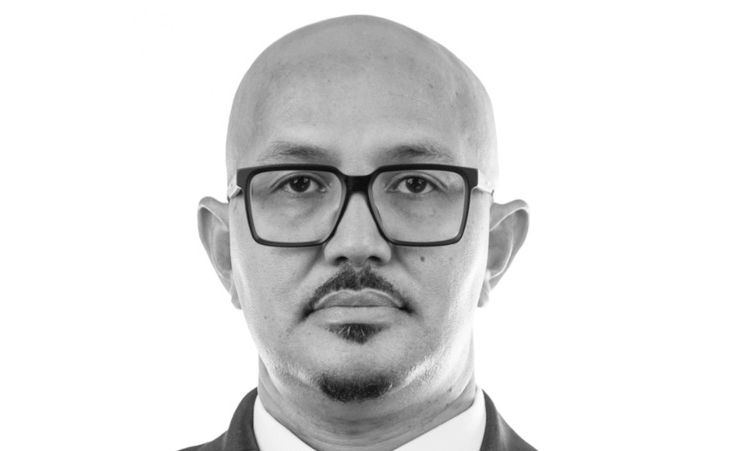
Here, /Ui/o/oo, who delivered the keynote address, warned his staff members that working for the integration of marginalised communities was not a “walk in the park, but a duty to fellow Namibians”.
Asked about the concerns of the Hai//om in Erongo, /Ui/o/oo told The Namibian that he was aware of the applications for grants.
“I was very busy screening the applications and consulting with the community’s chief representatives.
There are people who are not from marginalised communities, but who are manipulating the system to enjoy benefits directed specifically to marginalised communities. We must do all we can to ensure that these do not undermine the process at the expense of the real beneficiaries,” he stated.
He added that in general, the Hai//om are the biggest beneficiaries when it comes to farm resettlements and the division’s nursing programme.
The division has its roots in the Cabinet-directed establishment of the San Development Programme under the Office of the Prime Minister in 2005. This has now expanded to include other groups, and is also now under the Office of the President.