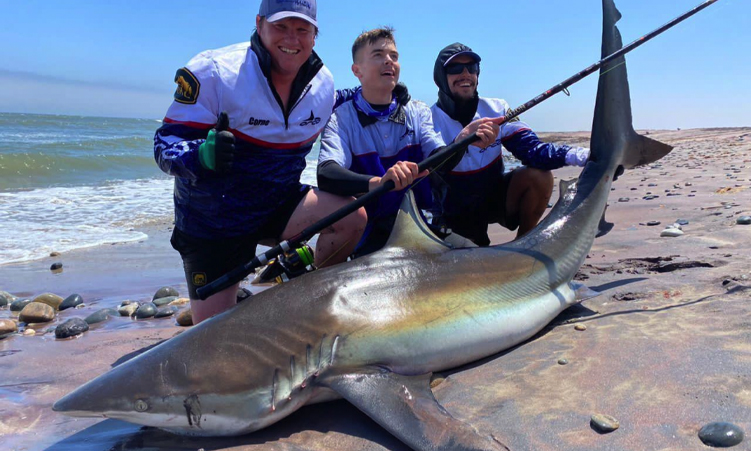
Sharks, rays, skates and chimaeras are unlike most fish. They have skeletons made of cartilage rather than bone, and inhabit oceans worldwide, as well as in some estuaries and even in freshwater environments.
Namibia is home to 87 of these species: 52 sharks, 27 skates and rays, and eight chimaeras.
Crucially, 29 are listed as threatened on the IUCN Red List, meaning one-third of all known species in Namibian waters are at risk.
A major concern is that some could be lost before they are fully understood. Despite their importance to marine ecosystems, research on sharks, rays, skates and chimaeras in Namibia remains limited.
Some species, such as the Great White shark, are top predators, while others are both predators and prey. Each plays a role in maintaining ecosystem balance.
If a species disappears, ocean health can suffer and potentially reduce fish stocks, weakening the ocean’s ability to regulate climate change.
DIVING DEEPER
One of the earliest shark studies in Namibia focused on the Bronze Whaler between 2003 and 2007.
Funded by the Benguela Current Convention (BCC), the research found that this shark species, which is common in Namibian waters, uses Baia dos Tigres in southern Angola as a nursery area where young sharks grow and develop.
A study carried out through the NaRaS (Namibia’s Rays and Sharks) project used underwater cameras and acoustic tags to assess shark diversity in the Namibian Islands Marine Protected Area (Nimpa).
However, the study was small and more research is needed. A project planned to record sharks caught by shore anglers never got off the ground.
Another underwater camera survey is planned for next year. Similar studies are expected every three years to gather more knowledge on shark populations in the area.
The Namibia Nature Foundation (NNF), which is involved in shark research under the Blue Benguela Partnership (BBP), aims to collect basic knowledge on shark populations in the north of Namibia.
The project will use underwater camera surveys and, with possible funding from the Save Our Seas Foundation, aims to tag sharks caught by recreational anglers.
This could allow Bronze Whalers to be fitted with tracking tags once again.
This species is known to migrate between Namibia and Angola but the most recent known information comes from the 2007 study. Up-to-date details are urgently needed.
POORLY UNDERSTOOD
Another issue is that shark bycatch from commercial fishing fleets is believed to be severely underreported.
Legal protection for sharks in Namibia remains limited. The Great White is the main exception while other protective measures limit shore anglers to keeping just one shark per day.
Awareness of sharks and rays, etc, remains low as they are rarely seen and are often misunderstood. Many people only view sharks as dangerous to humans or as competitors that reduce fish catches.
A positive step has been the development of a shark and ray identification guide by the NNF, NaRaS and the Shark Conservation Fund.
While people’s disconnect from these animals contributes to the lack of knowledge, a severe lack of research is also a major factor.
Most studies have focused on sharks, while rays, skates and chimaeras remain poorly understood. Limited resources and the remote, harsh coastline make research difficult.
Although sharks are becoming more important to some fisheries, investment in their research and conservation remains low.
What is often overlooked is the vital role they play in the ecosystem. If these species decline, the balance of the marine environment can be disrupted, potentially leading to lower fish catches in future.
This is why it is urgent to better understand these species and improve their protection.
* Damian Schreiber is a publicist, educator, seal rescuer and junior researcher at Ocean Conservation Namibia. He holds a master’s degree in ecology and society from the University for Peace in Costa Rica.