Local authorities say maintaining graveyards remains a challenge due to limited funding, forcing many councils to rely on public-private partnerships to keep burial sites clean and accessible.
Gibeon Village Council chairperson Ellerine Isaacks says the responsibility to keep graveyards well-maintained rests with the local authority but there is no dedicated funding for the task.
“We mostly have to look into the capital or development budget to see whether there is any funding left in the various vaults which we can allocate to the maintenance of graveyards,” Isaacks says.
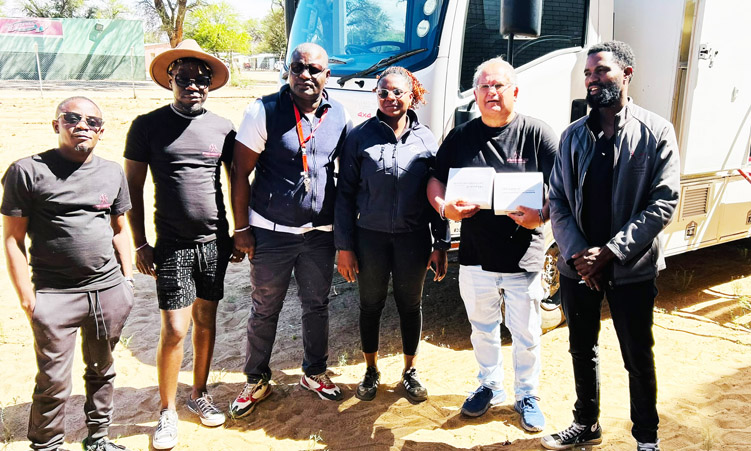
Khaxatsus Investment recently donated N$10 000 to the village council to clean the old graveyard site.
She says the funds will be used as part of the Cash-for-Work programme to recruit about 20 workers from the community, allowing them to earn an income over five days during the clean-up.
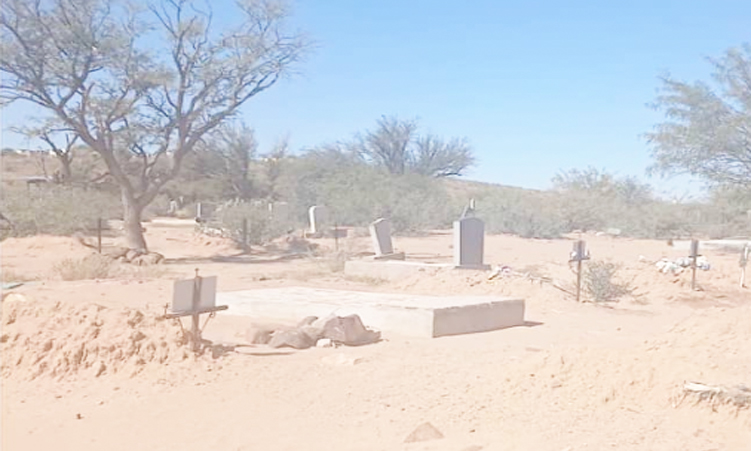
Isaacks says because the project is a public-private partnership, the council will provide excavators and chainsaws. She says the biggest challenges at the grave sites are prosopis trees, which require excavators to remove, as well as overgrown grass and sand heaps left behind from previous burials.
She says the council will also provide a meal for those doing the work.
“We want this campaign to involve all partners. We are also inviting families of the deceased buried there who want to clean around the graves during that same time of the 25 to 31 July to do so.”
Isaacks says the council has resolved to include N$70 000 in next year’s budget for the construction of a fence around the graveyard.
She says the aim is to build a fence, construct toilets and provide water at the graveyard. However, this will be done in phases due to limited funding.
The council requires between N$10 000 and N$30 000 annually for maintenance of the graveyard, depending on whether the work involves routine raking, de-bushing or excavation.
“We also want to provide fencing for the northern grave yard but currently there is an issue with the boundaries. We have requested our property officer to provide us with the GPS coordinates so that the area can also be fenced off. For the southern graveyard, we will use rocks to avoid buying bricks and we have sand. The council will only buy cement, poles and the wire mesh,” she says.
City of Windhoek spokesperson Harold Akwenye says the Ministry of Urban and Rural Development does not provide funding for the maintenance of graveyards because it is the council’s responsibility under the parks division.
Akwenye says cleaning is done on an observation basis and mostly after the rainy season when grass grows.
“Some of the cleaning the city does itself, but when it’s more extensive work that has to be done, we will invite bids from service providers and take the cheapest ones that are known for doing quality work,” he says.