The government has acknowledged that distance, limited resources and delays in accessing emergency medical care can worsen the outcome for people injured in road crashes.
Minister of health and social services Esperance Luvindao says no Namibian’s chances of survival should depend on where a crash occurs or how far the victim is from appropriate medical care.
“We cannot accept a situation in which a Namibian’s chances of survival depend on where an accident occurs or how far that person is from appropriate care,” she says.
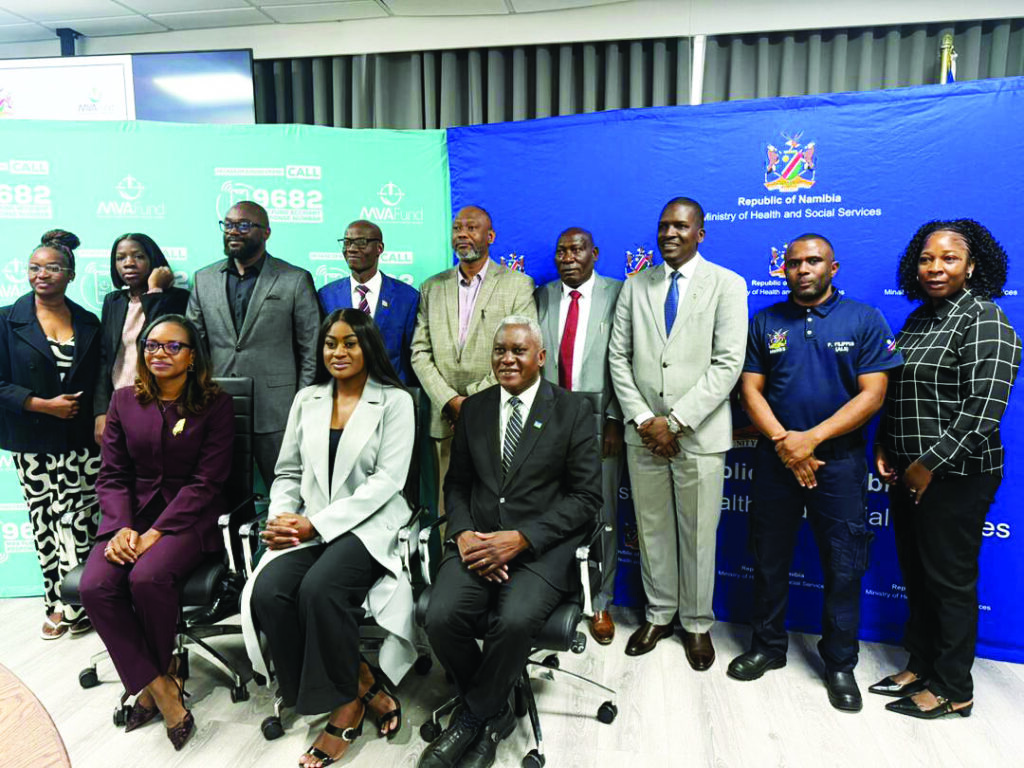
The minister was speaking at the signing of an agreement between the Ministry of Health and Social Services and the Motor Vehicle Accident (MVA) Fund to improve emergency medical response and trauma care.
The agreement will see the two institutions cooperate on ambulance services, trauma care equipment and facility improvements, emergency and trauma training, the transportation of injured people and continuation of treatment.
MVA Fund chief executive Rosalia Martins-Hausiku says the agreement formalises areas in which the two institutions have already been working together, particularly training.
She says the partnership covers “ambulances, trauma care equipment and facility improvement as well as training in emergency and trauma care and the continued treatment of injured people”.
Martins-Hausiku says the agreement is to cement the good work they have been doing through the health ministry.
“It is a partnership because they allow us to create that environment where we come in, we have conversations, and we identify areas in which we can improve together.
“And that’s how you’ve seen the various work, the various investments,” she says.
Luvindao says Namibia’s vast geography, growing population and increasing pressure on health facilities make partnerships necessary to strengthen the country’s emergency response system.
She says the agreement is not the end of the process, with the parties expected to conclude a service-level contract within 30 days detailing how the cooperation will be implemented.
The minister says the partnership would also be subject to annual work plans and oversight by a steering committee, with emphasis on measurable results and accountability.
She warns that resources provided under the partnership must be protected from waste, misuse and unlawful misappropriation.