






South African cattle judge PJ Budler says good genetics alone will not make a cattle farm profitable.
He says farmers must also manage their herds, finances, grazing and markets.
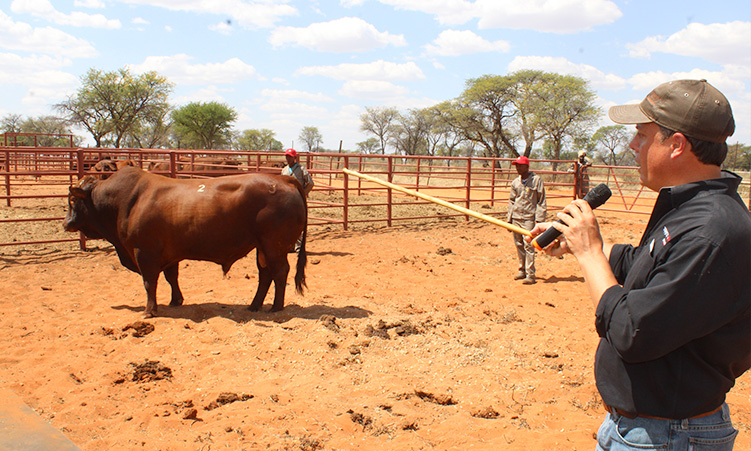
“You can have great genetics managed badly, and it’s going to be an unprofitable venture,” Budler said during Schumacher Bonsmaras Farmers Day at Seeis on Saturday.
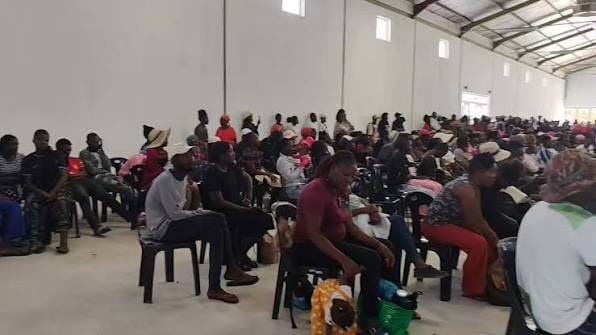
The day was held under the theme ‘Farming Smarter for Tougher Seasons’ and brought together cattle and agricultural experts to discuss livestock production and challenges facing farmers.
Budler said farmers should focus on genetics, herd management, nutrition, animal health, marketing, record-keeping, forage management and human resource management.
Nutrition requires farmers to ensure their cattle receive the right feed throughout the year, while animal health includes vaccinations and other measures to protect livestock from disease, he said.
‘WINKING IN THE DARK’
“If you possess that product but are unable to market it, it is akin to winking at a girl in the dark. She’s not going to know what you just did,” he said.
Budler said farmers should keep records of rainfall, animal performance, sales and other parts of their operations.
“Selling a product without a record diminishes its value,” he said.
He said farmers also need to manage their grazing and maintain good relationships with workers, family members, neighbours and other people in the livestock industry.
Managing all eight areas can help farmers make a profit, Budler said.
Meanwhile, the Livestock and Livestock Products Board of Namibia executive for quality assurance,
Anja Boshoff, says Namibia’s livestock sector depends heavily on exports, because the local market cannot consume everything the country produces.
Namibia consumes about 30% of the meat it produces.
“Our focus is on export and that determines a lot of what we have to implement within the country,” she says, adding that access to these markets depends on Namibia protecting its animal health status and meeting the requirements of importing countries.
Boshoff says Namibia is also considering vaccine banks to provide quick access to vaccines during an outbreak.
Funding remains a challenge as the cost of preventing animal diseases and meeting export requirements increases, she says.
DAS Group chairman Sarel du Toit says breeding animals, reproduction, feed planning, biosecurity and access to markets should be protected because rebuilding them can take years.
He says Namibia cannot compete with large beef-producing countries on the amount of beef it produces.
“We cannot compete with anybody in Europe and the rest of the world in terms of volumes, only quality, and only with systems that we have put in place at this point in time,” he says.
Du Toit says pressure in one export market should not result in Namibia reducing livestock production.
“If one market is under pressure, the answer is not necessary to make the animal industry smaller. We need to find alternative markets. We need to put more work into marketing,” he says.