The diamond sector is showing the first signs of future recovery, as the market for diamonds in the United States splits between lab-grown and natural diamonds.
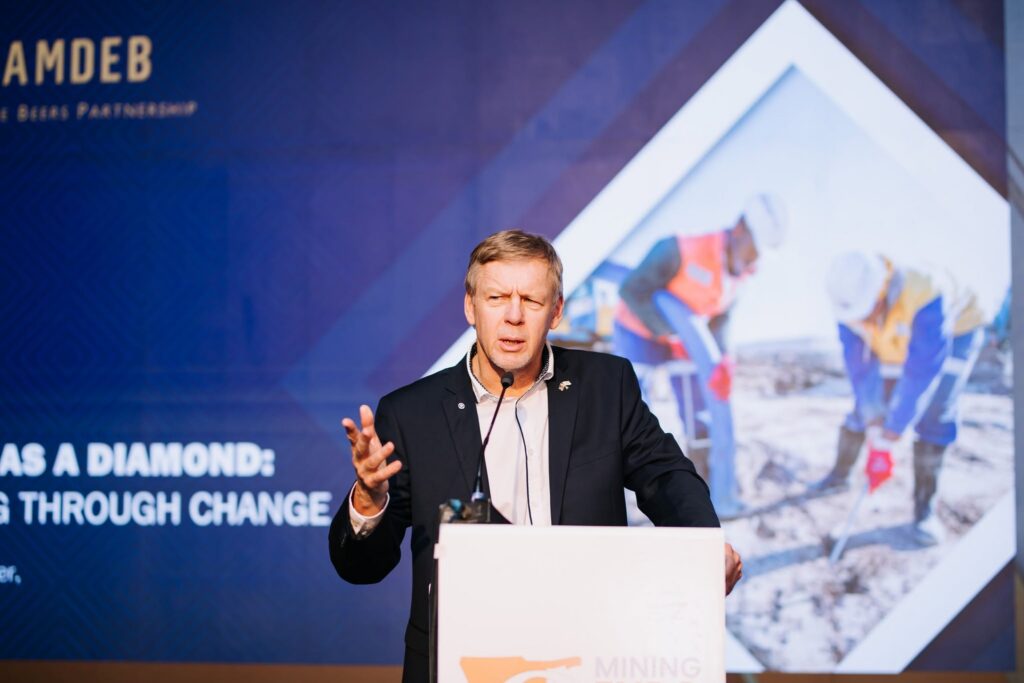
Speaking at the Mining Expo and Conference in Windhoek on Thursday, Namdeb chief executive Riaan Burger said a big marketing campaign should be expected from De Beers later this year to capitalise on this split.
“We’re seeing the first indications that lab-grown [diamonds] have hit their ceiling, particularly in the bigger stones. The top end of the market is turning away from synthetics. If you’re at the upper end of the market, you don’t want the fake thing, you want the real thing,” he said.
The Rapaport Diamond Report, the standard price index for diamonds, shows the price of diamonds in July has stabilised, interrupting a months-long decline.
The price of bigger stones remained steady last month, the report says.
Over 80% of Namdeb’s revenue comes from stones larger than one carat. As demand returns for larger stones, the Namibian diamond sector will be the first to benefit from a renewed luxury demand for natural stones, Burger said.
The demand for diamonds has to be created, he said. Demand for other mining commodities will rise if there is use for them.
De Beers, the 50% owner of Namdeb, launched its desert diamonds campaign late last year, focused on drumming up demand for coloured diamonds. Famous Puerto Rican singer Bad Bunny wore desert diamonds during the American Super Bowl half-time show.
Most diamond sales in the United States happen between Thanksgiving (in November) and Christmas, Burger said.
“Watch this space in the coming season. A big effort is coming from De Beers – specifically in the space in desert diamonds,” he said.
CHANGING SECTOR
The demand for diamonds cratered over the past three years, driven largely by lower prices for lab-grown diamonds.
“For the last three years, the diamond industry has been under the whip. It has been really really tough for us,” Burger said yesterday.
Revenue has been 60% lower than what Namdeb predicted before prices began to fall.
“How does any company survive with 60% less revenue? It wiped out nearly N$13 billion net present value of Namdeb,” he said.
In 2021, the company announced a 20-year business plan that involved expansion and increased revenues. Instead, it has had to cut operations, improve its productivity, and run three rounds of voluntary separation.
In 2024, De Beers parent company Anglo-American announced it wanted to sell its diamond business to refocus on other commodities. Botswana in July announced that Anglo-American had selected the Global Diamond Consortium as preferred bidder, which has not been confirmed.
‘DROPPING THE BALL’
Former Namib Desert Diamonds chief executive Kennedy Hamutenya says the sale of De Beers would redirect the diamond market.
“De Beers has always been the market leader. Everyone in the industry is watching what is happening [with the sale], and everything else will follow from there,” he says.
He believes the industry needs to invest heavily in marketing natural diamonds to increase demand for Namibian diamonds.
“They dropped the ball there,” he says.
Hamutenya says he has picked up from various markets that the interest in natural diamonds as a luxury good may slowly be returning.
“It’s obviously still early days, but I’m cautiously optimistic,” he says.