National Council, 6 July 2026.
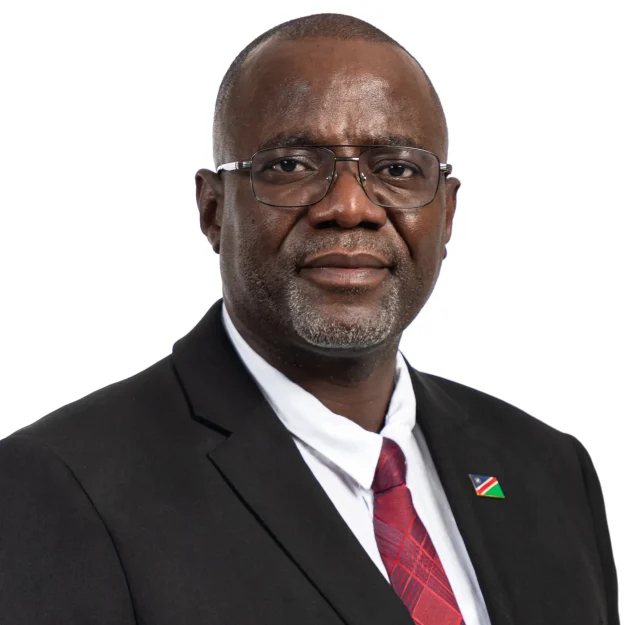
Welcoming remarks by George !Garab at the Standing Committee on Transport, Infrastructure and Housing stakeholder engagement on the motion, “The Urgent Need for Critical Measures to Combat the Rising Road Accidents Crisis in Namibia,”
Programme Director,
Honourable Members of the National Council,
Executive Directors and Representatives of Government Ministries, Offices and Agencies,
Representatives of Regional and Local Authorities,
Representatives of Law Enforcement Agencies,
Representatives of the Road Fund Administration, Roads Authority, Motor Vehicle Accident Fund, National Road Safety Council and other Road Safety Institutions,
Representatives of the Transport Industry, Civil Society Organizations,
Representatives of Higher Education Institutions,
Members of the Media,
Ladies and Gentlemen,
Good morning.
It gives me great pleasure to warmly welcome you to this important stakeholder engagement convened by the Standing Committee on Transport, Infrastructure and Housing of the National Council in support of the Motion entitled “The Urgent Need for Critical Measures to Combat the Rising Road Accidents Crisis in Namibia.”
Allow me, at the outset, to express our sincere gratitude to every institution represented here today. Your willingness to contribute your expertise, experience and perspectives demonstrates a shared commitment to protecting one of Namibia’s most valuable assets—its people.
Today’s engagement is more than a parliamentary consultation. It is a national call to action.
Road safety is not merely a transport issue. It is a public health priority, a development imperative, a governance concern, and a matter of social justice. Every road traffic crash has consequences that extend far beyond the scene of the collision. Families lose loved ones, children lose parents, businesses lose productive employees, communities lose future leaders, and the nation bears enormous economic costs through healthcare expenditure, emergency response, infrastructure damage, productivity losses and long-term disability.
For these reasons, road safety deserves our collective attention at the highest levels of policy and decision-making.
The National Council, through its oversight and legislative mandate, recognises that Parliament has an important responsibility to ensure that national policies, legislation, institutional arrangements and public investments effectively respond to this growing challenge. This Motion therefore provides an opportunity to evaluate whether our current road safety interventions are adequate, whether our institutions are sufficiently coordinated, and whether additional policy and legislative reforms are required.
Ladies and Gentlemen,
Road crashes are not random events, nor are they inevitable. They are preventable.
Globally, best practice has shifted from assigning responsibility solely to individual road users towards adopting the Safe System Approach. This approach recognises that while human beings will inevitably make mistakes, those mistakes should not result in death or life-changing injury.
A Safe System therefore requires roads that are safer by design, vehicles equipped with modern safety technologies, speeds that are appropriate for the road environment, effective legislation and enforcement, responsible road user behaviour, and emergency medical services capable of providing timely and effective post-crash care. These pillars are interdependent and require coordinated action across all sectors.
This systems-based philosophy aligns closely with Namibia’s aspirations to build a transport network that supports sustainable economic growth while protecting the lives and wellbeing of every road user.
Our discussions today are equally aligned with Namibia’s broader development agenda. They contribute to the achievement of Vision 2030, the objectives of the Sixth National Development Plan (NDP6), the National Road Safety Strategy, the African Union Road Safety Action Plan, and the United Nations Decade of Action for Road Safety 2021–2030. They also support the attainment of Sustainable Development Goal 3.6, which seeks to significantly reduce road traffic deaths and injuries, as well as Sustainable Development Goal 11, which promotes safe, inclusive and sustainable transport systems.
Ladies and Gentlemen,
The challenge before us demands evidence-based decision-making.
The recommendations emerging from this engagement should be informed by data, practical experience, international best practice and the realities faced by communities throughout Namibia. We must identify not only the causes of road crashes but also the systemic weaknesses that allow them to continue. Equally, we must identify practical, measurable and sustainable interventions that can deliver lasting improvements in road safety.
We are privileged to have representatives from government institutions, regulatory authorities, law enforcement agencies, the transport industry, academia, civil society, emergency medical services, development partners and affected communities. Each stakeholder brings unique knowledge and experience, and every contribution made today will enrich the Committee’s understanding of this complex issue.
As we deliberate, let us approach our discussions with openness, mutual respect and a shared sense of responsibility. Our objective is not merely to diagnose the problem but to formulate recommendations that are practical, implementable and capable of saving lives.
Ultimately, the success of this Motion will not be measured by the number of meetings held or reports produced. It will be measured by safer roads, fewer crashes, fewer fatalities, fewer serious injuries, and greater confidence among all Namibians that our transport system protects rather than endangers them.
Let this engagement reaffirm our collective resolve that no death or serious injury on our roads should ever be regarded as acceptable. Every life lost is one too many, and every life saved is a meaningful achievement.
On behalf of the Standing Committee on Transport, Infrastructure and Housing, I thank you once again for your participation, your expertise and your commitment to this important national endeavour.
I wish you productive deliberations and every success as we work together to develop practical recommendations that will contribute to a safer, more resilient and more sustainable road transport system for Namibia.
I thank you.