Every year, namibians hear grand announcements. New strategies. Bold plans. Ambitious targets.
From green hydrogen to food security, digital transformation to infrastructure development, our government makes commitments that sound promising.
Press conferences are held. Documents are launched. Photos are taken.
And then? Silence.
Months pass. Years pass. We hear nothing about progress.
No updates on milestones achieved. No explanations for delays. No accountability for abandoned plans.
The next election cycle arrives, and new promises are made while old ones gather dust in filing cabinets.
This is not unique to Namibia. It is a global challenge. But unlike our country, several nations have found a solution: transparency platforms that track government strategy implementation in real-time.
THE TRUST DEFICIT
The consequences of this accountability gap are severe. Citizens grow cynical. Trust in government erodes.
Even when ministries make genuine progress, nobody knows about it because there is no systematic way to share updates.
Civil servants who pour effort into implementation see their work go unrecognised. And when strategies fail, we never learn why or what could be done differently.
Meanwhile, our members of parliament waste time asking basic questions about strategy implementation that should be publicly available.
Journalists struggle to get responses. Civil society organisations resort to expensive court applications just to access information that should be readily shared.
This costs us more than money. It costs us the social contract between the government and the governed.
WORKING EXAMPLES
Consider Kaduna State in Nigeria. In 2015, they launched a simple system called ‘Eyes and Ears’ that lets citizens track government infrastructure projects using their mobile phones.
Citizens can photograph projects in their area, report progress or problems, and send feedback directly to the governor’s office. The system has been so successful that multiple Nigerian states have replicated it.
Or look at Estonia, the small Baltic nation renowned for digital governance.
Their ‘Minuomavalitsus’ platform gives every citizen access to performance data on all municipalities across 16 different public services.
From education to housing to public health, Estonians can see how their local government performs and compare it to others.
The platform even tracks open government metrics like participatory budgeting.
These are not wealthy countries with unlimited resources.
They simply made a choice: transparency over secrecy. Accountability over opacity. Progress tracking over press statements.
A NAMIBIAN SOLUTION
What would this look like in Namibia?
Imagine a simple website where every major government strategy or plan is uploaded with clear information: which ministry owns it, who is responsible, what the timelines are, and what milestones have been set.
Every quarter, the responsible official submits a progress update: green means on track. Amber means facing challenges. Red means serious delays.
Citizens can visit the site and see everything.
How is the Green Hydrogen programme progressing? What milestones has the Digital Transformation Strategy achieved? Where is implementation stuck and why?
More importantly, citizens can ask questions.
“Minister, you promised 500 new classrooms by December. I see the status is red. What happened?” And ministers have 14 days to respond publicly.
This is not about embarrassing the government. It is about empowering the government to demonstrate progress.
It is about replacing defensive crisis management with proactive communication.
It is about building the institutional memory that survives beyond individual officials or political cycles.
THE MEANS EXIST
The technology for this is remarkably simple. In fact, it is simpler than many systems we already have.
The platform needs basic features: document upload, progress tracking, a public dashboard, and a question-answer system.
Any competent local technology firm could build it within three months for less than N$500 000.
The harder part is not technical. It is cultural.
It requires government to embrace transparency, even when it reveals challenges.
It requires officials to commit to regular updates, even when progress is slow.
It requires political leadership to champion accountability, even when it might be politically uncomfortable.
Here is what makes it worthwhile: in every country that has implemented such systems, citizen trust increases.
Government efficiency improves because public scrutiny motivates action.
Even opposition parties benefit because they have factual data for constructive criticism rather than speculation.
STARTING SMALL, THINKING BIG
We do not need to do everything at once. Start with one: the National Development Plan 6.
Upload it. Track it. Let citizens see progress for six months.
If it works, and international evidence suggests it will, expand to all ministries.
Then to regional councils. Then to local authorities.
Within two years, Namibia could become the African leader in government transparency, positioning ourselves for development partner support, international recognition, and most importantly, restored public trust.
This cannot be a government-only initiative.
Civil society must push for it. The media must champion it. Parliament must demand it.
Development partners must support it. And citizens must use it.
We have spent decades building Namibia’s democracy.
We have a free media, active civil society, and engaged citizens. But democracy without accountability is incomplete.
Transparency without teeth is meaningless. And promises without progress tracking are just political theatre.
NOW IS THE TIME
President Netumbo Nandi-Ndaitwah’s administration has an opportunity to set a new standard.
Prime minister Elijah Ngurare can champion this from his office. Minister Emma Theofelus and the Ministry of Information and Communication Technology can provide the technical leadership.
The National Planning Commission under director general Kaire Mbuende can coordinate the reporting.
The tools exist. The international examples prove it works.
The funding is manageable. The benefits are undeniable. All that remains is political will.
From promises to progress. From opacity to openness. From announcements to accountability. The technology exists.
The will must follow. It is time for Namibia to lead.
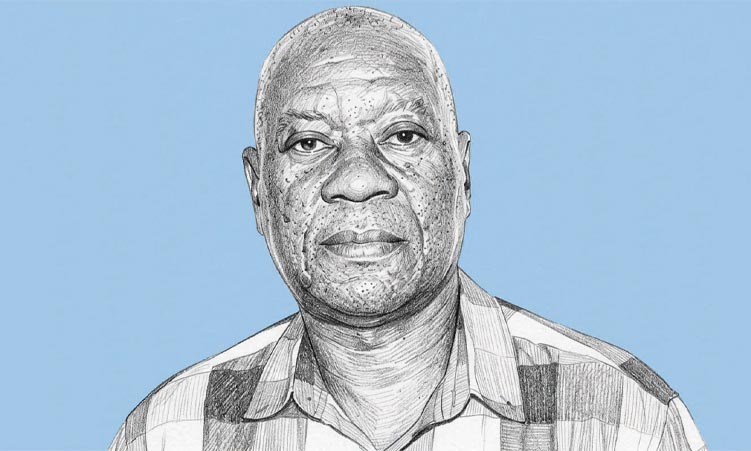
- Job Angula is a leading digital transformation advocate and activist.