






Namibia’s mining industry is transforming rapidly. New investments are flowing in, digital tools are reshaping operations, and policy debates rightly focus on how Namibians can capture more of the value beneath our soil.
During such pivotal moments, workers need a union that is present, principled and pragmatic.
Since my election as general secretary of the Mineworkers’ Union of Namibia (MUN), our focus has been straightforward: defend jobs and dignity today, while shaping future policies so that industrial progress elevates workers, not just balance sheets.
In 2025, Namibia renewed the national conversation about ensuring benefits from our natural resources.
Our union publicly supported the government’s aim to secure a 51% stake in new mining projects, not just as a slogan but as a means to embed skills transfer, local value addition and long-term social investment into project development.
We expressed this clearly because we have witnessed decades of extraction leaving many miners in poverty while profits flow out of the country. Workers cannot be passive spectators – they must be co-authors of policy.
Defending workers also means confronting corporate practices that cloak lay-offs in polite language.
When Sinomine Tsumeb Smelter announced a voluntary separation scheme that could affect up to 650 jobs, we challenged it as a bypass of fair labour procedures. We escalated the issue, engaged policymakers and insisted on lawful, good-faith consultations under the Labour Act – beyond mere human resources box-ticking.
Our stance was vindicated when, on 9 July, the minister of justice and labour relations invoked Section 80 to suspend the scheme.
This was not a public relations victory – it was a lifeline for families who might otherwise have been quietly shown the door.
Industrial change must never be used as a cover for union busting. We have condemned such tactics wherever we find them, including at Swakop Uranium, where we opposed actions that undermine independent worker representation.
This is not a matter of personalities; it’s a clear line in the sand for democratic industrial relations. A modern, globally competitive mining sector cannot succeed without a strong, independent union at the table.
Our work is national but also deeply local.
In the Erongo region – my home region – we built momentum through consistent, structured social dialogue. From convening the Western Regional Roundtable to day-to-day shopfloor engagement, we have demonstrated that rigorous, honest dialogue yields tangible results.
This approach underpins wage agreements like the multi-year deal at Rössing Uranium, which secured increases of 7% in 2024, followed by 6% in 2025 and 2026, with provisions applicable to all bargaining unit employees, including L-band staff.
In a cost-of-living squeeze, predictable wage growth matters.
Workers’ rights extend beyond pay. They encompass equality, safety and non-discrimination.
That’s why we welcomed the Employment Equity Commission’s summons of 13 employers to appear before a review panel on 13 and 14 August for non-compliance with the Affirmative Action Act. Enforcement is not anti-business; it is the basic minimum to ensure a fair labour market.
When the system’s authority is demonstrated, responsible employers gain confidence, and workers trust the law.
A forward-looking union must also invest beyond the workplace.
Through initiatives like the Namibia Miners Investment Trust EduFund, we have awarded grants to students from mining families.
This is how we translate current bargaining power into future human capital – preparing the children of mineworkers for opportunities in the green minerals economy, from processing labs to control rooms.
Our message remains clear: the union fights for your paycheque and your children’s prospects.
Industry modernisation – including automation, remote operations and artificial intelligence-assisted maintenance – will alter task profiles, shift rosters and demand new skills.
Our role isn’t to romanticise the past but to negotiate a fair and just transition.
This involves five practical commitments:
- No technological change without consultation. All new systems must undergo risk assessments, retraining pathways and absorption plans – avoiding silent job losses disguised as ‘efficiency’. Our stance in the Sinomine case embodies this principle.
- Multi-year wage frameworks to protect purchasing power. Indexation floors and productivity-sharing mechanisms, like those at Rössing, should set the standard.
- Skills development commitments. Every capital project must include funded upskilling tied to local employment targets, aligned with national efforts to boost domestic participation in new mining ventures.
- Zero tolerance for union interference. Workers must be free to negotiate without management choosing their representatives. We will continue to litigate and advocate where necessary.
- Enforcement of equity policies with clear consequences. Excluding workers from the sector invites instability; enforcing the Affirmative Action Act strengthens social licence to operate.
Finally, leadership renewal is a critical test for any organisation. After recent leadership changes, many predicted the MUN would fracture. Instead, our shop stewards, branch leaders and regional structures continued organising, negotiating and winning.
We took firm public positions when it mattered, defended our members privately when necessary and maintained our focus on the future: responsible national participation in new mining ventures, decent work in modernised operations and tangible opportunities for workers and their families.
The union did not falter; it matured. Industrial advancement is inevitable.
The real question is: whose progress will it be?
By maintaining a clear policy voice, disciplined workplace representation and investments in our people, MUN is ensuring that the next chapter of Namibian mining is not only more productive but more just.
This is the work we do. This is our mandate. And this is how mineworkers will claim a fair share of the future they help build each day.
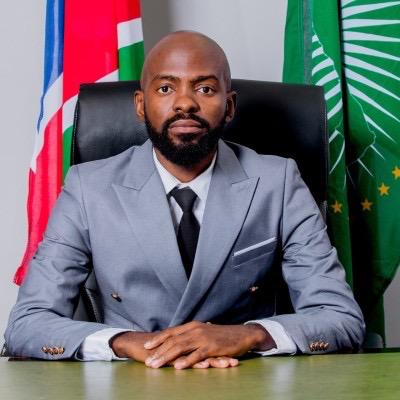
– George Ampweya is the general secretary of the Mineworkers’ Union of Namibia.