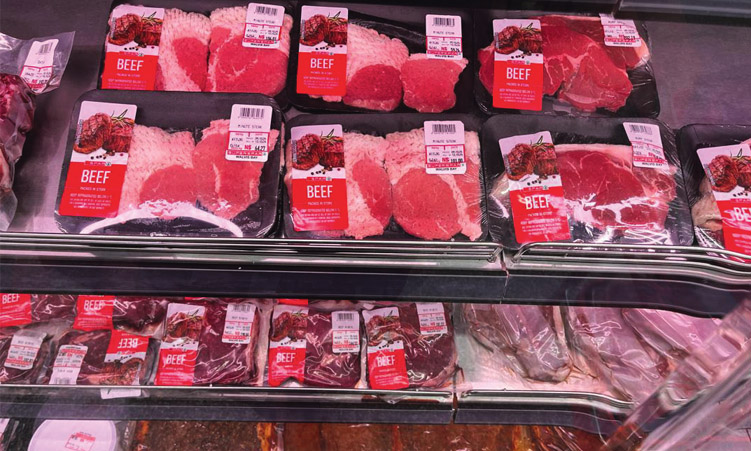
Meat prices are rising at some butcheries, while restaurants are increasing prices for meat dishes as the main ingredient due to the ongoing foot-and-mouth disease (FMD) restrictions.
Namibia confirmed an FMD outbreak last month, which has led to restrictions in slaughtering and livestock sales.
Benguella Butchery CC owner Charlene Hartung says meat supplies have become scarce, with the small quantities available on the market selling at high prices.
Hartung, who operates the butchery at Swakopmund, says she has seen meat trimmings selling for between N$105 and N$140 per kilogramme.
Butcheries use these trimmings to make mince and sausages.
“So if the buying price for trimming is N$105 or N$140 per kilogramme excluding VAT, can you imagine what the selling price is going to end up being? Yeah. So it is really bad,” Hartung says.
She says the high buying prices make it difficult for butcheries to keep their products affordable.
At Otjiwarongo, Franna’s Butchery owner Marissa Swart says the meat shortage has forced her business to increase prices.
Swart says the butchery normally uses cheaper cuts, including ribs and shoulder meat, to make beef mince.
However, shortages have forced her to use more expensive cuts from the legs of cattle.
“We should have lifted our prices because, you know, when you make beef mince, you do it from the rib, from the beef or from the shoulder, and now my meat is almost nothing. Now I must use the legs, and the legs are more expensive,” she says.
Swart says customers are unhappy with the price increases, but the business has little choice.
“Obviously our prices had to increase. The clients weren’t happy, but we didn’t have any other choice,” she says.
She says declining meat supplies have also made it difficult to keep the business running.
LLL Farms Otavi owner Lesley Losper says his biggest challenge is not the price of meat but the inability to buy stock.
Losper says he normally buys livestock at auctions or directly from farmers before processing and selling the meat.
However, the FMD restrictions have prevented him from buying livestock through these channels.
He says small butcheries cannot afford to store large quantities of meat and often depend on regular purchases to keep operating.
“There is no price increase for me. I can’t get any meat. Whether it’s cheap or expensive, there is no meat coming through to me,” Losper says.
Restaurants are also feeling the effects of the restrictions.
Berrylicious Restaurant manager Ndali Samuel says the Windhoek-based restaurant has increased prices on some meat items because of rising costs.
However, Samuel says the restaurant has not increased prices across all dishes containing meat.
“Yeah, we did increase our prices because the suppliers also increased their prices. We just increased on meat like rump steak, sirloin steak and T-bone,” she says.
Samuel says the restaurant is also struggling to obtain some meat products from its suppliers.
Butcher Block Steakhouse manager Khyro Blockftaan says the restaurant has also experienced an increase in meat prices from its suppliers. However, the restaurant has not increased the prices of its meat dishes despite paying more for supplies.
Blockftaan says the business is managing the higher costs while keeping its menu prices unchanged.
“We are sort of receiving the heat of FMD but at the same time we have prepared for times like this,” she says.
Meanwhile, Tom & Ndati CC co-owner Lajah Shilunga says the Ongwediva-based butchery has not experienced meat shortages.
Shilunga says the business still has enough stock and has not increased its prices.
“We haven’t bought stock. So, we haven’t encountered any problems till now,” she says.
She says the butchery will maintain its current prices for now.
FMD has thus far spread to 17 farms in the ||Kharas region, while the Zambezi region has also confirmed cattle that tested positive for FMD on Sunday.