


“I CAN have the interview, provided you do not mention my name or show my picture in your paper.”That was a 32-year-old young professional, *Natangwe (not his real name), who said he has everything going for him, except that he is not getting it up anymore without ‘assistance’. He suffers from low testosterone (LT).
I met Natangwe for brunch at a posh restaurant in Windhoek. I arrived early, but he was 20 minutes late.
He drove in a sleek car and hit the “here I am” alarm as he entered the restaurant, and all eyes turned on him admiringly, especially from the women.
I waved to him, and he came over to my table. His masculine perfume smelled miles away, and to break the ice, I asked him what perfume he was wearing, and he said ‘Issey Miyake’s L’eau D’issey’.
Natangwe is well built, and it was evident that he worked out, hence my second shot: “You also look good. Do you work out?”
“Yes, I do. I did since I was 20 years old, and sometimes I think that is how my problem started. Because at first I was very obsessed with working out, and for muscle gain, I took steroids, not knowing they would have a long-lasting effect on me. One of those side-effects are the low testosterone levels I have, but I am on the road to recovery now,” explained Natangwe.
He said low testosterone is not a problem for the 40 or 50 year-plus crowd only as it can strike even those in their early 20s, and spiral out of control fast.
“That is what happened in my case. I have always been active, but when I turned 29, something in me changed and I did not have the energy to do many things, including sex. I could not perform,” he said, looking down.
At this point, I realised it took guts to talk to a stranger about his sex life, and I asked him why he decided to talk about it.
“This is to advise fellow men to get their testosterone levels checked, as by not doing so increases your stress levels, and domestic abuse sometimes starts. If and when I would get an erection, it is about once or twice a week. When I do, I usually come too soon, and because of that, I am disappointed with myself. I thank God that my partner is an educated and understanding woman. We worked past this, and she accompanied me to the doctor to see what was wrong with me,” Natangwe stated.
He said at first he told her that he was manly, and did not go to doctors. “I, however, gave in because I thought I was young and could not go through the rest of my life like this. My wife set up an appointment, and when the doctor first asked me what my problem was, I thought of a lie I could make up. I made small talk about my sex life, and working out. He started asking me questions, and he finally got to the point,” said Natangwe, who was now ready to place an order with the waitress who stood nearby. After dispatching the waitress with his order, he continued: “Some tests were carried out, and I was told that my testosterone levels were super-low.”
According to Dr Emmanuel Johnson, an urological surgeon at the Windhoek Central Hospital and the Lady Pohamba Private Hospital, testosterone is an important hormone in the human body, but decreases each year after age 30. In some men, this decrease can be substantial, he said.
He noted that it is not just older men who are affected by low testosterone as young men, even teens, can also suffer from this problem.
“The effects of low testosterone or testosterone deficiency syndrome have been known since the early 19th century. The causes are either congenital (from birth) or acquired. Acquired causes include medication (anti-androgens, steroids, anti-fungals, etc), infection, injury/damage or removal of testicles (source of testosterone), recreational drugs (cannabis, cocaine, etc), alcohol abuse, obesity, smoking, effects of ageing and chronic illnesses like HIV, diabetes, chronic obstructive lung disease, chronic kidney disease and chronic liver disease,” Johnson said.
SYMPTOMS OF LOW TESTOSTERONE
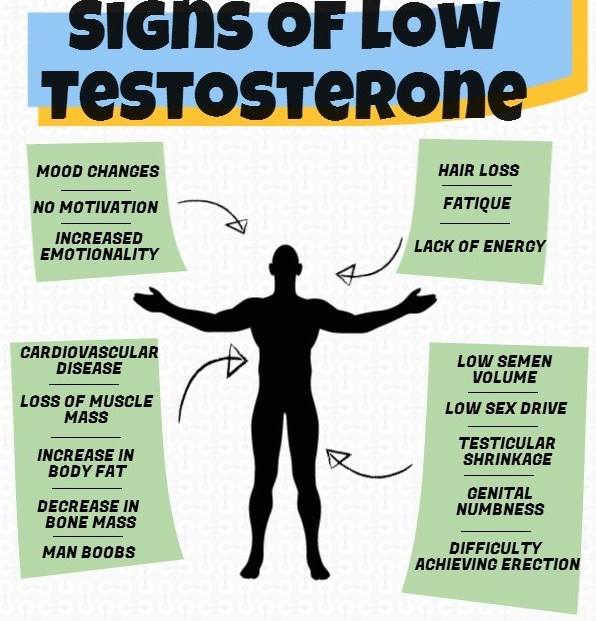
Low levels of testosterone are due to hypogonadism. Normal growth can be jeopardised if hypogonadism occurs during puberty. Problems occur with muscle development, deepening of the voice and lack of body hair. There’s also the risk of undeveloped genitals, overly long limbs and enlarged breasts.
Later in life, insufficient testosterone can lead to other problems. Symptoms include low energy levels, low muscle mass, infertility and erectile dysfunction. Other symptoms are slow hair growth, loss of bone mass and breast growth.
Fatigue, decreased sex drive and mental fogginess are commonly reported mental and emotional symptoms in men with low testosterone.
CHANGES YOU CAN MAKE
If you are experiencing symptoms of LT, there are lifestyle changes you can make to ease them.
A good first step is increasing activity levels, and maintaining a healthy diet in order to reduce body fat. It can also be helpful to avoid glucocorticoid medications such as prednisone, as well as opioid pain medications.
Johnson further talked about testosterone replacement therapy.
“Testosterone replacement or supplementation is available in various forms. One of the various forms is injections and implants, as testosterone can also be injected directly into the muscles, or implanted as pellets in the soft tissues. Your body slowly absorbs the testosterone into the bloodstream.
“Also, oral testosterone is available. However, some experts believe this can have negative effects on the liver. Using other methods such as skin patches, gels and orally disintegrating tablets or injections bypasses the liver and gets the testosterone into the blood directly.
“The other form is transdermal gel – which reproduces the natural circadian rhythm, but the area applied should be shielded from direct contact with children or female partners,” he continued.
Johnson said the side-effects of these therapies often include a rash, itching or irritation at the site where the testosterone is applied.
“Apart from the side-effects, I have super energy now, the sex is good. I am a whole new me, and I like this new me.”