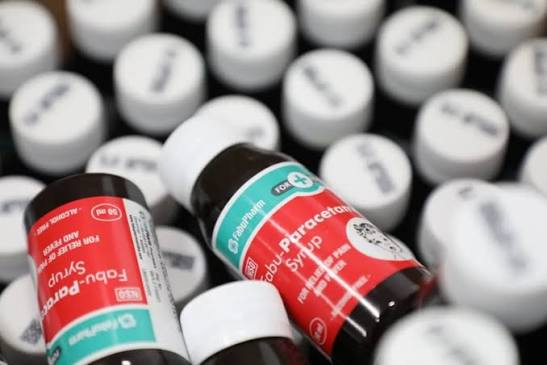
The Namibia Medicines Regulatory Council (NMRC) has cleared Fabupharm Pty Ltd’s paracetamol syrup for use after independent tests confirmed its safety.
The clearance was done in May when president Netumbo Nandi-Ndaitwah visited the pharmaceutical manufacturer at Otjiwarongo, however, notice confirming the product’s safety was only released yesterday by the Ministry of Health and Social Services.
The syrup was recalled last year after a routine inspection at Fabupharm’s oral liquid dosage block identified several shortcomings.
The directive followed pressure from parliamentarian Job Amupanda, who urged the regulator to act after claiming he had evidence its children’s paracetamol syrup was unsafe.
At the time, Fabupharm maintained its products are manufactured according to good manufacturing practice standards and follow guidelines set by the World Health Organisation and local regulations.
During her visit to the company, Nandi-Ndaitwah said medicine shortages in public health facilities were giving her sleepless nights.
Health ministry spokesperson Walters Kamaya yesterday clarified that the president’s visit did not influence the clearance, but it was a decision arrived at through engagement with the ministry and the relevant stakeholders.
In a public notice dated 20 May, former registrar of medicines Fransina Nambahu says independent laboratory tests found that the syrup met the required quality and safety standards.
Nambahu say the assessment was launched after concerns were raised about the quality and safety of the medicine.
According to the regulatory council, samples were collected from several health facilities, including the Central Medical Stores, to ensure a representative assessment of products available on the market.
Multiple batches of the syrup were tested and all met the required quality standards.
“The results indicate that all batches complied with the required quality specifications and contained the correct quantities of active pharmaceutical ingredient (API) and preservative,” Nambahu says.
The regulatory council’s quality surveillance laboratory also tested the syrup for diethylene glycol (DEG) and ethylene glycol (EG), substances linked to medicine contamination incidents in other countries.
“The results were negative, confirming that none of the tested batches contained these harmful substances. No such contaminants were detected in any of the batches analysed,” the regulatory council says.
It says the findings show that the syrup is suitable for its intended medical use based on the parameters assessed.
Nambahu says the regulatory council remains committed to ensuring that medicines available in Namibia meet the required safety standards.
“The NMRC clarifies that efforts are ongoing to further strengthen regulatory and laboratory capacity, and remains committed to safeguarding public health by ensuring that all medicines in circulation meet the required safety standards.”
Fabupharm board member Fanie Badenhorst (Jr) says the recall caused damage the manufacturer’s business.
“But it is in the past, and we move forward,” he says.
Badenhorst says Fabupharm never doubted the quality of its paracetamol syrup and has continued to test every batch manufactured at its facility to ensure compliance with quality standards.
He, however, did not reveal whether the discussion with Nandi-Ndaitwah included its paracetamol being recalled.
Political analyst Ndumba Kamwanyah says the regulatory council’s decision to announce the safety clearance of the paracetamol syrup a month later raises questions about transparency and communication under Nandi-Ndaitwah’s administration.
Kamwanyah says timely communication is important when public health issues are involved.
“Delays create room for speculation and uncertainty,” he says.
He says the timing of the announcement could also create perceptions of political influence, even if the assessment was based on scientific evidence and conducted independently.
“The fact that the clearance happened on the same day as the president’s visit can lead some people, including myself, to question whether there was political influence and interference. In governance, perception matters almost as much as reality,” Kamwanyah says.
He says public institutions should communicate decisions promptly and transparently, particularly on matters affecting public health.
He adds that institutions can reduce public suspicion by sharing decisions and supporting evidence openly and on time.
Medical doctor David Uirab says healthcare professionals would now be comfortable recommending the syrup.
“Once the NMRC clears a product, we are comfortable using it.
We rely on the science and testing conducted by the NMRC to ensure that medicines are safe,” he says.
Independent Patriots for Change shadow deputy minister of health Bonny Susiku yesterday said it’s good news for the nation, especially since such medications are crucial for the country.
“However, I would like to suggest that our ministry in question should do more in this respect by conducting such an assessment annually or else every two years, and I also would like to encourage our citizens to remain vigilant enough on such matters.
A healthy nation is a wealthy nation,” he says.
The clearance follows a period of scrutiny for the manufacturer.