





The Namibia College of Open Learning (Namcol) is working towards transforming into an open university, targeting a formal launch in 2028 or 2029 and promising to expand opportunities for students.
Deputy executive director for higher education, training, research and innovation Lisho Mundia says the ministry still needs to seek Cabinet approval before the transformation can proceed.
“The matter relating to transforming Namcol into a university, it’s premature information to share,” Mundia says.
He says the procedure has not yet started, although the ministry is working towards obtaining the necessary approval.
Mundia says additional information will be shared with relevant authorities once approval is obtained.
Namcol, formed in 1997, is a state-owned institution that provides open and distance learning opportunities to pupils who are unable to attend conventional schools or institutions.
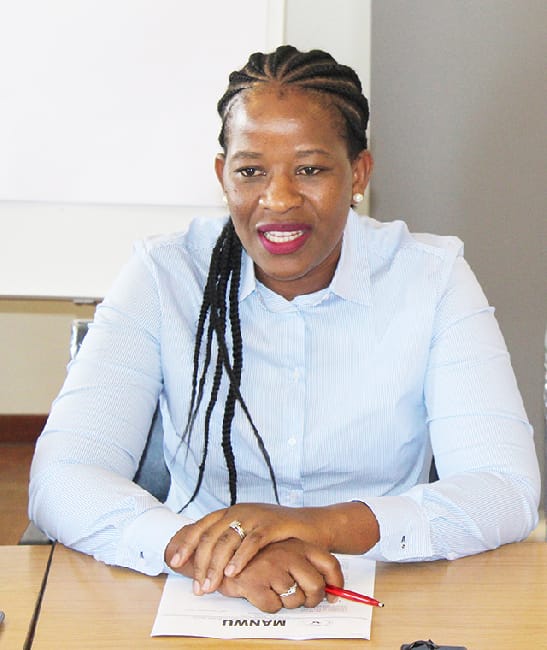
Namcol chief executive Kadhila Ngepathimo says the transformation agenda had been underway for some time following the endorsement of the minister of education, innovation, youth, sport, arts and culture and the establishment of a transformation committee. “A definitive transition date will be confirmed once this planning and legislative work has been completed and considered by the relevant authorities,” he says.
Ngepathimo says with support from the Commonwealth of Learning, a technical expert had started assessing Namcol’s current position, benchmarking it against comparable open universities in the region and beyond, and developing a proposed institutional structure.
He says the transformation would not compromise Namcol’s existing triple mandate of secondary education, technical and vocational education and training and higher education. He says all three areas would be maintained and strengthened, with the institution planning to expand its programme offerings from secondary and vocational qualifications to degrees and postgraduate studies.
He says Namcol would continue providing flexible and technology-enhanced learning to working adults, out-of-school youth and people in rural communities.
“Students already enrolled with Namcol can expect continuity in their studies, with the transformation opening up a broader range of qualifications and progression routes over time,” Ngepathimo says.
Namibia National Students Organisation spokesperson Ndayola Mulongeni has welcomed the proposed transformation, saying it could expand access to higher education for students, particularly those in rural, underserved and remote areas.
“This development will ultimately be a big thing for Namibia and it’s going to make a positive impact in a lot of students’ lives,” Mulongeni says.
She says Namcol’s focus on accessible education and its distance-learning model could make university education more accessible to people who cannot attend traditional institutions.
Mulongeni says the transformation could also improve the social perception of qualifications obtained through Namcol, adding that some people do not take qualifications from Namcol seriously because of the institution’s association with subject upgrading and alternative education.
“The moment it becomes a university, then it also does a lot in terms of social perception of the quality of one’s qualification,” she says.
Mulongeni, however, says the transformation should be properly supported to ensure that qualifications offered by the proposed university are accredited and meet quality standards. She calls for support from the Namibia Qualifications Authority and sufficient funding from the education ministry to sustain the institution.
Mulongeni also says the need for a smooth transition does not disadvantage students who are already enrolled at Namcol.
Former education minister Nahas Angula questions the proposal to transform Namcol into a university, arguing that the institution serves a specific group of pupils.
Angula, who was education minister when Namcol was established in 1997, says the college was created primarily to provide an opportunity for pupils who had completed Grade 10 but failed to obtain the required points to proceed to Grade 11.
According to Angula, such pupils could enrol with Namcol to improve their results and increase their chances of gaining admission to institutions of higher learning.
“The college was established for a specific purpose, targeting a specific group of people,” Angula says. He questions whether the original purpose of Namcol will remain relevant if the institution becomes a university.
“If that purpose is no longer there, then those who want to make it a university perhaps… you can ask them: Are the original objectives not relevant to them anymore?” he says.
Angula also raises concerns about the cost and accessibility of university education, warning that changing Namcol’s mandate could affect pupils who rely on the institution to improve their school results. He says the proposed transformation should, therefore, consider who would be able to afford the costs associated with university education and what would happen to pupils who still need an opportunity to improve their grades before pursuing higher education.
“The real question is, who is going to afford this university when you change the objectives, and what are you going to do with those children who want to improve their grades to go to institutions of higher education?” Angula asks.
He criticises what he describes as Namibia’s strong emphasis on university qualifications, saying obtaining a university diploma does not necessarily guarantee employment.
“But Namibians think that to have a university diploma is the best thing to have. Yes, you can have your university diploma, but you might still roam the streets,” he says.
Member of parliament Willem Amutenya has welcomed the planned transformation but warns that Namcol’s original second-chance education mandate should not be lost.
Amutenya says Namcol has historically provided an important pathway for young people who do not obtain the required results to improve their qualifications through affordable, part-time studies.
He says the need for such opportunities remains relevant, particularly for young people struggling to improve their Grade 11 and Advanced Subsidiary results, while private tutoring remains unaffordable for many families.
“Therefore, we must not allow the university mandate to replace the second-chance education mandate,” Amutenya says.
He says Namcol should continue providing affordable opportunities to improve school results while expanding access to higher education.
“If Namcol can carry both responsibilities, providing accessible pathways into higher education while continuing to offer affordable opportunities for pupils to improve their Grade 11 and Advanced Subsidiary results, then this transformation can have a much broader impact on our youth.”