Namibia cannot keep treating road deaths as an unfortunate part of holiday travel.
The recent long weekend once again showed the human cost of poor driving behaviour and weak discipline on our roads.
The NBC reported that 15 people died on Namibia’s roads over the long weekend ending 4 May, bringing the national road death toll to 170 since the start of the year up to 3 May.
The MVA Fund also reported that from 1 January to 26 April, the country had already recorded 921 crashes, 1 467 injuries, and 143 fatalities.
This is confirmation that road crashes are not isolated events but occur every day, and that they constitute a persistent national crisis that requires immediate and ongoing attention.
Each time a life is sacrificed on the road causes more pain than the accident.
Loved ones die, children lose their parents, business lose their employees, and the country loses citizens who had so much to give.
There’s also the cost factor, which includes hospitalisations, insurance claims, property damage, lost productivity and long-term disability.
ALARMING REALITY
Between January and September of 2025, the MVA Fund reported 4 271 injuries and 412 deaths in crashes, for just the first half of the year.
Namibia also recorded about 423 road traffic fatalities in 2023, a rate of 14 per 100 000 population, according to the World Health Organisation (WHO).
Namibia is thus one of the nations with a serious road safety problem.
The fact that these numbers keep increasing should alarm all citizens: it is an indication of the sustained nature of the crisis.
Roads are supposed to link people to work, school, hospital and markets, but they are becoming locations of tragedy.
There are situations where individuals are in their prime earning years and may die, causing the country to lose skills, income earners and future potential.
COMMON CAUSES
Law enforcement agencies, transport authorities and road safety organisations have repeatedly identified a range of common causes behind many road crashes in Namibia.
Speeding remains one of the leading problems, especially on open highways where some drivers assume conditions are safe enough to exceed posted limits.
Higher speeds reduce reaction time and make collisions far more severe.
Alcohol and drug use also continue to endanger lives as impaired judgement, slower responses, and greater risk-taking often lead to poor driving decisions.
Driver fatigue is another serious concern, particularly during holiday travel when motorists spend long hours on the road with little rest.
Tired drivers lose concentration and, in some cases, fall asleep while driving.
Reckless overtaking at blind corners, hills and unsafe sections of road frequently results in fatal head-on crashes, often caused by impatience and attempts to save a few minutes.
Poor vehicle condition also contributes significantly, with worn tyres, faulty brakes, broken lights, and steering defects increasing the chance of crashes.
This is especially concerning for public transport and heavy goods vehicles, where one mechanical failure can affect many people.
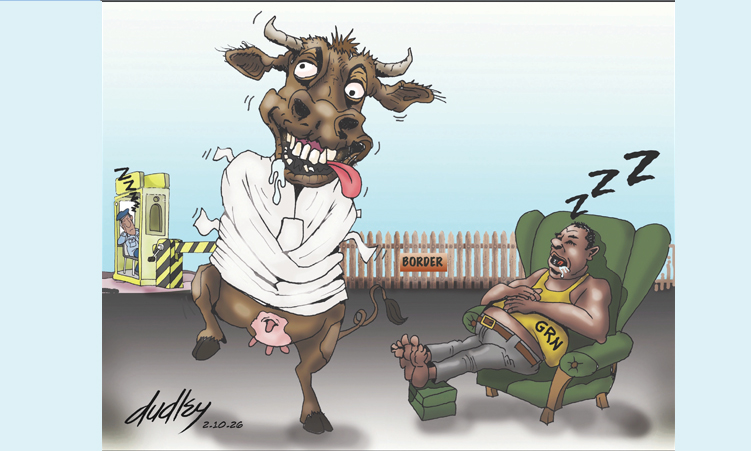
In rural parts of Namibia, livestock and wildlife crossing roads unexpectedly create further danger, particularly at night or when vehicles are travelling at high speed.
WHAT SHOULD WE DO?
The following are some of the things we must do now to ensure safer road travel.
- Stronger and Fairer Law Enforcement
There needs to be equal and open enforcement of traffic regulations.
Enforcement efforts should be boosted on weekends, during holidays and during high-traffic times.
If an offender thinks the bad behaviour will not be punished, it will continue.
- Improve Road Infrastructure
Roads are an important component of road safety, and their safety depends on their design and condition. Consider improving road markings, warning signs, lighting, pedestrian crossings, rumble strips, guardrails, and speed-calming devices in high-risk areas in Namibia.
- Strictly Regulate Public Transport.
Many people ride in passenger cars, such as taxis, minibuses, and long-distance buses.
This means that a single crash can result in several deaths or injuries.
There should be tougher checks on operators for licensing, competency, rest periods, insurance, and vehicle roadworthiness.
- Public Education and Social Responsibility
Road safety must be a way of life.
Promote seatbelt use, and safe driving, speeding and travelling behaviour, and child restraint use campaigns, in schools, churches, media and workplaces.
Responsibility also lies with the family. Avoid riding with intoxicated or reckless drivers.
- Improved Emergency Response
Rapid medical assistance can save many of those involved in car crashes.
Ambulance services, trauma services, rescue equipment, and communication systems need to be enhanced, with particular emphasis on major highways and rural roads.
Quick response can be the difference between life and death.
- Use Data and Technology
Evidence should be the basis of modern road safety management.
The mapping of crash hotspots, monitoring of dangerous driver behaviour and the regular study of trends should occur.
Intelligent traffic monitoring, digital licensing systems, and cameras can help reduce violations and increase enforcement efficiency.
IN CONCLUSION
The factors responsible for road crashes are known in Namibia, and the institutions are in place to respond.
No one should accept a road death as an inevitability or accepted fact of life. One death is one death too many.
The government, drivers, businesses, and communities must all do their part to achieve safer roads.
- Oluibukun Ajayi is an associate professor of geoinformation technology at the Department of Land and Spatial Sciences, Namibia University of Science and Technology (Nust); oajayi@nust.na. The views expressed in this article are his own and not those of Nust.