








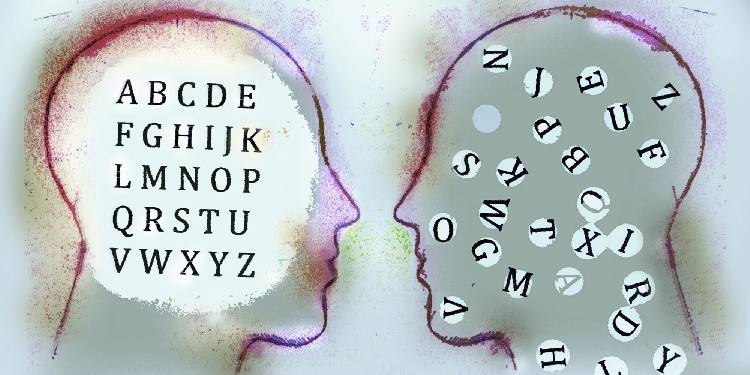
If you are able to read this with ease, dyslexia probably doesn’t affect you, however that doesn’t mean we should turn a blind eye to those affected.
Our societies tend to be built for the comfort of the majority and many times disregard the minorities – the ‘little guys’, the ones you don’t notice walking by you in the street or the quiet ones sitting in the back of the class.
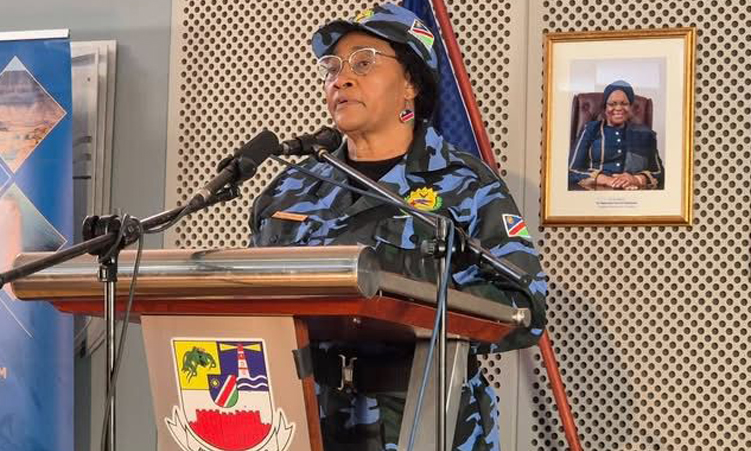
Poet and activist Helga Kuzeeko of Global Poetry wishes for Namibians to be more accommodating towards those living with dyslexia. But what is dyslexia? She explains it as the disability to read and to acknowledge letters – thus making it difficult to give the proper meanings to words. Global Poetry is an organisation which looks at issues which society tends to ignore through poetry, as Kuzeeko feels poetry helps people come to terms with their problems.
Dyslexia is defined as a general term for disorders that involve difficulty in learning to read or interpret words, letters and other symbols, but that do not affect general intelligence.
“I bet you you gain great deal of confidence and much more from reading, depending on how far you read – whether you want to pass your exam, perhaps satisfy your inquisitiveness or just hanker after what may possibly be next in the piece being read,” Kuzeeko outlines the joys some individuals may find in reading, however she also points out that not everybody is offered that chance to indulge in a simple novel. Some also have difficulty preparing for tests and examinations.
“Are you able to read? How much do you know about reading? How far could you possibly read? Who else is able to read? How much do you gain from reading? Do we all read? Who is the eligible reader? Could all these be the possible challenges we are faced with?”
“Not only does reading entail the habitual simplification of a written message, it helps to increase the vocabulary, which in turn helps you to express yourself with ease. Frequent reading enhances communication skills and enables you to market yourself better and increases confidence,” Kuzeeko said. She likens reading to the layers of an onion, with each layer being a different benefit.
Kuzeeko mentions that to enable people with dyslexia to enjoy the benefits of reading, phonetics should be incorporated. Phonetics is the study and classification of sounds and would use symbols instead of letters to represent different sounds. “For instance the word ‘read’ would phonetically be read as
‘/ri:d/’. By doing so, the levels of sounding, by different dialects, will be transformed with ease to the typical required international standard and method thus leading to the sought-after pronunciation and eventually avoiding the distortion.”
Seeing as our entire school careers entail reading books upon books, how is dyslexia dealt with in school?
Deutsche Hohere Privatschule Windhoek (DHPS) gives special care to pupils living with dyslexia. The unit which helps students living with dyslexia includes Ulla Rohrmüller, Cordula Fischer, Karin Hammer, Nicole Moormann, Hannah Reusch, Immeke Schmidt von Koenen and Theone Otto.
“DHPS attaches great importance to the individual support of our pupils. Therefore, we offer special remedial classes for learners with dyslexia/dyscalculia and support our pupils with additional tutoring as well as an extensive support and motoric program in the primary section,” the school said.
“It is important for us to start working with the relevant child on the basis of their current abilities and shortcomings. The solution of small step-by-step problems provides the child with the fundamental experience of having a basic competence in the field of dyslexia which can be used and further developed in the learning process,” DHPS added.
At DHPS, remedial classes are offered from Grade 3 to 8. Teachers try and identify which students might suffer from dyslexia and organise for those ones to be shifted to remedial teaching, however consultation first takes place.
“Should dyslexia or dyscalculia be assumed during ordinary lessons, the class teachers or subject teachers contact the parents and make an appointment with the school psychologist or an external psychologist. Applying a variety of standardised tests, the relevant psychologist is in a position to establish an accurate assessment of the pupil’s weaknesses and learning difficulties. This assessment is a precondition for taking part in remedial lessons and helps the teacher to design specific training. Subsequently, the teachers establish an individual support plan.”
The remedial classes are adapted from the norm to engage with a variety of learning materials to enhance the pupil’s learning ability.
Tuerora Kataahi, a teacher at Concordia College, had this to say about their school accomodating pupils with dyslexia: “We do accomodate all pupils but the downfall is that they are expected to reach and acquire the same syllabus as the other pupils. Therefore, it’s deemed as not conducive for those with learning disabilities. I mean, we don’t have a special syllabus and special learning and teaching aids and resources for them. So at the end, they’re expected to compete with the others, so their disabilities are not taken into consideration.”
While dyslexia may make it difficult to read and learn and while it may take pupils with dyslexia longer to perform certain tasks at school, it definitely does not mean that they are not intelligent. People with dyslexia can perform well, finish school and go on to live very successful lives.
• Tom Cruise
• Whoopi Goldberg
• Cher
• Jay Leno
• Erin Brockovich
• Muhammad Ali
• Bruce Jenner
• Earl ‘Magic’ Johnson
• John Lennon
• Ludgwig van Beethoven