



The internet, like real life, can be a complicated maze to navigate. We meet people, make friends, join groups and live out our virtual days talking to countless friends and followers alike.
But, just as the internet mirrors the positives that come with regular social interactions, our online lives come with drawbacks that we’d probably all be happier without.
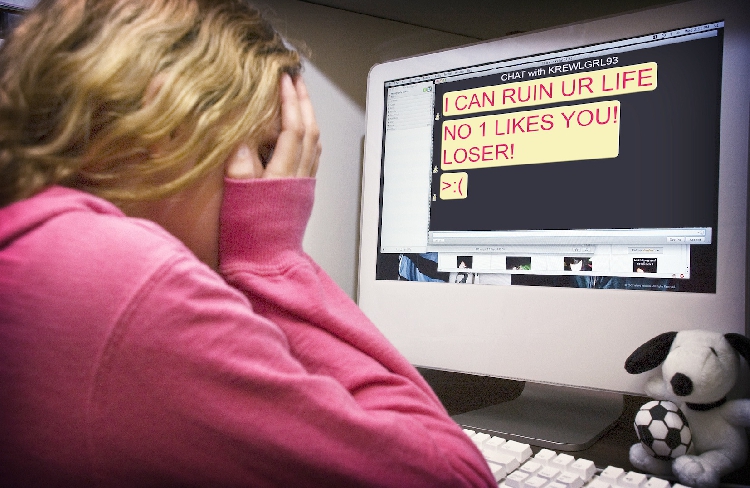
These include cyber-bullies, the people who seem to be on the internet purely to taunt and make others miserable.
These people are called trolls and they harass people in the cyber world in several forms. According to the anti-bullying website
NoBullying.com, some post derogatory information about or embarrassing photos of people and some start and fuel fights, often with hurtful and degrading words.
Victims are also at risk of repeated and hurtful mockery as well as being stalked or made to fear for their safety.
There is damage that can be done to an individual and to regular social discourse, should they encounter negative commentary while they are online.
In a study by University of Wisconsin-Madison, science professor Dominique Brossard found that “uncivil interactions [in comments sections] not only polarised readers, but often changed people’s interpretation of the information itself”.
This means that trolls interrupt what are supposed to be normal social interactions and conversations and shift people’s individual opinions, often towards the negative.
Psychologist Shaun Whittaker says that bullying online is pretty much just the same as bullying in general, and that the effects can be just as bad. “People will start to have a negative image of themselves,” he says. “The effects of bullying can be long term.”
Victims of trolls may become reserved or withdrawn from social interactions and some may suffer bouts of depression.
At whatever age or stage one finds themselves, there is always the possibility of suffering harassment in any form, though for some reason it appears to be worse online.
Social media expert Rob Parker says “anonymity gives people power. On some sites, where you don’t have to use your real name, people are vicious to each other”.
This air of anonymity and feeling of safety from repercussions that avatars and usernames provide give trolls a sense of ‘false courage’, which makes them say or do things that they might not necessarily have done in face-to-face situations.
Also, it is easy to do. The internet is quite accessible to a lot of people. A troll can approach his/her victim at any time while bystanders, the people who just play witness to the harassment, can be numerous and without their help, the problem persists.
Sometimes it’s hard to know whether you’re being trolled. WikiHow, an online help guide, provides a nifty method of judging weather or not you are a victim. First try to identify the intent of certain comments you are receiving. Are they trying to provoke you? Are they being rude and offensive or vulgar?
Next, check out their profile history. Trolls often hide behind profile pictures or names that aren’t their own and are said to be more brave in the things they say if they do not have to be immediately held accountable for their words or actions.
Rob says that a troll is somebody who is just trying to upset you. “Some people just want a reaction. They want to see if they can have you typing angrily in capital letters and swearing people’s mothers”.
Others do it just for the laughs.
If the problem gets to the point where you have to endure being trolled every time you log on, the number one thing you can do to fight these bullies is nothing. Ignoring them is most likely just the thing to get them to go away, as retaliation might just exacerbate the problem.
Rob advises that you do not fuel their attack on you with a reaction and if they continue, block or remove them from your social media life.
Another solution, according to Dr Whittaker, is to talk to somebody about the problem. “Don’t suffer in silence. Talk to somebody close to you or if you need to, a priest or psychologist.”
In 2013, a Newcastle man named John Nimmo was arrested for threatening to ‘find’ a fellow Twitter user amidst his ‘hatred’ for her feminist ideals and women in general.
Earlier this year, police in North West London admitted to having arrested around 150 of these types of perpetrators over the space of three years. They were charged with ‘sending malicious messages’ between November 2010 and November 2013.