





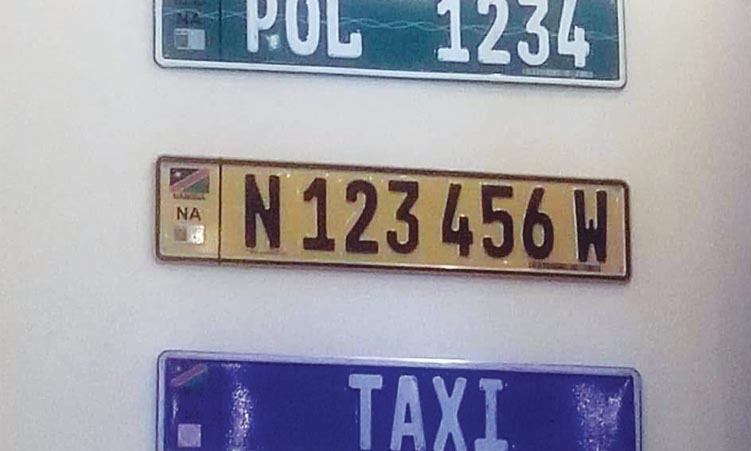
Parliamentary opposition parties and transport-sector stakholders have welcomed the government’s planned introduction of high-security vehicle number plates, but warned that the initiative must not become another financial burden on already struggling public transport operators.
Independent Patriots for Change (IPC) shadow minister of works and transport Nelson Kalangula and Namibia Revolutionary Transport and Manufacturing Union (Naretu) commander-in-chief Petersen Kambinda yesterday said they support efforts to eliminate fake number plates, but questioned the cost, implementation and potential surveillance implications of the new system.
Kalangula questions who would carry the cost of the transition, particularly for taxis, shuttle and bus operators already facing high fuel, permit and maintenance costs.
“Taxpayers and small transport businesses should not subsidise system upgrades resulting from state enforcement failures,” Kalangula says.
The comments follow works and transport minister Veikko Nekundi’s announcement that Namibia will introduce new number plates with enhanced security features, including QR codes and other measures aimed at combating plate cloning, fraud and other vehicle-related crimes.
Kalangula says modernising the registration system could strengthen law enforcement, but warned that the government must first address practical challenges before forcing motorists and public transport operators to replace their plates.
He is concerned about the technological readiness of the proposed system, particularly in rural areas and along major transport corridors where internet connectivity remains unreliable.
Kalangula questions how officers would verify plates when there is no connectivity, warning that a system dependent on real-time cloud access could cause delays and create opportunities for harassment of compliant drivers.
He calls for transparency in the procurement and licensing of number-plate manufacturing, warning against a system that could centralise production among a few suppliers.
“The licensing process for plate manufacturers must be transparent, competitive and accessible to local small- and medium-sized enterprises.
“Let us be clear: We support crushing fake plates. Fake plates kill jobs and put our drivers in cells for crimes they did not commit,” he says.
Kalangula criticises what he describes as a tendency by the government to rush implementation, saying Natis offices are already understaffed and struggling to cope with demand.
He also demands safeguards for personal information, particularly data collected through scanning systems and stored in the cloud.
Nekundi told The Namibian on Friday, that they are on the last leg of consultations with the stakeholders, after which implementation will commence.
“We anticipate the registration of manufacturers to start this year, and subsequently the conversions of number plates early next year,” he says.
He says vehicle owners will be given between 6–12 months to convert their number plates although the exact period is yet to be determined.
An automatic number plate recognition system is already being used in Windhoek, while the government is working to enhance digital verification and enforcement systems, he says.