



BLOUWES – Fifty-three households at Blouwes near Keetmanshoop last week received 21 goats each through the German Special Initiative Programme.
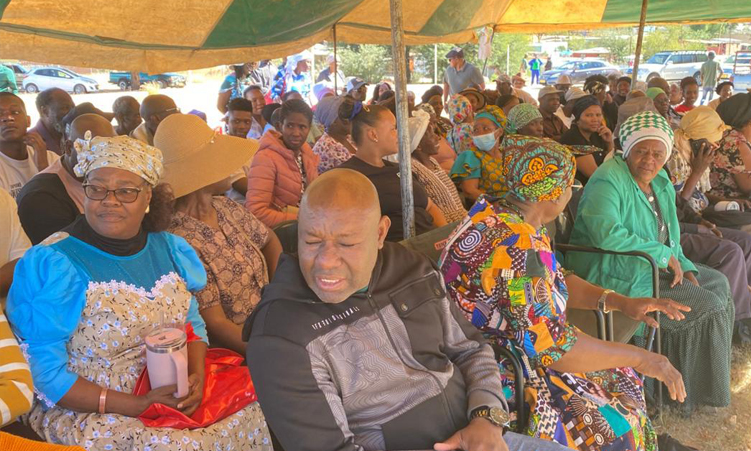
The Blouwes Traditional Authority and community said they will henceforth consider October 23 as a historic day. The senior councillor in the traditional authority, Adam April, told Nampa that this day will be celebrated every year as it is now being considered as a milestone in the eradication of poverty in the community.The households received 20 nanny goats and one billy goat each, with April saying most of the recipients were overjoyed as they previously did not own any goats.’I want to thank the Namibian and German governments for helping people out of poverty. I also want to use the opportunity to urge the beneficiaries to take good care of their animals to avoid falling back into poverty,’ said the senior traditional councillor. The conditions of the programme differ for the Blouwes residents, as Karas Regional Governor Bernardus Swartbooi advised that everyone should receive 20 goats but should not be expected to ‘pay back’ the same number of goats to the programme in three years’ time.The decision to pay back will, nonetheless, apply to other villages such as Bethanie and Berseba, which will be receiving goats next month.At Vaalgras village, beneficiaries received ten goats each, and are expected to pay these back in three years’ time.Officials at the governor’s office said the decision was taken to ensure that beneficiaries are able to farm and have the goats reproduce at a good rate, without the process being interfered with by them having to ‘pay back’ goats.They said the decision was also taken because livestock farming is unpredictable, and it might not always be possible for the residents to pay the goats back as expected.The German Special Initiative Programme contract states that beneficiaries get 20 goats, and must repay the same number in three years. Steering committees and traditional authorities were, however, given the right to reduce this number to suit the needs of communities. In 2005, the German government proposed a special initiative in which they undertook to commit about N$160 million, which would be disbursed over a period of three to five years.The initiative is meant for developmental projects for communities that had ‘historic ties’ with the German colonial government such as the Nama, Damara, Herero and San.It funds small-scale social and economic infrastructure projects which benefit the poor and have an impact on poverty. – Nampa