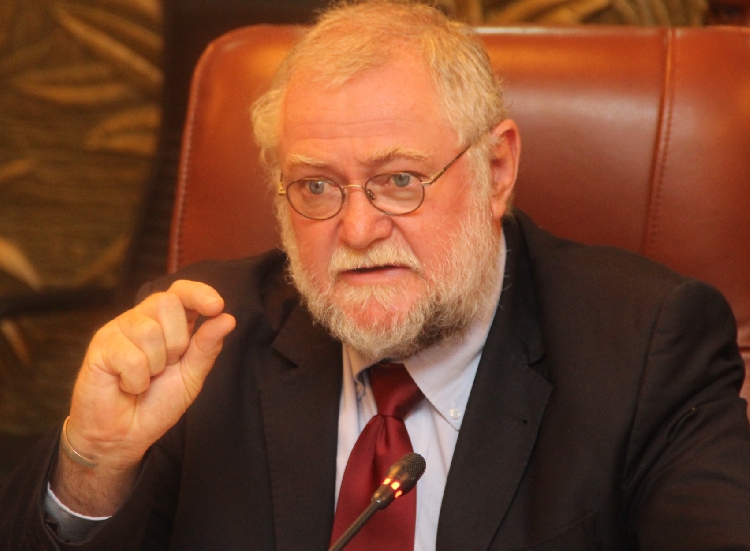




OVERGRAZING is causing the Namibian desert to expand, according to well-known environmentalist Axel Rothauge.
“As you know people are not migrating anymore as they used to many years ago and this means they and their animals remain stationary, constantly grazing the same land, and it does not get a chance to re-generate itself. People settle in one space and this leads to the depletion of rangeland, soil erosion and the fact that the fertile top soil is then washed into the Atlantic Ocean when rain falls,” Rothauge said.
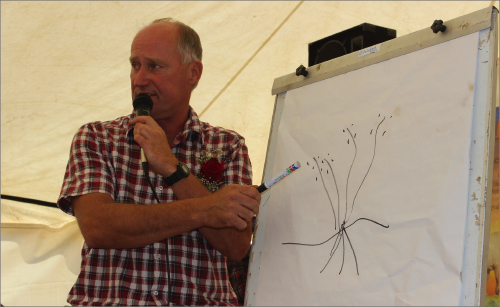
He was speaking to pupils, teachers and representatives of the Outjo municipality about desertification in the Kunene region, which was the worst affected region in Namibia, especially the Opuwo district.
His talk was part of the 2015 FNB Global United Climate Kick FNB Namibia. Rothauge said clear signs of environmental degradation are bush encroachment, believed to affect 80-85% of Namibia’s land area, and soil erosion.
Bush encroachment can reduce the grazing potential of land to one-tenth its original production potential and is a serious threat to livestock farming, he said.
The extent of soil erosion, the most severe form of land degradation, is less well quantified but fertile alluvial and sedimentary soils are threatened by sheet and gully erosion all over Namibia.
Shortly after independence, desertification was already estimated to cost a communal household N$2 500 a year in lost production.
This was 20 years ago. In 2012, the cost of foregone meat production due to bush encroachment was estimated at N$1,4 billion a year.
As long as environmental degradation affects plant composition, it can be reversed through dedicated rehabilitation, but once the soil is washed away, desertification is practically irreversible in human time spans.
Rothauge went on to say that it could take 20 to 25 years to rehabilitate an area that has been ‘abused’ to such an extent that erosion gullies have formed.
“We need to implement rotational grazing, while at the same time training and educating fellow Namibians about desertification. These problems arise because most people are ignorant and uninformed and this can be remedied. Together we need to create a greener future and I firmly believe that if we cause the problem, we can and must also solve the problem. If we have great soil, we have grass which leads to grazing and better-fed cattle and in the end it means that people become richer and not poorer.”
To better quantify and assess soil erosion in northern Kunene, a project funded by the EU and the FNB Foundation was launched in January 2015. It will investigate how to contain serious soil erosion by growing drought-tolerant fodder shrubs in erosion heads, thus stabilising the soil and providing fodder for the livestock of pastoral people.
“Part of the project is to demonstrate techniques to arrest and if possible reverse local desertification on plots in communal areas. These will be used to raise awareness of the problem among people and to train people in soil erosion control measures. Some of these demonstration plots are near Opuwo and can easily be accessed by people interested in containing desertification,” says Rothauge.