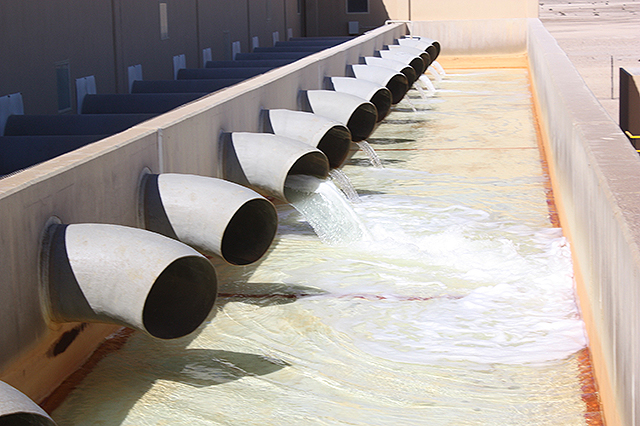
THE government’s plan to construct a desalination plant to provide water to the coastal and central parts of the country could cost more than N$3,5 billion to implement.
This is according to a draft feasibility study report on the proposed project presented at a stakeholder workshop earlier this year.
The estimated N$3,5 billion is, however, almost N$500 million more than the offer of N$3 billion the government turned down about five years ago to buy an existing desalination plant owned by Orano Mining Namibia, previously known as Areva, near Wlotzkasbaken in the Erongo region.
The government has over the years been weighing plans to extract water from the Atlantic Ocean to solve the problem of water scarcity at central and coastal towns, including Windhoek.
It is also exploring the option of partnering with Botswana on the proposed project to provide the drought-stricken neighbouring country with water.
NamWater’s spokesperson, Johannes Shigwedha, says the government was advised by a company conducting a feasibility study on the proposed project not to buy the Areva plant, but to rather develop a new one.
Had the government opted to buy the Areva plant, it could also carry the costs of renovating and upgrading it, consultancy information provided by Shigwedha shows.
Shigwedha says plans are now in motion to develop a government-owned desalination plant.
A feasibility study process, which started in February 2019, is expected to be completed in the next few months before the project is approved by Cabinet.
It was spearheaded by a foreign company called ILF Engineering Consultants, together with local consultants from Lund Consulting Engineers, Shigwedha says.
“The feasibility study investigated how and at what cost to desalinate the seawater at the coast and deliver the same potable water to both the coastal areas and Windhoek,” he says.
Shigwedha says the proposed multibillion-dollar plant would have a production capacity of more than 36,5 million cubic metres of potable water per year.
He says the estimated cost of about N$3,5 billion or US$ 230,5 million for the proposed project includes the production of desalinated water, transmission and power supply.
This translates into about N$35 per cubic metre of water.
Information provided by Shigwedha shows the project should be implemented in phases.
The first phase would cost about N$2,5 billion and would produce about 20 million cubic metres per year, he says.
The overall development cost to meet Windhoek’s water demand is estimated at N$132 per cubic metre.
The project would be implemented using the already existing water infrastructure in the central coastal area.
The plant would also be powered with electricity from the grid, supplemented by solar power.
The consultancy advised that the project should be implemented through a public-private partnership model.
“… but the government will internalise these proposals and make its own decision after consulting all the affected parties,” Shigwedha says.
The spokesperson says the feasibility of supplying desalinated water to Botswana was also looked at during the stakeholder workshop.
However, no cost was provided for this plan.
Minister of agriculture, water and land reform Calle Schlettwein this week said although committees have been set up between Namibia and Botswana, no agreements are in place regarding the funding of the project.
“The discussion with the president of Botswana was very general and it covered a whole lot of issues. The basic agreement was that there are committees set up and they must do their work, but there are no investors identified for the project,” he said.
Schlettwein’s position, however, contradicts comments by Botswana president Mokgweetsi Masisi, claiming he visited Namibia last week to meet an investor for the desalination project.
Masisi wrote on his Twitter account that “they have started talks with an investor who is offering to desalinate water from the Atlantic Ocean. Being a good neighbour and alive to our water challenges, president [Hage] Geingob invited us to come and meet the investor and also share thoughts on the project”.
In an age of information overload, Sunrise is The Namibian’s morning briefing, delivered at 6h00 from Monday to Friday. It offers a curated rundown of the most important stories from the past 24 hours – occasionally with a light, witty touch. It’s an essential way to stay informed. Subscribe and join our newsletter community.

The Namibian uses AI tools to assist with improved quality, accuracy and efficiency, while maintaining editorial oversight and journalistic integrity.
Stay informed with The Namibian – your source for credible journalism. Get in-depth reporting and opinions for
only N$85 a month. Invest in journalism, invest in democracy –
Subscribe Now!