The Ministry of Home Affairs, Immigration, Safety and Security says it is still in the process of deciding what information to include on the chip that will be installed on national electronic identification documents (e-ID).
Electronic identification cards will officially be rolled out in July 2026, with the expectation of making work easier and more convenient for people and service providers by authenticating people’s identities through scanning the card and biometrics in a short time.
“We are still deciding what information to include on the eID’s chip, whether it’s medical, credentials or the drivering licence information of the applicant.
We are still deciding until after the input and consultations are done with the community,” ministry deputy executive director Jackson Wandjiva says.
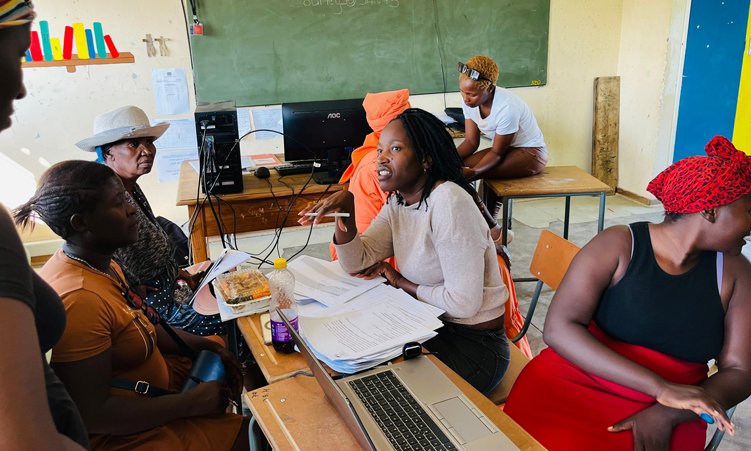
Speaking during a community engagement at Otjimbingwe in the Erongo region on Wednesday, Wandjiva highlighted the safety of eIDs, stating that a third person can only access information with the consent of the ID holder.
“The eID will be in the form of a physical card installed with a chip, while the m-ID will be an application downloaded on a smartphone that will have a national ID without having to carry the ID-card,” he explained.
A mobile ID (m-ID) is a national digital identification functioning as a software-based ID.
It is accessible only via a dedicated smartphone application and provides a secure, digital alternative to the physical identification card.
Digital identification is being implemented to reduce documentation costs and identity theft, while improving services and keeping pace with technological advances.
United Nations Development Programme Namibia Accelerator Lab experimentation head Yrika Maritz says the community feedback at Otjimbingwe, where a pilot awareness campaign was launched this week, has been insightful.
“The community has warmed up to the possibility of eIDs and testing prototypes. This is important and it’s where public policy meets the community,” she says.
Some Otjimbingwe residents have welcomed the digital identification system.
“I was observing how the mobile application is downloaded on the smart mobile phones. I don’t have a smartphone but I understand the process, which seems to be smooth.
The world is advancing with technology,” says Wycliff Pius (23).
Barbara Khoases (36) says it would be ideal to have information on Namibian ID cards that creates profiles in the system, making it easier for personal information to be traced.
Pensioner Fredrick !Kharuxab (83) says it sounds promising. However, he wants to see what it entails.
“I haven’t seen it yet. I will have to see the e-ID first, only then can I comment,” he says.