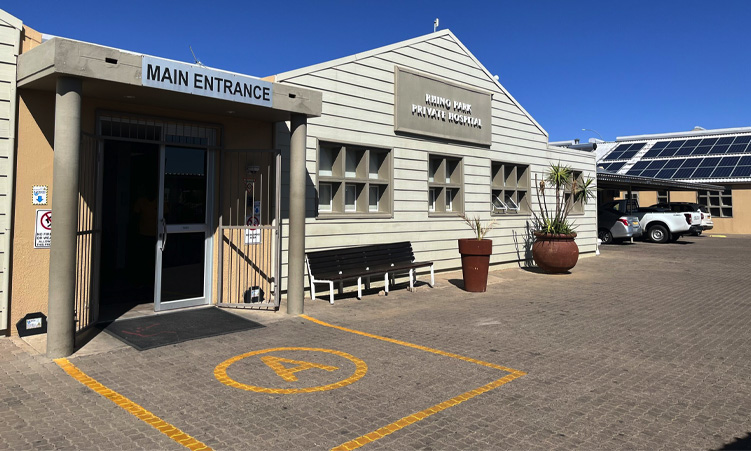
The government wants to pay a private hospital to host surgeries on state patients, despite concerns from medical doctors that the state’s own 20 theatres in Windhoek are underutilised because of a lack of medication.
The arrangement is mapped out in a concept note dated 24 April, drawn up by the health ministry, meant to clear around 9 600 elective surgical backlogs at Katutura Intermediate and Windhoek Central hospitals.
The document, seen by The Namibian, proposes a public-private partnership between the two state hospitals and Rhino Park Private Hospital.
The proposal states that the ministry and Rhino Park would enter a mutually beneficial partnership where state surgeons would use the private hospital’s theatres during off-peak hours, including evenings, weekends and public holidays, to operate on state patients.
Under the arrangement, Rhino Park would provide theatre space, equipment and support staff, while state surgeons would perform operations on public patients.
In the document the ministry explains that Katutura hospital has about 2 000 pending elective surgeries, while Windhoek Central Hospital carries more than 7 600 cases.
At Windhoek Central Hospital, the backlog includes general surgery (1 758), orthopaedics (446), gynaecology (587), urology (1 403), ophthalmology (1 370), ear, nose and throat (561), caesarean sections (1 502), as well as cardiac and vascular cases.
The document sets a target of reducing the combined surgical backlog by 30% within 12 months of implementation.
The concept note describes the root cause of the backlog as a result of systemic challenges, including a growing national disease burden, inadequate health infrastructure, insufficient theatre space and a shortage of skilled theatre staff.
The note further says the lack of modern instruments and consumables, and periodic poor access to essential pharmaceuticals and clinical supplies is also a cause.
The Namibian understands the concept note was authored by deputy executive director Theo-Ben Kandetu.

Kandetu has referred questions to the ministry’s public relations office. Questions had not been responded to by the time of publication.
Rhino Park Private Hospital (RPPH) chief executive Martin van Niekerk did not responded to questions sent to his office by the time of going to print.
Sources say health minister Esperance Luvindao is pushing for the partnership, although internal resistance remains within parts of the public health sector.
The document further proposes that payments would be based on Namibian Association of Medical Aid Funds and Public Service Medical Aid Scheme tariffs, with reduced flat rates under a corporate social responsibility arrangement.
“However, in the spirit of corporate social responsibility, RPPH will offer reduced, standardised flat rates for these specific backlog-clearing lists. This ensures RPPH covers its operational costs and staff overtime, while the ministry benefits from highly subsidised access to premium private facilities,” it states.
The proposal has triggered disagreement within the ministry.
Inside sources say the matter is currently under investigation, with senior hospital management and surgeons questioning its practicality and cost-effectiveness.
“The case is under investigation. The after-hours times proposed is also the time the majority, if not all, state theatres are available. Where is the financial sense of inviting state expenditure to utilise private theatres when state theatres are available?” one source asks.
The source adds that concerns were raised about why private theatres should be used after hours when state facilities are reportedly available but underutilised due to staffing and supply constraints.
However, the Namibia Nurses Union (Nanu) backed the proposed partnership, saying patients have waited years for surgery because of pressure on both hospitals.
Nanu secretary general Junias Shilunga says the two hospitals are struggling to cope with growing patient numbers, and has called on the government to build referral hospitals in all regions and expand healthcare infrastructure.
“These hospitals serve patients from all corners of Namibia, and with the growing population, it is becoming increasingly difficult for them to accommodate all patients timeously. Their infrastructure and theatre capacities were not originally designed to handle the current volume of patients,” says Shilunga.
SENT HOME
Medical doctors at Katutura Intermediate Hospital yesterday announced they have cancelled all operations at the paediatric ward due to a lack of neostigmine, a synthetic cholinesterase inhibitor medication primarily used in anaesthesia.
The doctors, who spoke to The Namibian on condition of anonymity for fear of victimisation, claim that critical shortages continue to affect patient care.
“As we speak we have cancelled all the operations on the list of the paediatric ward because there is no neostigmine, which is one of the essential medications needed to conduct successful operations. We sadly sent them home because there is nothing we can do. You cannot measure success while departments are unable to function normally,” one doctor says.