




As the Constitutional Court prepares to rule on the Phala Phala scandal, the ramifications could redefine President Ramaphosa’s political future and reshape opposition dynamics in South Africa.
This Friday, 8 May, is set to be D-Day (or P-Day) for President Cyril Ramaphosa when the Constitutional Court finally delivers judgment on the Phala Phala scandal.
South Africa’s apex court will rule on an application brought by the EFF and ATM (a small party with two MPs) against Parliament’s blocking of an impeachment inquiry by voting down a Section 89 panel report that found Ramaphosa had a serious case to answer. Section 89 is the Constitution’s impeachment clause, which sets out how a head of state can be removed from office for misconduct. The panel’s report was a first-step inquiry into whether the President had a case to answer.
The background
In June 2022, the former spy boss Arthur Fraser walked into the Rosebank Police Station in Johannesburg and laid a criminal complaint against Ramaphosa.
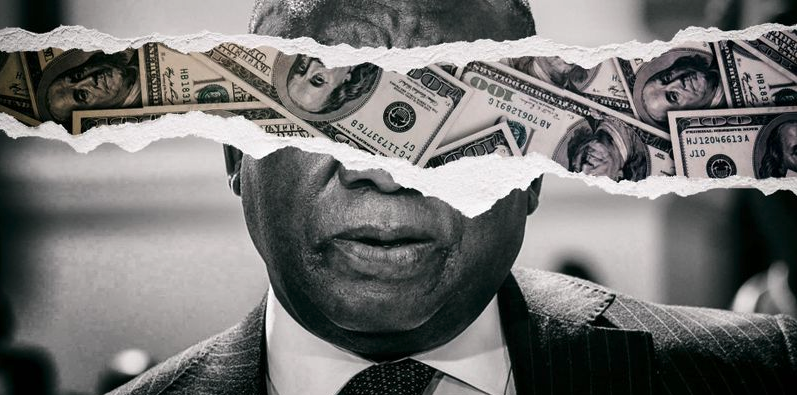
He said the President had concealed the February 2020 theft of almost $4-million in cash from Phala Phala, his farm in Limpopo. It has since emerged that around $580,000 was stolen.
Ramaphosa conceded the theft had occurred, saying he had reported it but did not make it public to avoid panic. The President said the cash had been payment for Ankole cattle sold to a wealthy Sudanese businessman who had never collected them.
The political fallout was huge, and Parliament instituted an inquiry under Section 89.
When the Section 89 panel report was released in June 2022, Ramaphosa came very close to resigning, but was persuaded to stay and fight, a fight the EFF and ATM took all the way to the ConCourt.
The court has taken more than a year to deliver judgment, and after an EFF protest in March, Chief Justice Mandisa Maya pressed the accelerator. The court has not been asked to adjudicate the scandal, but instead will consider whether Parliament acted correctly in throwing out the report after it was voted down, since the ANC still had a majority at the time.
The EFF argued that once a panel finds there is a case to answer, Parliament is obligated to establish a formal parliamentary inquiry to test the facts. Parliamentary lawyers argued that the legislature has the discretion to accept or reject a panel’s recommendations and that the ConCourt cannot intercede in the separation of powers doctrine.
Ramaphosa’s lawyers attempted to petition the ConCourt directly to get the Section 89 panel report thrown out for what they viewed as various evidentiary deficiencies, but the court sent them packing. The panel was chaired by Judge Sandile Ngcobo (who is also a former Chief Justice), Judge Thokozile Masipa and advocate Mahlape Sello, who is now with the Madlanga Commission.
If the court rules against Parliament, it will have to take the report back to a vote or establish an impeachment inquiry. If the court rules against the EFF and ATM, it will mark another institution that has come down on Ramaphosa’s side in the ongoing scandal.
The Public Protector, the SA Reserve Bank (Sarb) and the SA Revenue Service have all cleared the President of wrongdoing. The Public Protector report is being taken under review, while questions have been raised about the Sarb finding.
In addition, ActionSA has used an access to information law to force the police watchdog, the Independent Police Investigative Directorate, to release its Phala Phala report, and then wrote to the Public Protector to request that she reopen the investigation because new evidence had come to light.
The political stakes are high: the ANC no longer has a majority in Parliament after the 2024 national election, which changes the landscape. If the justices rule in favour of the EFF and ATM, EFF leader Julius Malema wins, as he will use the moment to build the party’s profile as a campaigner against corruption and to consolidate opposition to Ramaphosa.
In Gauteng, the EFF is in a governing coalition with the ANC (as it is in many councils), and the EFF leader could use a win to build a new politics in South Africa. Even if the party loses, there is enough fire in the opposition engine on Phala Phala to keep the matter alive at Parliament, where it could hurt an ANC already on the ropes in an election year. DM