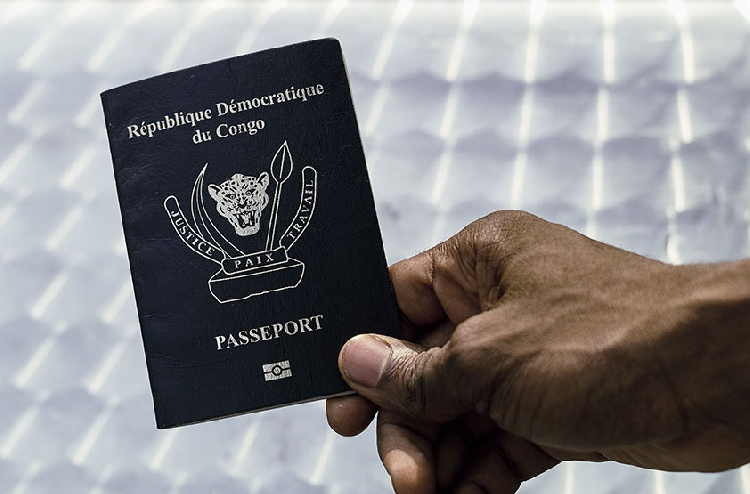
KINSHASA – One day in November 2015, president Joseph Kabila visited his foreign ministry and smiled broadly as a computer took his photograph and fingerprints. He was there to mark the launch of the Democratic Republic of Congo’s new biometric passport, fitted with a chip to store details of his identity.
Kabila and his aides have extolled the benefits of the passports, saying they will allow freer movement across an increasingly security-conscious world. In private, the organisers of the deal have another reason to celebrate: It presents an opportunity to make hundreds of millions of dollars off some of the poorest people on the planet.
The passport is among the most expensive in the world, costing each Congolese applicant US$185. A UK passport costs half as much, and a US passport US$110.
Yet according to documents reviewed by Reuters, the Congolese government will receive just US$65 from each passport. Instead, most of the money will go to Semlex, a firm based in Belgium, that is producing the travel documents, and to a small company in the Gulf.
That Gulf company, called LRPS, receives US$60 for every passport issued, according to documents relating to the deal between the Congo government and Semlex. LRPS is registered in Ras Al Khaimah in the United Arab Emirates (UAE), a jurisdiction where details of ownership are often kept secret.
According to a person with direct knowledge of the passport deal, LRPS is owned by Makie Makolo Wangoi, who is believed to be a close relative of Kabila. This source said that Wangoi travelled to the UAE in June 2015 to complete the transfer of LRPS shares into her name. Documents referring to travel arrangements and the share transfer indicate that Wangoi owns LRPS, though the evidence is not conclusive.
Reuters sent questions about LRPS to Wangoi’s email address but received no reply. The Congolese presidency did not respond to Reuters inquiries about the passport scheme and the ownership of LRPS. Nor did Semlex respond to requests for comment.
After these various enquiries were sent, a senior Congolese security official contacted Reuters and said he would provide responses on behalf of Kabila, Wangoi, and others. He later said all questions should be referred to the CEO of Semlex, Albert Karaziwan, and supplied no further comment.
Karaziwan did not reply to emails or text messages sent to him. His lawyers declined to comment, citing possible legal action over a person involved in the passport deal for allegedly disseminating misleading information. Reuters gave Kabila and others multiple opportunities to say whether any of the information about the passport deal in this article was misleading. They did not respond.
The surprising cost of Congo’s passports is highlighted by a rival proposal from a separate Belgian company called Zetes. In that document, reviewed by Reuters, Zetes outlined plans in 2014 to supply biometric passports to Congo for US$28,50 each. Zetes confirmed making such an offer.
Over time, Congo’s US$185 biometric passports could generate hundreds of millions of dollars for LRPS and Semlex while diverting potential revenue away from an unstable and impoverished state. According to the United Nations, the average per capita income in Congo is just US$680 a year.
The Congolese state needs all the funds it can get and has previously missed out on revenues from big corporations: A 2013 report by the Africa Progress Panel said Congo appeared to have lost out on US$1,3 billion in revenues from five mining deals since 2010 because state companies had “systematically” undervalued assets when selling concessions to investors. Those deals involved complex transactions between big enterprises; in the passport scheme, the state is losing out on revenue that comes directly from ordinary citizens.
Kabila was due to step down in December but elections have been postponed, leaving him in charge as domestic opponents assert his authority has run out. Dozens of people have been killed in violent clashes between protesters and police.
During Kabila’s rule, some of his close associates have acquired considerable wealth through interests in numerous businesses in the country, according to the corruption watchdog Global Witness. In December, the news agency Bloomberg detailed a network of about 70 companies – not including LRPS – that it said were linked to members of Kabila’s family, including Wangoi.
Kabila did not respond to requests for comment on that story either, but officials close to Kabila have denied Congo is losing out in deals that favour officials or businessmen close to the president. They have also defended his family’s involvement in business, saying they are private citizens who have a right to engage in commercial activities.
Over the past 20 years, Semlex has become a leader in providing identity and travel documents for African nations. From its headquarters in an imposing building on Avenue Brugmann in Brussels, it has supplied clients stretching from Guinea-Bissau in Africa’s west to Kenya in the east and Madagascar in the Indian Ocean.
Landing a contract in the DRC – one of the continent’s most populous nations, with some 70 million people – had the potential to be highly rewarding for the firm. Documents seen by Reuters, including correspondence between Semlex and the government and agreements between individuals and firms involved in the deal, paint a picture of how the contract was pulled together.
In an age of information overload, Sunrise is The Namibian’s morning briefing, delivered at 6h00 from Monday to Friday. It offers a curated rundown of the most important stories from the past 24 hours – occasionally with a light, witty touch. It’s an essential way to stay informed. Subscribe and join our newsletter community.

The Namibian uses AI tools to assist with improved quality, accuracy and efficiency, while maintaining editorial oversight and journalistic integrity.
Stay informed with The Namibian – your source for credible journalism. Get in-depth reporting and opinions for
only N$85 a month. Invest in journalism, invest in democracy –
Subscribe Now!