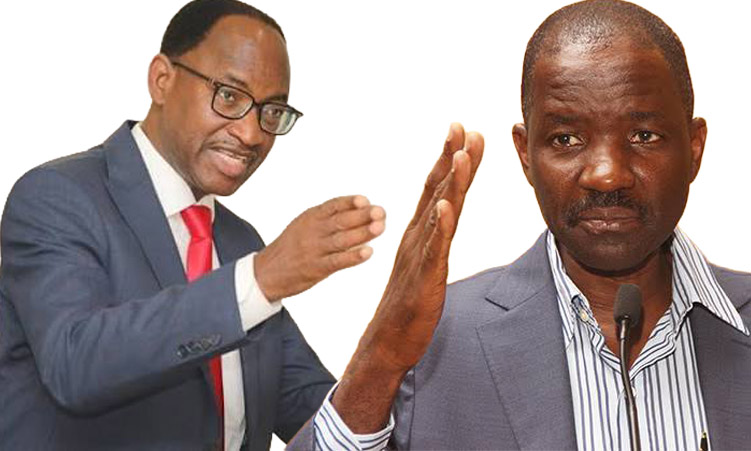
Minister of industries, mines and energy Modestus Amutse officially inaugurated the National Steering Committee on the Informal Economy in Windhoek on Friday morning.
The ceremony was witnessed by Windhoek mayor Sakarias Uunona and Bank of Namibia governor, Ebson Uanguta, Jasmine Papa, a social protection specialist representing the International Labour Organisation as well as other top government officials.
Also present were Dynamic Informal Traders Association secretary general Tangeni Shindondola and Namibia Informal Sector Organisation secretary general Veripi Kandenge.
The massive 35-member steering committee will be chaired by Diina Nashidengo, the director of commerce in the ministry of industries, with David Iigonda of the Ministry of Justice and Labour Relations the deputy chairperson. They will be in office for three years.
The minister said the inauguration is historic because the informal economy plays an essential role by providing jobs, income and living essentials to people in both rural and urban areas.
“The informal sector in one of the largest drivers of employment and livelihood in the country as 58% of the workforce is employed in this sector, of which 59% are in the rural areas,” he said.
Amutse said this underscores the catalytic nature of the economy that has the potential of leveraging the attainment not only of Vision 2030 objectives but also has the the potential of accelerating the attainment of Sustainable Development Goals and objectives set in the country’s sixth National Development Plan.
The minister highlighted the challenges the informal sector faces and urged the steering committee to find solutions for them.
“These include finance, suitable business premises, markets and reliable infrastructure. I urge you as a committee to go out and empower our people,” he said as he issued appointment letters to committee members.
Uanguta assures members working in the informal economy that the time has come for their financial inclusion as new products will soon be introduced in the banking sector.
Kandenge says besides economic hurdles, operators in the informal economy continue to face persistent and worsening violations of their fundamental human rights.
“Most notably their right to dignity, right to livelihood, equality before the law and freedom from arbitrary confiscation and destruction of property,” he says.
– matthew@namibian.com.na