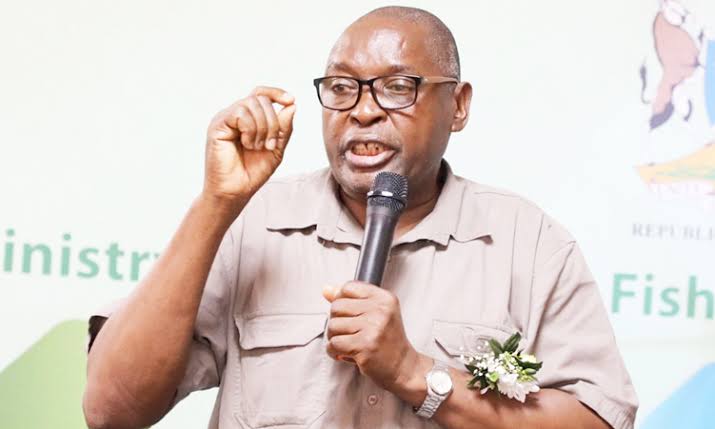
Urban and rural development minister James Sankwasa has warned that political affiliation will not influence recognition of traditional leaders, saying chieftaincy applications must meet customary law and hereditary succession requirements.
Speaking during a public engagement at Opuwo on Wednesday, Sankwasa said people should not expect to be recognised as chiefs simply because they belong to a political party.
“Do not come and apply to become a chief because you are a Swapo member.
“Chieftaincy will not be determined by politics,” the minister stated.
Sankwasa said applicants must be able to prove a clear line of hereditary succession linked to recognised royal families.
He said anyone seeking recognition as a traditional leader must justify their lineage and demonstrate that they succeed an established chief within the community.
“You have to justify who your great grandfather, the chief, was.
“You must have succeeded someone who was there,” he said.
Sankwasa said chiefs are not elected through public voting processes, but inherit their positions in accordance with the customs and traditions of their respective communities.
He referred to Section 12 of the Traditional Authorities Act, saying the ministry first establishes the customary law of a community when handling succession disputes.
This includes determining whether inheritance follows the maternal or paternal line.
“If your culture says succession is through the mother’s side and you claim through the father’s side, you will be disqualified,” he said.
He added that where a leader is chosen through a general election, that person is regarded as a headman rather than a chief, as “chieftaincy is by blood, not by elections.”
Sankwasa said the responsibility to nominate a successor rests with the royal family. If the wider community rejects the nominee, the royal family is expected to reconvene and propose another candidate.
He said integrity and good character are essential requirements for traditional leadership.
“You cannot be a thief or a street fighter and then want to become a chief,” he stated, adding that where the rightful heir is still underage, a caretaker is appointed until the successor reaches an appropriate age to assume leadership.