





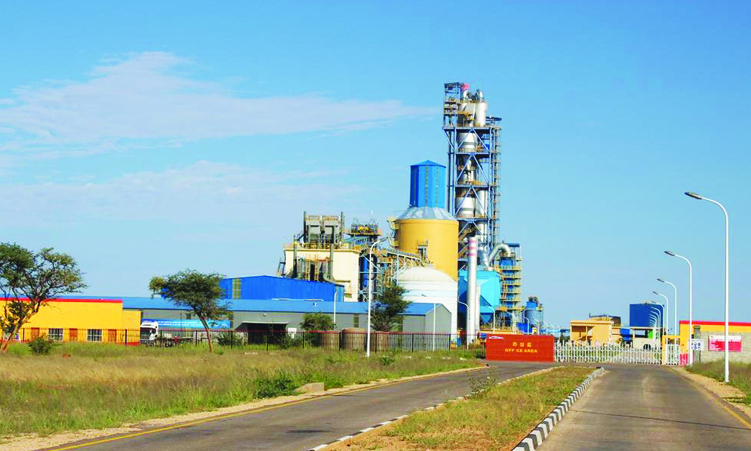
Cheetah Cement has halted planned retrenchments at the company after the ministry of industries reversed a decision to block its takeover of Ohorongo Cement.
The company began discussing the retrenchment of 87 workers in March following financial losses caused by export restrictions and the failed merger attempt.
Industries, mines and energy minister Modestus Amutse announced in the Government Gazette on Wednesday that he had overturned the decision by the Namibian Competition Commission to block the purchase after an appeal by Chinese-owned Whale Rock, which owns the Cheetah Cement brand.
“We are excited about the decision [to allow the merger]. We had begun negotiations about retrenchments, but all that has now been ceased,” Cheetah Cement spokesperson Tabby Moyo told The Namibian yesterday.
Moyo said the market for cement in Namibia is relatively small. When they were set up, both Cheetah Cement and Ohorongo Cement expected to export cement to neighbouring countries like Botswana and Zimbabwe.
These countries have since closed their borders to imports of cement in order to develop their own industries, causing financial losses to the two Namibian cement companies.
“These companies are operating at 50% capacity. By merging and having one cement factory at Ohorongo operate at 100% capacity, economies of scale allows the company [to be financially viable],” Moyo said.
Whale Rock applied to buy all shares of Schwenk Namibia, which owns Ohorongo Cement, last February.
The competition commission rejected the application on 4 July 2025, citing the fact that the two companies are the only cement producers in the country.
In addition to a negative impact on competition, the commission said it was likely that the merger would lead to a loss of jobs.
Moyo said no worker will lose employment, although workers will need to be relocated from the current factory near Otjiwarongo to the Ohorongo Cement plant near Otavi.
“While appreciating that the commission acted within the confines [of the law], I am of the considered opinion that the concerns raised by the commission can be remedied by attaching appropriate conditions to the proposed merger,” Amutse says in the Government Gazette.
The conditions include that there should be no job losses, the commission should monitor whether a monopoly is established after the merger, and the Cheetah Cement plant should not be destroyed.
“Options should be explored to ensure its continued existence and transformation into a productive facility with the capacity to employ Namibians,” Amutse says.
In addition, both Whale Rock Cement and Schwenk Namibia should increase local ownership to at least 40%.
Competition commission spokesperson Dina //Gowases says the commission will abide by the minister’s decision and monitor the merger to ensure compliance.
The Mineworkers Union of Namibia (MUN) says it welcomes the decision to stop retrenchment proceedings, and would also monitor developments.
“MUN makes its position unequivocally clear: the union will not tolerate any attempt to use this transaction to increase corporate profits at the expense of workers,” general secretary George Ampweya says.
Ohorongo Cement declined to comment for this article, as the decision by the minister currently only affects the ownership of the shareholding company.