





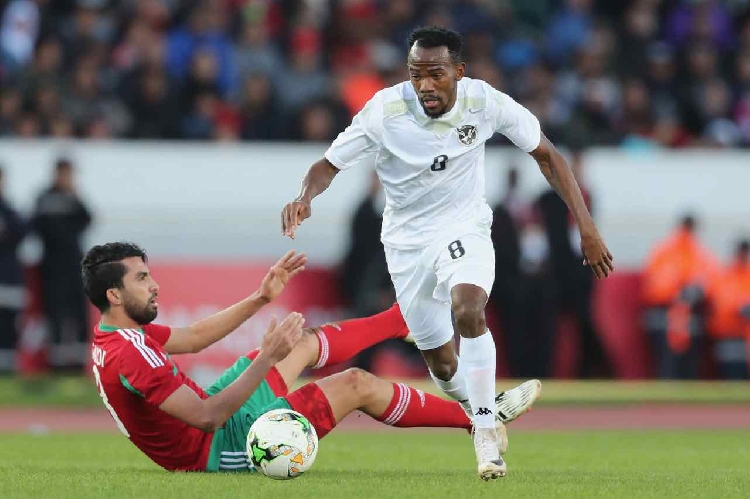
UNDERDOGS, surprise package or no-hopers. Whatever your assessment of the Brave Warriors over the past two weeks, their impact on the 2018 African Nations Championship cannot be understated.
By the time the dust settles after the final encounter between hosts Morocco and Nigeria in Casablanca on Sunday, the post- mortem for most participants in the second-tier Caf nations’ competition would have been complete.
For some, like the Elephants of Ivory Coast who got dumped out in the group phase without scoring a goal, the scathing assessment began with defeat to the “undermined” Brave Warriors in their first game in Morocco.
“Football crisis! Shameful Elephants!,” screamed the headlines in Ivory Coast after they crashed out, bottom of the group and with only a measly point to their name.
A lot has been said about the Brave Warriors’ fairytale run to the quarter-finals of the competition reserved solely for players who turn out in their domestic leagues.
They were in defensive mode for the most part against the highly-rated Ivorians – third-place finishers in the competition held in Rwanda two years earlier, and the all-action Ugandan Cranes.
That solid organisation and opportunism helped them to unlikely 1-0 victories in those matches, and guaranteed that Namibia historically reached the last-eight.
Those wins were also Namibia’s first at a Caf competition for men. The Brave Gladiators’ 2-0 win over Zambia at the 2014 Africa Women’s Championship in Windhoek was the first time the country had won a match at that level.
Reaching the quarter-finals at Chan may not be considered a major achievement, but it is a notable footnote for Namibian football.
What happens next is the crucial part.
The general consensus among observers at the tournament was that, with a little polishing, Namibia should steadily become more competitive on the continent.
That polishing involves sustaining the leagues, and ensuring that Namibian clubs become regular fixtures in Caf club competitions, a fact reiterated by coach Ricardo Mannetti after the Brave Warriors lost to the Atlas Lions on Saturday.
Additionally, Namibian players need to consider other destinations on the continent other than the lucrative South African Premiership, where a good number have moved to but struggled for game time.
The team’s success was down to Mannetti’s motivational ability, instilling a steely belief in a side arguably short on quality required to compete at that level.
“The fact that we’re here for the first time doesn’t mean we don’t want to win. We want to do well, and beat Morocco in front of their fans,” he said before facing the hosts on Saturday.
Beating Ivory Coast and Uganda may be perceived a fluke by detractors, but it does not change the fact that it happened. The impressive draw against Zambia reinforced the multifaceted threat that the Warriors carry.
Those performances have shown that despite all the pessimism and lack of resources in the domestic leagues, there is reasonable quality.
“I’m not the kind of coach who lives in the past. We have broken boundaries in qualifying to the tournament, which is a huge achievement, considering that we did not have a league back home for nearly two years,” said Mannetti.
The wonderful Chan experience is now part of history, which the Brave Warriors need to build on, going forward.
Next up are the Africa Cup of Nations qualifiers, where Namibia need to overcome Zambia, Mozambique and Guinea Bissau to reach the finals in Cameroon for the fist time since 2008.
Zambia travel to Windhoek in March on match-day two of the 2019 AFCON Group K qualifiers.
Namibia and Zambia are on zero points in Group K after losing by the same 1-0 score lines away to Guinea Bissau and at home against Mozambique, respectively, in June 2017.
“It’s important to keep the momentum going into our next challenges. I believe we have what it takes to still make it to Afcon. We have enough matches to turn this around. I’m sure the boys will rise to the occasion again,” Mannetti said.
Meanwhile, as the Chan reaches its climax, Nigeria’s Super Eagles beat Sudan 1-0 on Wednesday to set up a final date with Morocco, who needed extra-time to see off spirited 2013 Chan champions Libya 3-1 to stay on course for winning the competition on home soil.
Indeed, after controversially overcoming Namibia 2-0 in their quarter-final clash, Moroccan coach Jamal Sellami made clear their desire to become the first side to win the competition on home soil.
“Of course, we want to go all the way. It would be a wonderful achievement to win the tournament as we are playing at home. But for us to reach that objective, we have to play with desire, and we call on the fans to support the team in this journey,” Sellami told reporters.