






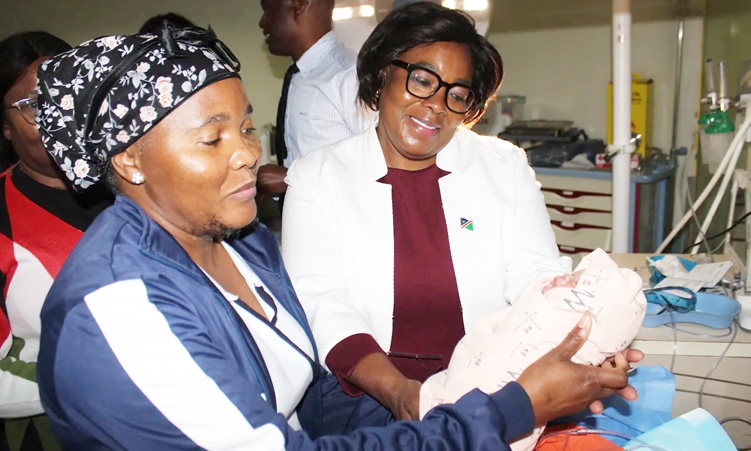
Deputy health and social services minister Suzan Ndjaleka has called on employers in both the public and private sectors to introduce breastfeeding-friendly workplace policies, saying mothers should never have to choose between their careers and their children’s health.
Speaking at the commemoration of World Breastfeeding Week at Windhoek Central Hospital yesterday, Ndjaleka said creating sustainable support systems for breastfeeding mothers requires action beyond the health sector and into workplaces.
“The private and public sectors must evolve. A mother should never have to choose between her career and her child’s health. We call for robust maternity leave policies, dedicated breastfeeding corners, and flexible hours,” she said.
Ndjaleka said workplaces need to evolve to accommodate breastfeeding mothers.
This is not the first time that the government is calling on workplaces to make breastfeeding facilities available at their premises.
In 2024, The Namibian reported that the labour ministry called for employers to accommodate breastfeeding mothers at workplaces.
The ministry was responding to a 2024 Nutrition and Food Security Alliance of Namibia (Nafsan) study revealing that breastfeeding mothers are not being supported in the workplace.
According to Ndjaleka, breastfeeding is not the sole responsibility of mothers, but requires support from health facilities, communities, workplaces and families.
The deputy minister added that the ministry plans to roll out the “Ten Steps to Successful Breastfeeding” across all maternity wards, antenatal clinics and health facilities in Namibia, while also expanding the Baby-Friendly Hospital Initiative nationwide.
“Every health worker must be a champion, trained to provide skilled counselling and hands-on support so that every mother leaves the hospital feeling confident and empowered,” she said.
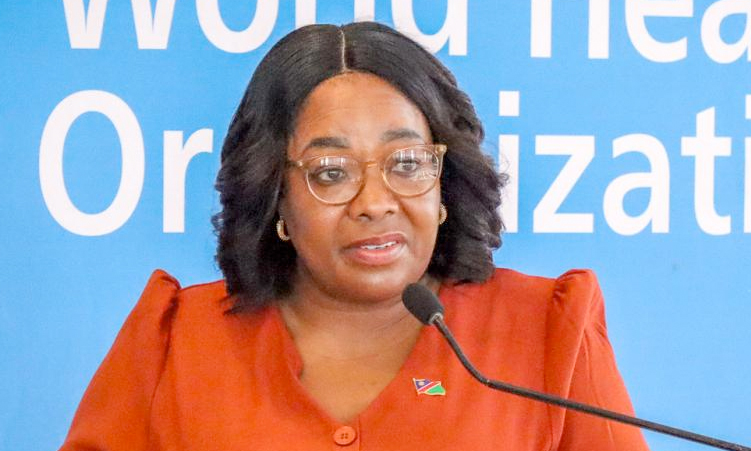
She also appealed to communities to normalise breastfeeding in public and combat stigma and misinformation, while urging fathers to play a more active role at home.
“Support is not just a kind word; it is the father preparing a meal for the mother while she nurses their baby, or taking care of the household so she can rest,” she said.
According to the deputy minister, Namibia continues to face challenges in improving breastfeeding practices despite its importance in preventing malnutrition.
She said the 2024 Smart Nutrition Survey found that only 49% of infants aged 0-5 months are exclusively breastfed, early initiation of breastfeeding stands at 63.6%, while continued breastfeeding among children aged 12-23 months dropped to 36%.
“These numbers tell us that our children are being weaned too early, often onto inadequate complementary foods, directly exposing them to the risks of malnutrition and chronic illness. We must change this narrative,” she said.
Ndjaleka added that babies should be exclusively breastfed for the first six months before introducing complementary foods while continuing breastfeeding until the age of two.
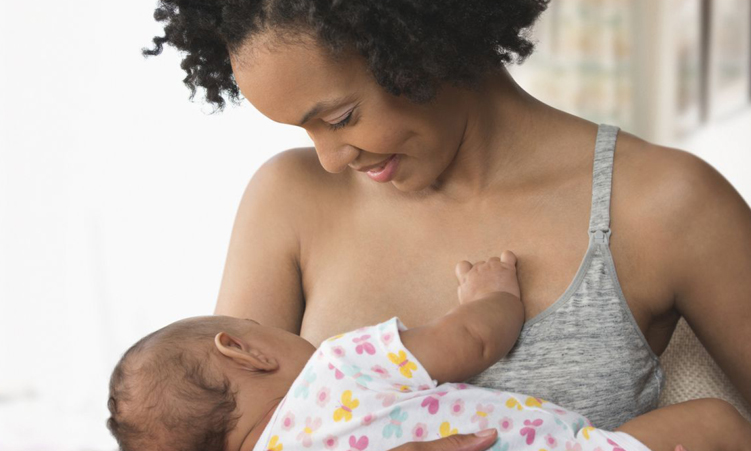
“The science is clear: Babies must be breastfed exclusively for the first six months of life. From six months onwards, we must introduce safe, nutritious weaning foods while continuing to breastfeed until the age of two,” she said.
United Nations Children’s Fund representative Samuel Ocran at the event said breastfeeding-friendly workplaces are among the proven measures that improve breastfeeding outcomes.
“We know that mothers succeed when they receive quality counselling before and after birth. We know that Baby-Friendly Hospitals work. We know that supportive communities and breastfeeding-friendly workplaces make a difference,” he said.
Ocran also encouraged fathers to actively support breastfeeding mothers.
“When she needs time to breastfeed, protect that time.
“Breastfeeding is not only a mother’s responsibility. It is a family responsibility. It is a father’s responsibility. Every father who supports a breastfeeding mother is investing in the health, strength and future of his own child,” he said.
Labour expert Herbert Jauch says creating breastfeeding-friendly workplaces forms part of broader efforts to promote gender equality and support working mothers in balancing their professional responsibilities with motherhood.
Jauch says maternity leave only covers the first few months after childbirth, while health recommendations encourage mothers to breastfeed their babies for longer periods.
“The call for breastfeeding-friendly workplaces is part of the efforts to achieve gender equality and to enable working mothers to balance their working lives with being a mother,” Jauch says.
He says employers could introduce measures such as providing private and suitable spaces where mothers can breastfeed or express milk, as well as allowing breastfeeding breaks during working hours where possible.
“The specific measures might vary from workplace to workplace, but in general employers should discuss the measures with the mothers to find the best possible solutions,” Jauch says.
He adds that such interventions would not only benefit mothers and babies but would also contribute towards creating more inclusive workplaces.
Breastfeeding mother Ester Silas describes breastfeeding as a rewarding experience that strengthened her bond with her baby.
“Breastfeeding my baby for the first time was a special moment and it helped me and my baby build a strong bond. It gave me joy knowing that my baby was getting all the nutrients needed by my baby,” she says.
“I would love to encourage all mothers to at least breastfeed our babies exclusively for six months, meaning no solid food before six months,” Silas says.
The Namibian Employers Federation could not be reached at the time of publication.