





Haruki Murakami’s latest novel sold more than a million copies in its first week on sale in Japan and, like the English translation of his previous novel, ‘1Q84’, is likely to have a blockbuster début in the United States as well. (Also like ‘1Q84’, this compact little volume has been given a notably handsome design treatment.) Tsukuru Tazaki is a 36-year-old railway-station engineer, but when we meet him, in the book’s opening pages, he is 20, in college, and suffering from debilitating depression, because his four best friends have, without explanation, “announced that they did not want to see him, or talk to him, ever again”.
In high school, the group of five were inseparable – though while each of the other four had an outstanding talent or trait, Tsukuru was always unsure of what he brought to the group. “There was not one single quality he possessed that was worth bragging about or showing off to others,” writes Murakami. “At least that was how he viewed himself. Everything about him was middling, pallid, lacking in colour.”
At the age of 36 he meets a woman named Sara, who becomes his girlfriend and encourages him to get in touch with his old friends and find out why they abandoned him. Tsukuru’s journey takes him to familiar haunts and new places as he learns to move forward.
In an article about Marina Tsvetaeva that appeared in The New Yorker in 1994, Claudia Roth Pierpont wrote that the poet had “the most peculiarly excitable and brilliant and perhaps the most individual style in 20th-century Russian poetry”.
Although little known in the United States, in her home country Tsvetaeva is considered one of the major poets to have witnessed the Bolshevik Revolution, and her work was deeply admired by writers such as Boris Pasternak, Vladimir Nabokov, and Joseph Brodsky.
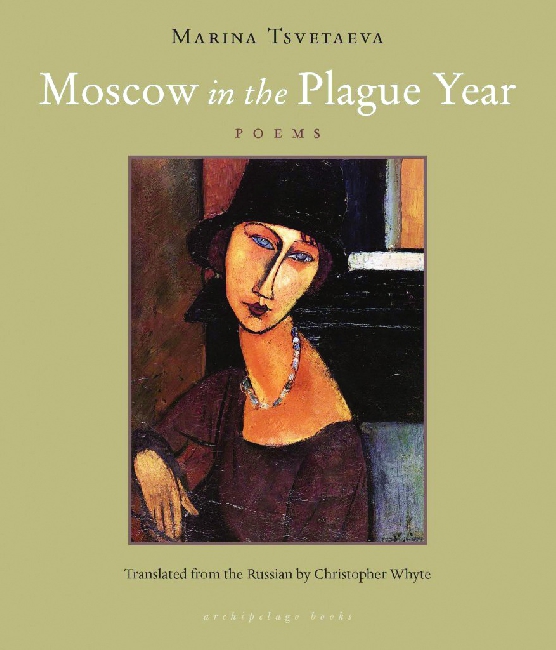
This new collection brings together all of Tsvetaeva’s poems from the years 1917 to 1921 – “verses varying from the outstanding to the only moderately successful”, according to the afterword. During those years, the poet was living in privation in Moscow while her husband fought in the anti-Communist White Army. Tsvetaeva referred to 1919, in particular, as “the plague year” – this was when conditions in the city reached a low point. One of Tsvetaeva’s daughters contracted malaria, and the other died of starvation in a children’s home outside of the city. (From a poem addressed to the first child: “Although you still have both father and mother,/you nonetheless remain one of Christ’s orphans./Though you were born in a whirlpool of wars/you too will make your way unto the Jordan.”). This period of hardship was one of the most productive of Tsvetaeva’s career. Poems about the suffering in Moscow appear alongside verses full of passion and guilt about the affairs the poet engaged in while her husband was away. A number of the poems in this book are appearing in English for the first time. – newyorker.com