






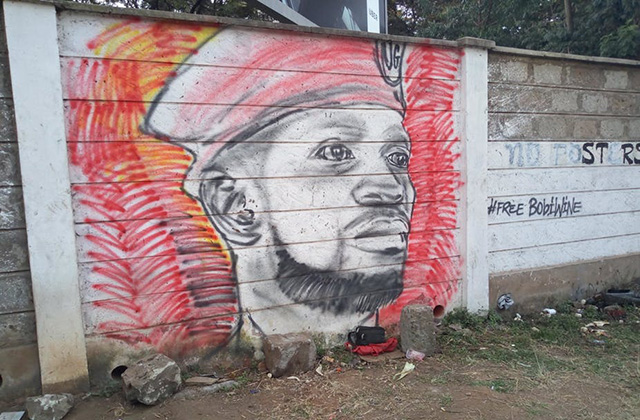
• GEORGE OGOLAPresident Yoweri Museveni has ruled Uganda with authoritarian firmness for the last 32 years. But even his most ardent supporters were shocked by the ferocity with which his security forces recently meted out violence on journalists and supporters of Robert Kyagulanyi, a musician-turned-politician popularly known as Bobi Wine.
Wine, an opposition MP, has emerged as a threat to Uganda’s old political order.
Against many odds, including systematic state intimidation, in 2017, he won the Kyaddondo East constituency seat at a canter. He got nearly 80% of the vote, beating the ruling party and the main opposition’s candidates.
In subsequent by-elections, the candidates he has backed have all won.
But the weight of this success is becoming painful for Wine. He and 11 others have been charged with treason after one of the vehicles in Museveni’s convoy was pelted with stones at a campaign rally.
Wine was initially charged in a military court with illegally possessing a firearm. When the military dropped that charge, he was released – then immediately rearrested and charged with treason in a criminal court.
This shows how desperate authorities are to deal with the threat Wine poses. And the way Museveni’s government has moved to keep a lid on how the case is being reported is raising fears that Uganda’s democratic regression is deepening.
In full view of the public, journalists covering protests in Kampala calling for Wine’s release were brutally assaulted.
Their recording equipment was either confiscated or destroyed by security forces. This has sparked a national and international outcry.
Museveni’s grip on power remains exceptionally strong. His control of the country’s civic and political institutions is nearly complete after 32 years in power. But there are pockets of dissent emerging from digital platforms whose practical political consequences are being slowly realised.
Museveni runs a brutal regime. The control of information seems key to eliminating public dissent. A number of newspapers as well as radio and TV stations have been shut down over the years, always at the whim of the president.
Individual journalists have also borne the brunt of the state’s violence. Arrests, kidnapping and torture are common.
Some of Uganda’s best journalists have fled the country over the years of Museveni’s rule to seek refuge in neighbouring countries.
The Ugandan government’s tight grip on the flow of information can also be seen in its various attempts to control the use of social media. It has obviously recognised this as a new platform for political expression.
In 2016 the government shut down social media during the country’s elections. Museveni defended the move, calling it a security measure to avert lies intended to incite violence and illegal declaration of results.
In July, Uganda introduced an unprecedented tax on the use of social media services such as Facebook, Twitter and WhatsApp. Critics see the 200 shilling tax as being specifically targeted at the youth and intended to discourage their use of social media for communication.
Despite these measures, social media has become an important form of political participation – especially for young Ugandans who are institutionally excluded from meaningful participation in the country’s economic and political processes.
Museveni has previously dismissed social media as a platform used particularly by young people for gossip.
But that ‘gossip’ has become an important form of political participation and protest vernacular. What cannot be published in the newspapers or broadcast on radio or television finds expression in tweets, memes or other forms of social media.
In fact, social media is becoming a formal political platform in its own right.
Following Wine’s arrest, social media users in Uganda and across the continent popularised the hashtag #FreeBobiWine to focus attention on him and his co-accused.
The hashtag quickly attracted significant interest, and led to peaceful protests in Kenya, South Africa and at Ugandan embassies around the world.
It’s on the back of this kind of attention that more than 80 world-famous human rights activists and artists – including Angelique Kidjo, Chris Martin, Wole Soyinka and Damon Albarn – expressed their support for Wine. They’ve also called for international organisations to censure Museveni.
Other repressive governments are no doubt watching this story unfold, and are worried. Such transcontinental alliances forged and popularised through social media are undermining many governments’ attempts to control information and invalidate legitimate dissent.
More importantly, the conversations enabled by hashtags like #FreeBobiWine borrow from international norms of conduct. This invests local campaigns with agency as well as legitimacy.

