






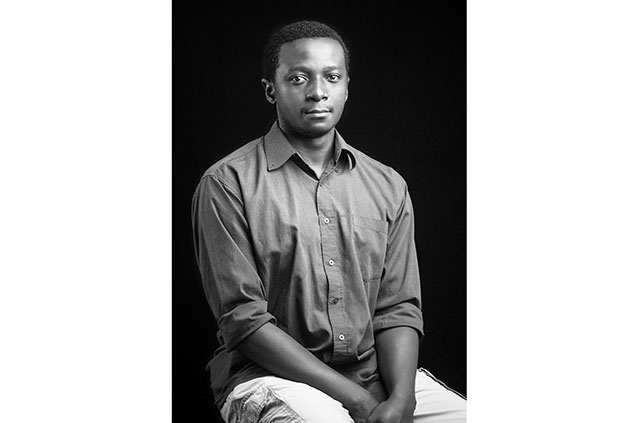
Zimbabwe-born playwright, screenwriter and director Lloyd Winini has an arresting allure to his work, instantly teleporting spectators on a journey through the eerie and unquestionable world of African mysticism.
While many of us are too afraid to consciously think about these ancient realms, thankfully an architect that revels in creating these noir worlds in a post-modern context has been ordained for us.
His plays and films often carry motifs of betrayal, religious dogma and fear, such as ‘The Nuthouse’, centred on women in a mental facility battling their demons, literally; and his most recent work, ‘Sacred Place’, funded by the Goethe Institute, follows a group of friends trapped in a haunted cave after a vacation goes terribly wrong.
In spite of its recurring gloomy context, his works are culturally transcending, promoting an alternate view into the mutation of African cinema and theatre.
Hip-hop started off with disco parties and poetry in underground garages and basements which periodically evolved into hypnotic 808s and heavy bass drums found in trap and drill which is akin to what Winini is doing through performance art.
It’s clear that something big is cooking.
His new script starts off in early 20th century Zimbabwe and ends with a wild goose chase for gold in Namibia.
It aims to show some of the country’s most picturesque areas, including Lüderitz, the Fish River Canyon and Spitzkoppe.
While he initially planned to study law, a change of heart saw him venture down a more creative path.
“I grew up telling my parents that I wanted to study law but after my A levels [Grade 12 in Namibia] I had a change of heart. I always enjoyed writing and I owe my inspiration to Chinua Achebe and Tstisi Dangarembga, who I credit for teaching me how to create a plot and end a story through her novel ‘Nervous Conditions’.
“I wanted to stay in Zimbabwe and attend ZIVA School of Arts but the fees were really high. Fortunately, I gained admission to Unam. During this period, I immersed myself in dramaturgy and writing plays and scripts for short films and full-length feature films which I plan to use in the near future.”
Winini is inspired by a wide and surprising range of directors, from the explosive energy of Michael Bay and his work in ‘Bad Boys’ to Quentin Tarantino in ‘Pulp Fiction’ and Wes Anderson for his eye for detail.
“I am impressed with their stylistic visuals that give them unmistakable imprints and while I do not have favourite directors, I appreciate creative aspects of their work.”
His films and plays often feel like the reconstruction of dreams.
“I try to push the surreal and often inconceivable things into real-life scenarios which is what nightmares tend to do.”
In terms of selecting and casting actors, Winini prefers to pick actors who work well as part of a team.
“In my last short film [‘Sacred Place’] in the final stage of selection I made them sit in a room together and observed who was more likely to underpin the others after sitting through a day with multiple personalities. Films will always be a collaborative effort,” he says.
Film-making in Africa is often seen as unsustainable and rife with challenges.
“I feel we need a wider chain for funding projects in the country. The industry is small because funding is limited. More investors need to be incentivised to fund film projects that can show Namibia through multiple lenses.
“Namibia has a lot of potential to make film-making sustainable. People shouldn’t be forced to move to South Africa.”