CITIZEN NAHAS ANGULA
Founding president Sam Nujoma, visited Angola from 15 to 17 October 2021. He was warmly received by both the current president, Joao Manuel Goncalves Lourenco, and by the former president, Jóse Eduardo dos Santos.
Their meetings were characterised by shared revolutionary experiences, fraternal emotions and comradeship. Former president Nujoma expressed the gratitude of the Namibian people to the people of Angola for their steadfast support of Namibia’s struggle for freedom and independence.
Angola served as a reliable rear base for the fighters of Swapo’s military wing, the People’s Liberation Army of Namibia (Plan). Plan established its military headquarters at Lubango, southern Angola, and several military bases in the provinces of Huila, Cuando Cubango and Kunene, among others. The Thobias Hainyeko Military Camp, which provided basic training to new recruits, was located near Lubango, which also housed a civilian school for exiled Namibian children. Kalulo town in Kuanza-Zul province was home to the largest Namibian civilian settlement in Angola.
Many Namibians died in Angola from war-related and natural causes and it has the largest number of Namibian graves outside Namibia. Efforts are underway to construct memorial shrines at Cassinga and Sheetekela in memory of those who sacrificed their lives in Angola. In the future, Namibians will be able to visit these memorial shrines and other grave sites such as those found at Lubango and Kuanza-Sul. Such pilgrimages will forever remain a constant reminder of the revolutionary solidarity of the Angolan people with the people of Namibia.
In the process of providing support for Namibia’s struggle, Angola suffered invasions of its territory by apartheid forces from Namibia. Many Angolan lives were lost, and property and infrastructure destroyed. Insecurity among the population was heightened. But Angola persevered in supporting African liberation.
Historically, the Angolan and Namibian peoples have shared their cultural, social and economic resources. Since time immemorial, blacksmiths from northern Namibia travelled annually to the area around Cassinga, where they mined iron ore from which they forged axes, hoes, traditional knives, arrowheads and spears. People from central Angola travelled to northern Namibia to exchange tobacco for cattle. In colonial times, labourers from southern Angola joined the notorious contract labour system in then South West Africa.
Currently, some Namibian farmers from crowded northern Namibia graze their cattle in southern Angola. At the same time, almost half of Namibia’s population depends on water from the Kunene river, which originates in the Angolan highlands. Namibian livelihoods depend greatly on the goodwill of the fraternal people of Angola.
The private visit by the former president should be understood in these different contexts. Namibia has long borders with Angola, stretching from the Kwando River to the Atlantic Ocean. Communities from both countries are culturally linked by kinship and common historical experiences.
In the Kavango regions, people of Angolan origin form almost 20% of the population. In Omusati, children from Angola cross the border on a daily basis to attend school in Namibia. Namibian hospitals along the common border provide services to both Namibian and Angolan patients. Angolan patients are treated like local Namibians. This interdependence means our common borders should be treated as administrative mechanisms to prevent crime but not to separate people who share historical links.
Sam Nujoma, as a pan-Africanist, values the need to strengthen the bonds of friendship and comradeship among neighbours. The fraternal bonds of comradeship between Angola and Namibia have been further renewed.
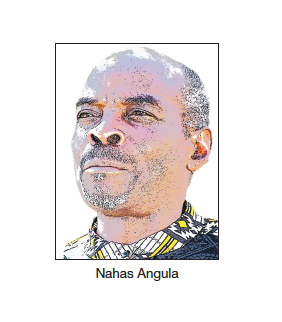
* Nahas Angula operated from Angola from 1979 to1989. He served as Swapo secretary for education and culture. He writes in his capacity as a public educator and a civic citizen.