Recent reports, especially those highlighted in The Namibian article ‘The Scourge of Rising Child Abuse in Namibia’ (31 August 2023), paint a grim picture of the state of child protection in our country.
It becomes clear that wider societal structures, shaped by deep-seated issues like patriarchy, racism, financial pressures, and homelessness, play a significant role in tightening the hold of violence.
Even more tragic is our collective desensitisation as a society to these heinous acts, which often leave seen and unseen scars on children.
I call on our nation to hold a national case review. This is paramount to refining professional approaches, and focusing on child safeguarding and welfare in Namibia.
While the Child Care and Protection Act (CCPA) lays a robust foundation for child protection, it’s essential to optimise its implementation.
The National Advisory Council, under the CCPA, has the mandate to coordinate, ensuring civil society, private sector and the government collaborate and offer introspection and accountability at a national level.
A national case review is vital for:
• evaluating cases where children lose their lives tragically because of abuse or neglect.
• understanding circumstances leading to significant harm, including abuse or neglect.
• highlighting inefficiencies in the collaboration between professionals that weaken our response to safeguarding concerns.
IT’S UP TO US
It is pivotal to understand that the aim isn’t finger-pointing. It’s about learning from our shortcomings, and ensuring we hold ourselves accountable.
In this way we can foster a transparent environment and proactively prevent recurring harm.
We need to remain aware of and acknowledge the emotional weight those at the forefront of child protection bear – social workers, police officers, health professionals, and more.
They, too, need our support and understanding.
When discussing child abuse, a key demographic, adolescents and young adults, is often overlooked.
Societal biases, influenced by our culture, can sometimes overshadow the vulnerabilities of our youth.
When we use labels such as delinquent, defiant or deviant, we dehumanise them.
As a result, they often face the brunt of misplaced blame, making it harder for them to seek and receive vital support.
Furthermore, the adultification of adolescents can force them to grow up faster than they need to.
Data from the Namibia Violence Against Children and Youth Survey (2021) drives home the magnitude of the problem.
An astounding 48,8% of young women and 59,5% of young men aged 18 to 24 have witnessed physical violence during childhood.
The knock-on effects are evident: Of these, 12.9% of young women and 18.8% of young men later became perpetrators.
Notably, adverse childhood experiences of physical or sexual abuse made them more vulnerable to such violent behaviour.
We are all stakeholders when it comes to Namibia’s children.
While formulating policies is crucial, effective enforcement, backed by regular reviews, will define their true success.
TIME TO ACT
I urge the Office of the Children’s Advocate to amplify the voices of our children, ensuring every stakeholder is held accountable.
It’s distressing that for each known case of violence against children, countless others might remain hidden.
We need decisive, collective action, supported by accountability.
I also implore the National Advisory Council to drive change that will result in the material improvement of the lives of children, youth and young adults.
Tailoring services and approaches that resonate with local needs ensures effectiveness, and for that, we must lean on evidence and relevant case reviews.
As Namibians, we need to foster a culture that embodies curiosity, continuous learning, and improvement.
Moreover, the voices of local communities, especially children and youth, is vital.
By adopting a holistic public health approach to reducing violence, we can co-create a society where children and youth are protected from its lasting impact.
Children do not put their lives on hold waiting for another study, just as abuse will not stop while waiting for the next strategy.
We require immediate, decisive and nimble action.
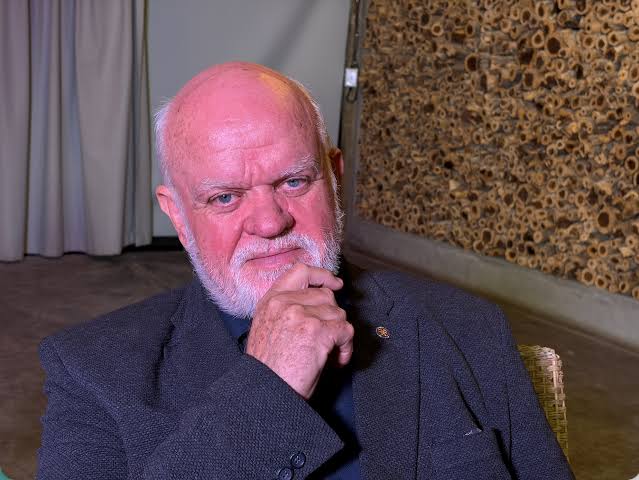
- Steven Harageib, development practitioner; hello@stevenharageib.com