




Almost 90% of men between 18-39 years not married
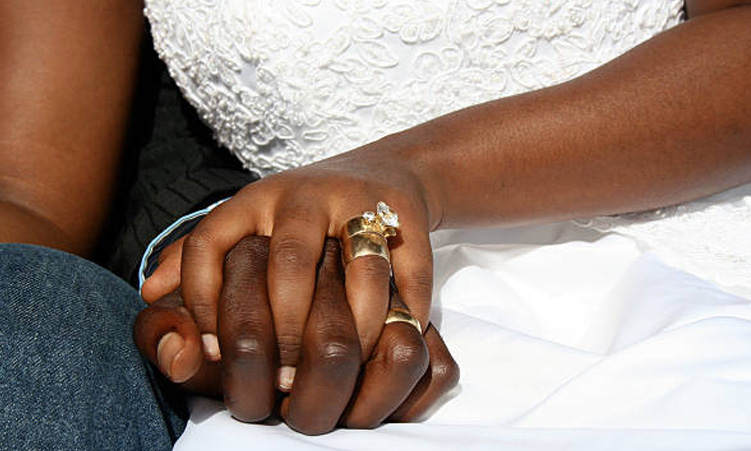
About 87.2% of men aged 18 to 39 in Namibia had never been married at the time of the 2023 Population and Housing Census, with some men questioning whether marriage should remain an expected milestone in adulthood.
Figures from the Namibia Statistics Agency show that 454 047 of the 520 557 men in this age group have never married.
In 2001 the number of never married was less.
According to the 2001 census, 60.9% of men aged 15 and older had never married, compared with 51.9% of women.
The total number of people aged 15 and older who had never married then was 625 230, out of 1.1 million people.
Ondonga Traditional Authority spokesperson Frans Enkali says changing gender roles, financial independence and domestic violence may be influencing how people view marriage.
Enkali says the situation today differs from the past, when women had fewer opportunities to earn an independent income and marriage could offer them financial security and a home of their own.
“Now, nowadays, some of them are earning more than those men that are dating them, or that are in relation with them,” he says.
He suggests the income differences between partners may have changed relationship dynamics, making it more difficult for men to propose marriage.
Enkali says arranged marriages and parental involvement in choosing partners have become less common, with young people increasingly making their own decisions about whom to marry.
“But nowadays, parents cannot come and say, no, we got a man for you, get married. No, it won’t materialise,” he says.
He points to domestic violence and the way partners treat each other as factors that may discourage marriage.
However, he cautions against concluding that young people have completely rejected marriage, arguing that social attitudes and expectations have changed over time.
Namibia Marriage Council executive director Paulus Hawanga says a lack of understanding about marriage and inadequate preparation could contribute to negative attitudes towards the institution, leading some people to choose not to marry.
“People are getting married without proper preparation,” Hawanga says.
He says couples often enter marriage without understanding what it requires, including how to resolve conflict and manage their responsibilities.
“When the issue of a difficult season comes, people only see marriage as a failed institution,” he says.
However, Hawanga says marriage provides a sound foundation for families and children, adding that problems often arise when that foundation is not properly established.
His view is partly rooted in his religious understanding of marriage and its spiritual, social and legal responsibilities.
Hawanga says domestic violence, family conflict and disputes over inheritance, particularly after the death of a spouse, could also shape how people view marriage.
He says some people witnessed families falling apart after a parent died, including situations in which children were neglected or caught in disputes among relatives over inheritance.
“These are the things discouraging people from getting married,” he says.
Hawanga says more education is needed to help people understand the differences between civil, customary and religious marriages, including the responsibilities and processes associated with each.
Pastor Maureen Dausas says economic pressure is among the reasons some young Namibians delay marriage, with lobola, wedding expenses, unemployment and housing costs contributing to fears about financial readiness.
“Many young men feel they are not financially ready to be a husband and provider.
They tell us: ‘Pastor, I will marry when I get a stable job or when I am stable’,” she says.
Dausas says the trend is also visible in Evangelical Lutheran Church in the Republic of Namibia records, adding that the church has seen fewer weddings alongside an increase in couples living together without marrying.
“In the past, after confirmation and youth league, the next step was marriage.
Now, many of our members are in their late 20s and 30s, baptising children, attending church faithfully, but not getting married,” she says.
She also attributes the trend to changing social values, longer periods spent pursuing education and careers, and fears about failed marriages.
Some young people, she says, grew up witnessing divorce and gender-based violence and are afraid of experiencing similar problems in their own relationships.
Dausas says the church was also concerned that some couples were entering marriage without adequate preparation and counselling.
“In the past, the church prepared couples for six months. Now many couples come only two weeks before the wedding,” she says.
She encourages young people not to view the cost of a wedding as a reason to postpone marriage indefinitely, arguing that a modest ceremony can be just as meaningful.
“Marriage is not about a big wedding, it is about a strong marriage,” she says.
“Do not wait to have N$100 000 for a wedding. Start with a simple, dignified church wedding.
What matters is the covenant, not the celebration.”
FROM THE HORSE’S MOUTH
One of the men in this age group, Tommy Shivute, says marriage is not his immediate priority.
He is focusing on upgrading his qualifications, building his career and securing financial independence, while questioning the cultural expectation that marriage marks a man’s transition into adulthood.
“In my culture, marriage is seen as the ultimate rite of passage that turns a boy into a man.
However, I don’t believe it should be the only measure of adulthood, especially when so many married couples are visibly miserable,” Shivute says.
He says financial pressures, cultural expectations and painful experiences in past relationships had weakened his confidence in marriage.
Shivute says he had become more cautious about entering a marriage after witnessing relationships break down and experiencing difficulties in his own relationships.
“I completely support long-term commitment over legal marriage,” he says.
“To be honest, I’ve lost faith in marriage because of how badly I’ve been shown flames by Eve’s gender,” Shivute says.
Likius Hashikutuva, another unmarried Namibian man, says he values his freedom and does not believe marriage is necessary for a fulfilling life.
“Honestly, there is no benefit to getting married. I like my freedom a little too much,” Hashikutuva says.
He says he was unwilling to change his lifestyle to accommodate marriage and was also concerned about the cost of weddings.
“Marriage is not something that would define the quality of my life.”
For Junior Oluwafemi, the issue is not a rejection of marriage but a decision to wait until he is better prepared.
Oluwafemi says the financial and social responsibilities expected of husbands have influenced his decision.
“I don’t want to rush into marriage just because society expects me to,” he says, adding that he wants to build his career, become financially independent and understand himself better before making such a commitment.
He says financial pressure was among his biggest concerns, arguing that marriage required preparation, maturity and shared responsibility.
“I still hope to get married someday, but I don’t want to rush into it,” he says.
Oluwafemi says he would rather remain single than enter an unhappy marriage, adding that a healthy relationship required love, trust, respect and mutual support.