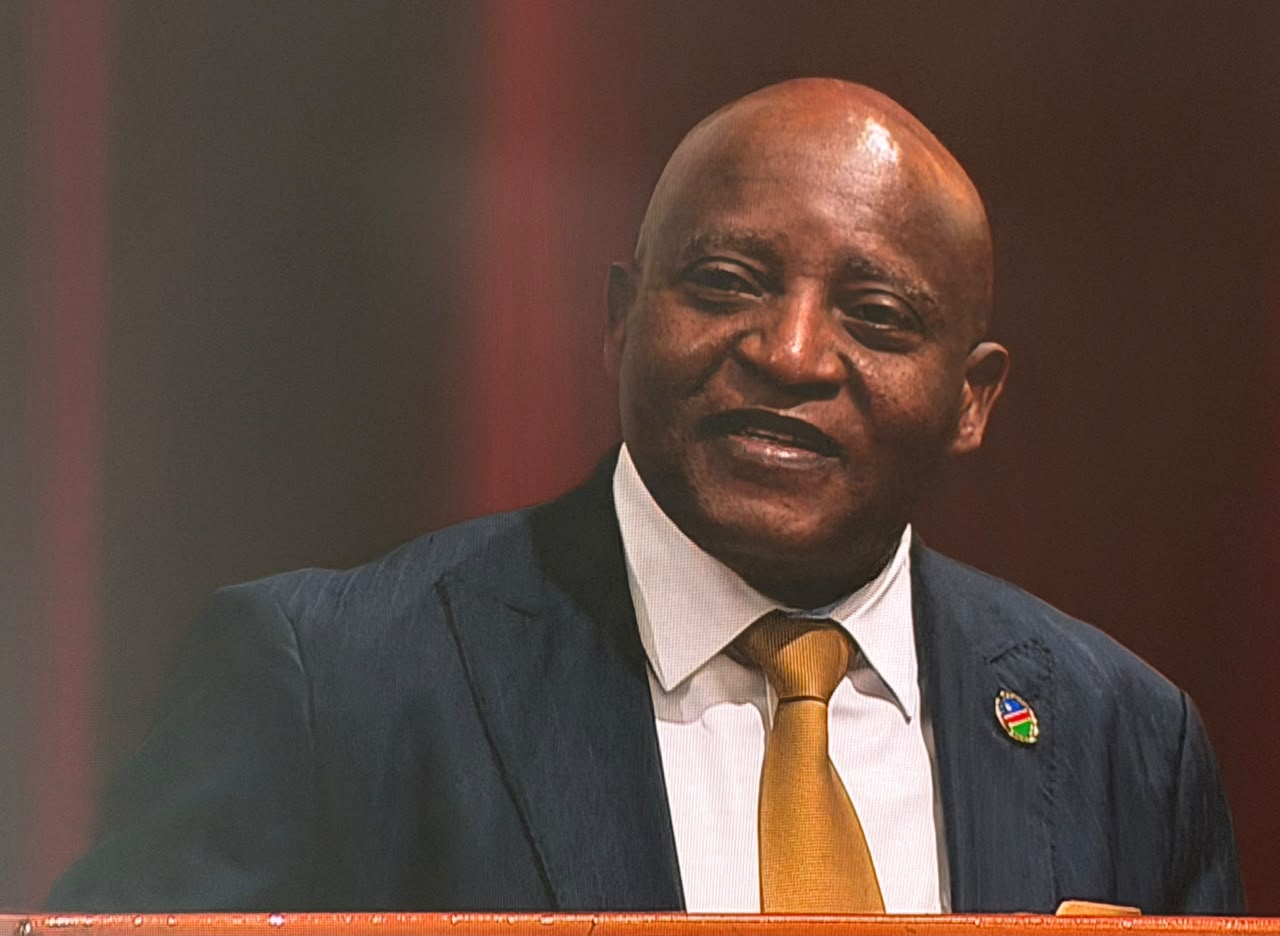







Local football analyst Isack Hamata says the Confederation of African Football (CAF) is maintaining a ‘quiet diplomacy’ compared to other continental football bodies.
This week three continental football bodies, the Union of European Football Associations (Uefa), the Confederation of North, Central America and Caribbean Association Football (Concacaf) and the Asian Football Confederation (AFC), issued an open letter accusing Fifa president Gianni Infantino of breaking trust “through deception” with his aborted Fifa Forward Enterprise proposal.
Fifa Forward would have been a new company created to manage commercial and ticketing rights of all Fifa competitions, including World Cups, with 21% sold off to a private investment company.
“CAF’s approach is fundamentally rooted in a policy of quiet diplomacy; rather than public confrontation. Several factors explain this stance,” Hamata says.
He says under Patrice Motsepe, CAF has prioritised maintaining a close working relationship with Fifa to secure development funding and technical support, which are vital for African member associations.
Hamata says African football leadership has historically preferred internal negotiation over publicising grievances, viewing open conflict with Fifa as counterproductive to the continent’s standing in global football politics.
“By endorsing Fifa’s recent communications, CAF opted for institutional stability, aiming to avoid the perception of a fractured membership while protecting the flow of the ‘Fifa Forward’ development grants.
“There is a valid argument that as a bloc representing 54 of Fifa’s 211 member associations, the second-largest voting bloc after Uefa, CAF has a responsibility to help shape the organization’s direction.”
He says when governance concerns arise, the collective voice of African football is powerful enough to ensure that reforms are meaningful rather than superficial.
He adds that silence can sometimes be interpreted as tacit approval of policies that the continent may not fully support.
“Conversely, being vocal; can risk alienating the Fifa administration, potentially impacting the allocation of resources.”
Hamata says the challenge for CAF’s leadership is to find a middle ground being assertive on matters of governance and integrity while remaining a cooperative partner in global football development.
CAF INFLUENCE
“It is a misconception to label CAF as having little influence. In terms of voting power, CAF is arguably the most influential confederation. However, influence manifests differently across regions,” Hamata says.
“Uefa, Concacaf and AFC often exert influence through commercial leverage, established media scrutiny, and the threat of alternative competitions (such as the discussed boycott).”
He says Africa’s influence is traditionally political and demographic. While it may not wield the same financial or commercial threats as Europe, its support is essential for any Fifa president to maintain a mandate.
“The current situation highlights a divergence in strategy: Europe chooses to use its commercial muscle, while Africa chooses to use its political capital to preserve cohesion.”
INFANTINO
Hamata says from a governance perspective, the proposal to sell a stake in the Fifa Forward Enterprise was widely viewed as a fundamental error in judgement.
“Football is a social asset, not a private commodity. The proposal to bring in private equity created an inherent conflict of interest between the duty to serve the global game and the obligation to generate returns for private investors.
“The swift collapse of the plan, and the resignation of senior advisers, suggests that the proposal lacked the necessary internal consensus and failed to account for the values-based objections of stakeholders worldwide.”
FIFA CRACKS
Hamata says Fifa is increasingly operating in a world where sport and geopolitics are inseparable. He says the 2026 World Cup environment, for example, was heavily influenced by the policies and personalities of the host nations.
“Reports of heads of state engaging directly with Fifa officials on specific regulatory matters (such as match officiating or Fifa awards) indicate that powerful political figures recognise the soft-power value of football.”
He says when when an organisation’s leadership is perceived as being closely aligned with specific political interests, it risks appearing less like an independent global arbiter and more like an extension of state power.
“This inevitably creates cracks, as member associations from opposing geopolitical camps grow uncomfortable with perceived biases.
“The core criticism facing the Fifa administration is a perceived shift from being a custodian of the game to a commander of it.”
He says critics point to the reversal of previous governance reforms, such as expanding the number of standing committees, as evidence of a move toward a system of patronage.
“By framing major governance failures as mere failures of communication, the leadership has struggled to demonstrate the accountability expected by traditional football stakeholders.
“There is also a growing disconnect between the administration’s focus on rapid commercial expansion (like private equity schemes) and the memberships desire for transparency, inclusivity, and traditional democratic process.”
Hamata says the path forward for Fifa requires a return to collaborative governance, where the president acts as a first among equals rather than an executive overseeing a commercial enterprise.