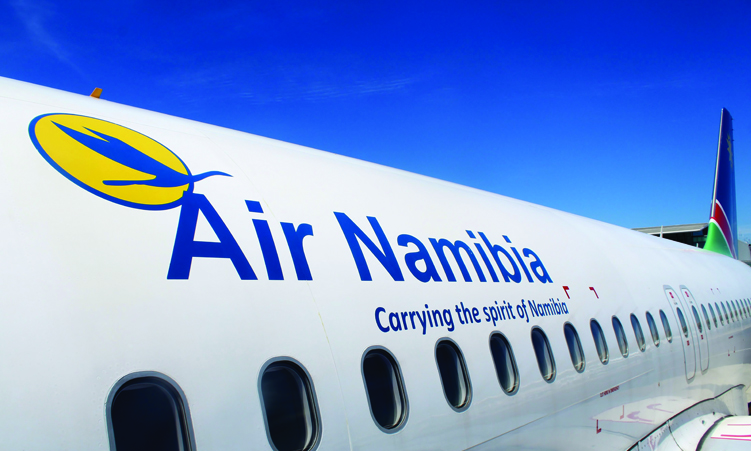
Over The past month I have read, with growing frustration, a string of letters and opinion pieces condemning the government’s plan to launch a new national airline.
Almost every one leans on the same argument: Air Namibia lost money, therefore any national carrier is destined to fail.
As someone with 21 years’ experience in the aviation industry, I would like to offer a different perspective.
It is worth remembering that Air Namibia was, albeit for a short period, run profitably under capable leadership.
Its later collapse was a failure of management and due to political interference, not proof that a national airline can never work in the country.
We should be careful not to confuse “it was mismanaged” with “it cannot be done”.
That kind of thinking reflects a wider problem in how we as Namibians talk about our own ambitions: a reflexive cannot-do attitude that assumes failure before we have even tried to get it right.
Consider what is actually at stake. Domestic connectivity in Namibia is poor.
Travelling between our own towns and regions is often slow, inconvenient, and in many cases barely possible by air at all.
For ordinary Namibians, flying, even within our own country, has become largely unaffordable.
Meanwhile, foreign carriers, particularly from Europe, fly into Namibia in growing numbers, carrying tourists and business travellers to our destinations, and taking the revenue straight back out of the country.
Namibians see almost none of that benefit. A functioning national airline is not a vanity project; it is infrastructure, in the same way roads and ports are infrastructure.
It connects our regions, supports tourism, opens trade, creates skilled jobs, and keeps a share of that revenue at home instead of handing it entirely to foreign operators.
None of this means we should be naive about the risks.
A national airline is a significant financial undertaking, and Air Namibia’s own history is a real warning about what happens when accountability is absent and political interference is allowed to dictate decisions.
That risk is genuine and should not be waved away.
But it is also worth noting that accountability has been a defining feature of the current administration’s approach to governance.
If that same standard is applied to this new airline, transparent oversight, sound commercial management, and a willingness to hold leadership responsible for results, there is no reason it cannot succeed where its predecessor ultimately did not.
The lesson of Air Namibia is not that Namibia should abandon the idea of a national carrier.
It is that the idea only fails when accountability does.
We owe it to ourselves to back this with cautious optimism rather than write it off before it has flown a single route.
– Name withheld on request