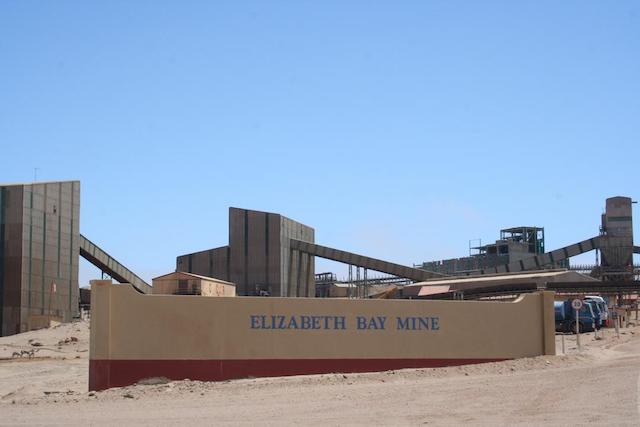
Dutch private equity and special situations investor Kenzoll Capital has partnered with MSF Commercials to restart operations at the Sperrgebiet Diamond Mine, formerly known as the Elizabeth Bay Mine, near Lüderitz.
This is despite the global market for diamonds declining without any forecast of recovery for 2027.
The investment marks a fresh attempt to revive the historic mine, which has been largely out of production since Namdeb placed it on care and maintenance in September 2018 after concluding that it could no longer operate the mine economically.
Elizabeth Bay has a mining history dating back to 1911, following the discovery of diamonds near Kolmanskop in 1908.
Operations were interrupted several times, including during the First World War and the Great Depression.
The mine was reopened in 1991 under Consolidated Diamond Mining and later became part of Namdeb, the 50:50 diamond joint venture between the Namibian government and De Beers.
In 2009, the global financial crisis forced the mine into care and maintenance. Namdeb restarted operations in 2011 after upgrading the processing plant, initially expecting the mine to have only about four more years of production.
However, technological improvements allowed Elizabeth Bay to operate beyond that projected life.
By 2018, the mine was facing renewed challenges.
Namdeb said it could no longer operate the mine economically and sought a lower-cost operator that could extend its life.
The mine also experienced production difficulties at its processing plant and underperformance of its resources.
Namdeb subsequently sold the mine and associated marine assets to Sperrgebiet Diamond Mining (SDM), a Namibian-owned consortium, in a deal valued at US8.3 million or about N$120 million at the time.
The transaction was finalised in 2020, with SDM taking ownership of the mine and plans to refurbish the plant and recommission operations.
However, the mine did not return to sustained production as anticipated. In 2023, SDM retrenched workers after diamond production and recovery rates failed to meet expectations, while the company also faced financial difficulties.
Kenzoll’s latest investment, therefore, represents another attempt to bring the asset back into operation.
The mine’s licences cover 245 364 hectares of the Sperrgebiet and contain estimated onshore diamond resources of 6.3 million carats and offshore resources of 4.2 million carats.
Kenzoll says it has previously committed more than US$10 million (about N$166 million) to Namibia and is now working with MSF Commercials to restart the mine while exploring heavy mineral sands and critical metals that have not previously been explored on the licences.
Following regulatory approvals, the investment is expected to reach US$50 million (about N$828 million) as exploration and production of other minerals progresses.
“Elizabeth Bay has spent most of the past eight years out of action and we’re committed to getting the mine producing again, providing jobs and economic value to an area that has relied heavily on diamonds for over a century,” Kenzoll Capital chief executive Corné Melissen says.
He says diamonds would be the starting point, with critical minerals to follow.
The investment comes at a difficult time for Namibia’s diamond industry, with diamond export earnings declining sharply from N$1.5 billion in the fourth quarter of 2022 to N$1.7 billion in the first quarter of 2025.
SDM director Conan Mlunga says the investment combines international capital with local expertise and could help build value beyond diamonds.
“SDM holds a strategic asset in a part of the country that requires investment,” Mlunga says.