







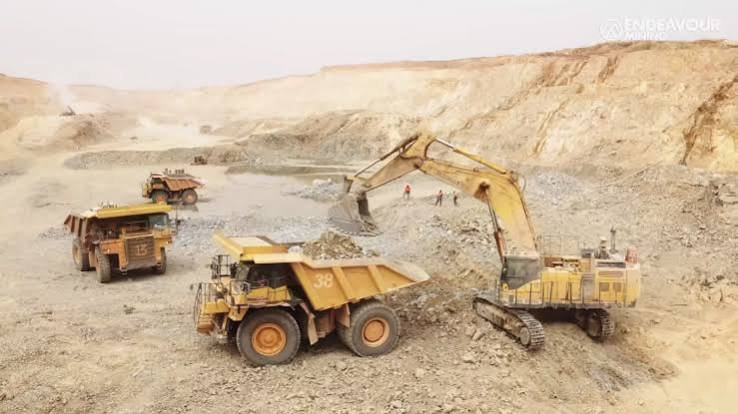
Mines minister Modestus Amutse says 71 inactive mining licences face cancellation, while incomplete paperwork and understaffing fuel ongoing processing backlogs.
The minister of industries, mines and energy disclosed this in the National Assembly last week, saying 91 mining licences are currently active and producing.
He was responding to Independent Patriots for Change parliamentarian Ferdinand Hengombe who raised issues on application delays and inactive mining licences.
Amutse said the ministry is engaging holders of inactive mining rights who are failing to comply with their approved mining or exploration programmes to find amicable solutions.
However, inactive licence holders could face difficulties when seeking renewals.
“The ministry would reject applications for renewal where a licence holder had failed to produce, unless the holder could convince the ministry that the failure was caused by circumstances beyond their control, but it’s not a guarantee,” he warned.
Amutse said he understands participation from local companies may face challenges of having to find investors, explaining the ministry’s leniency, but warned renewals may be rejected if there are no convincing reasons for it.
The ministry’s position comes against the background of concerns over mining rights being held without actual mining or exploration activities taking place.
Under Namibia’s Minerals (Prospecting and Mining) Act, mining licence holders are expected to conduct mining operations and notify the minister when operations are permanently or temporarily stopped or reduced.
The law also allows the minister to investigate where there are indications that mining operations have ceased or have been reduced.
The ministry’s mineral-rights division is responsible for monitoring compliance and conducting visits to prospecting and mining sites. Its system also distinguishes between active and inactive mining licences.
Amutse also addressed the growing backlog of applications, saying the ministry previously struggled to process the high number of applications received within the designated application periods.
He said the technical team could not cope with the volume of applications and assessments, prompting an administrative decision in 2024 to introduce two application windows each year.
Applications are now accepted from 1 April to 31 May and again from 1 September to 31 October.
“Once this period was over, no further applications were accepted. This is to give the ministry technical team time to assess received applications and make evaluations, determinations and recommendations,” Amutse said.
He said additional working days, including Thursdays, were introduced to help deal with the backlog.
He said the ministry had previously received more than 800 exclusive prospecting licence applications at a time, while 3 251 mining claims applications were received.
“Mining claims require an environmental clearance certificate from the Ministry of Environment, Forestry and Tourism before they can be evaluated,” he explained.
Since 1 April 2025, more than 900 applications have been received, with only about half assessed so far.
Amutse attributed the delays to incomplete documentation, limited human resources and insufficient staff to monitor whether licence holders comply with the Mineral Resources Act.
He said plans are underway to recruit more staff to strengthen the ministry’s monitoring and application-processing capacity.