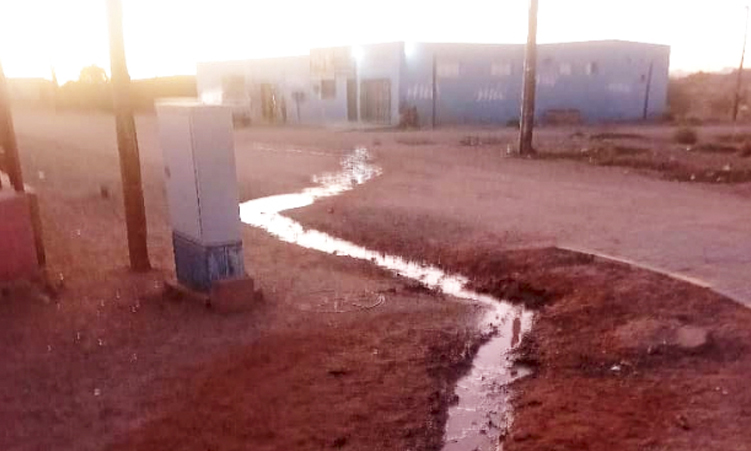






ABOUT thirty-four pupils from the Aris Primary School at Krumhuk, 26 kilometres south of Windhoek, developed a mysterious skin condition last year which residents claim could have been caused by pollution produced by the operations of three nearby companies.
The Aris Primary School has about 180 pupils, who inhale and absorb the waste emitted by the plants, a situation residents describe as a “legal genocide”.
The residents have petitioned the government to investigate the companies in October last year, but nothing appears to have happened since then.
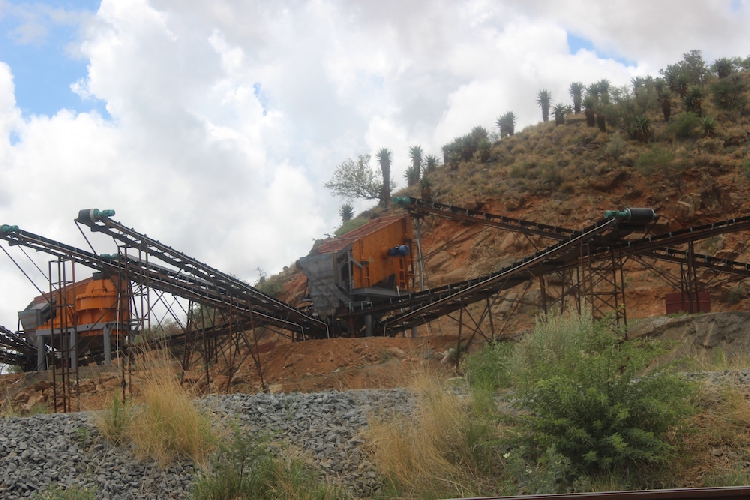
One of the companies, Central Brick and Paving CC, is owned by Chinese business people, while the other two companies are Oiltech Namibia, an oil and tyre recycling plant, and Kunene Building Supplies which operates a stone-crushing plant just two kilometres from the school.
The petition, handed to various ministries – energy, education, environment and health – requested that the children, teachers as well as area residents undergo medical tests to determine whether they have been exposed to harmful emissions from the companies’ operations.
Environment ministry spokesperson Romeo Muyunda told The Namibian yesterday that Kunene Building Supplies, accused of noise pollution, was denied an environmental clearance certificate after an objection from some parties, and that the company had been given time to appeal, while Oiltech has been asked to comply with the Environmental Management Act of 2007.
The deputy director of public and environmental health at the ministry of health, Benson Ntomwa, said he has not heard of the Aris situation, but that activities such as brickmaking should not be allowed to operate within residential areas or next to schools.
“Such activities will cause dust, which can lead to lung problems and other serious conditions if inhaled over a prolonged period of time,” he stated.
Ntomwa said the ministry of health was supposed to issue the companies with fitness certificates, taking into consideration human health and safety issues. He added that the industrial activities next to the school and residential areas could cause coughing, skin conditions and hearing impairment due to noise.
Some classrooms at the school have cracked walls, apparently caused by regular explosions from one of the operations.
Since the brickmaking factory became operational in December 2015, residents said they have started experiencing headaches and coughing fits, while 34 of the 180 children at the school developed a mysterious skin condition in July last year.
Although the health ministry sent a team to investigate, they could not establish the cause of the rashes, and attributed the condition to the children’s dirty bedding.
A senior at the school, who spoke on condition of anonymity, told The Namibian that she suspects it was because of the exposure to “radioactive waste”.
Windhoek rural constituency councillor Penina Inga-Ita said she was aware of the “unhealthy” situation, and had submitted a motion to the Windhoek City Council for a decision soon since the industrial operations were zoned too close to residential areas and the school.
“Children’s lives should not be secondary to money-making businesses,” she stressed.
Charlie Xie of Central Brick and Paving CC admitted that the community complained about the dust produced by his factory, but said he had put up a net between the school and the factory to prevent the pollution.
“Ever since I put up the net, none of the community members came back to say they are still experiencing problems,” he claimed. The company said they could not move the factory elsewhere as they had already set up shop.
Oiltech co-owner, Heather Craemer, who says she is an environmental activist, said the community has been misinformed by someone who was on a witch-hunt, and that oil recyling has been proven not to have any harmful effects and that no dangerous chemcials are used in the process. Craemer also said she would invite The Namibian to observe the oil recycling process to prove her point. “We have already submitted our environmental management plan to the ministry of environment for approval,” she said.
“The community thinks that the smell is toxic but it is harmless. They are just not properly informed and we try to contain the smell as much as we can,” she said. The Namibian was unable to obtain comment from Kunene Building Supplies.